

On April 21, 2025, He Jingshu, the wife of former Singapore Prime Minister Li Xianlong, shared an article on Facebook that claims Xi Jinping has always behaved like a gang leader during his 12 years in power. (Internet screenshot)
[People News] The struggle-centric philosophy of the Chinese Communist Party (CCP) is prominently reflected in a series of significant speeches by Xi Jinping over recent years. This includes his address at the 100th anniversary celebration of the CCP in 2021, the upcoming speech for the 105th anniversary in 2026, the report from the 20th National Congress of the CCP in 2022, and the communiqué from the Third Plenary Session of the 20th Central Committee in 2024. The term 'struggle' and its related expressions appear repeatedly, establishing a core theme that permeates Xi Jinping's governance. This emphasis is not just a rhetorical flourish; it signifies a systematic political strategy characteristic of the Xi Jinping era. It represents a revival of the historical lessons from the Mao Zedong era, which emphasized class struggle, and serves as a political maneuver and mobilization by the CCP aimed at ensuring its future survival.
Nevertheless, in the current context of the CCP, Xi Jinping's persistent focus on the rhetoric of struggle is a genuine reflection of the party's prisoner's dilemma. This dilemma is evident not only in high-level political conflicts, domestic governance, and economic transformation but also across various dimensions, including Sino-U.S. competition and international relations.
In his speech marking the 100th anniversary in 2021, Xi Jinping reflected on the century-long history of the Communist Party, characterizing the phases of the New Democratic Revolution and others as a "great struggle marked by bloodshed and unyielding perseverance." He emphasized that the Party's defining traits include "daring to struggle and being adept at struggle." In his address for the 105th anniversary in 2026, he reiterated that "all Party comrades must dare to struggle and be skilled in struggle," and specifically included this in the Party's list of "excellent qualities." The report from the 20th National Congress in 2022 linked "upholding the Party's overall leadership" with "coordinating development and security," urging the promotion of a "spirit of struggle" in the face of complex challenges. While the communiqué from the Third Plenary Session in 2024 concentrated on reform, it also integrated the themes of "enhancing the ability to struggle" and "addressing risks and challenges."
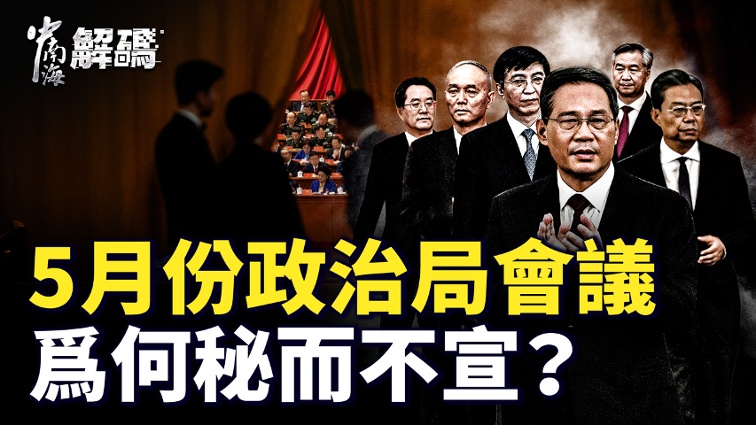
Since its establishment, the Chinese Communist Party (CCP) has been rooted in a philosophy of struggle. In the new era under Xi Jinping, this emphasis on struggle has been revived, framed by official narratives as a necessary response to the 'unprecedented changes in a century.' However, the truth is that Xi Jinping, in his quest for lifelong re-election and a highly centralized power structure, has wielded the anti-corruption banner to eliminate anyone he perceives as insufficiently loyal. This purge has targeted not only key figures from rival factions but also those who have previously contributed significantly to his rise, as well as his own trusted allies, members of the 'red second generation,' and military confidants—none have been spared. This indiscriminate approach has escalated the brutal internal power struggles within the CCP to an extreme level. Now, on the occasion of the CCP's 105th anniversary, Xi Jinping continues to call for struggle, fostering an atmosphere of fear throughout the party and military. While it may seem that everyone is compliant with Xi Jinping, there are significant undercurrents of discontent, with many non-cooperators, dissenters, and those biding their time for a chance to retaliate. Even during a party anniversary concert, Xi Jinping's entrance is heavily guarded by bodyguards in black, underscoring his deep-seated security concerns and the ongoing crisis facing the regime.
Since Xi Jinping took office, he has achieved an unprecedented concentration of power through anti-corruption campaigns and personnel adjustments. Official reports indicate that since the 18th National Congress, disciplinary inspection and supervision agencies across the country have investigated and dealt with millions of party members and officials, including high-ranking figures like Zhou Yongkang and Sun Zhengcai. This process reached its peak between 2012 and 2022 and further solidified Xi's core position following the 20th National Congress in 2022. However, this indiscriminate struggle has fostered a widespread atmosphere of fear within the bureaucracy and generated unprecedented resentment. On one hand, officials are reporting on each other and publicly demonstrating their loyalty; on the other hand, many are responding to the top-level political directives by adopting a 'lying flat' attitude and being unproductive, resulting in a dual dilemma of distorted information at the decision-making level and misalignment in grassroots execution.
Xi Jinping has consistently stressed the importance of 'coordinating development and security,' placing national security at the forefront. In this context, security has become the state's highest strategic priority, overshadowing economic considerations. According to data from the National Bureau of Statistics, China's GDP growth in 2022 was only about 3.0%, significantly lower than pre-pandemic levels, with the service sector and consumer spending severely impacted. The real estate crisis has followed, with major companies like Evergrande (Hengda) and Country Garden (Biyuan) defaulting on debts since 2023, leading to a sharp decline in real estate investment, local governments facing financial strain from land sales, weak infrastructure investment, and persistently high youth unemployment rates.
In the economic sector, terms like 'new quality productivity' and 'technological self-reliance' have emerged as key phrases since the 20th National Congress. Xi Jinping has ramped up investments in chips, artificial intelligence, and new energy, with significant industry funds and fiscal support earmarked for the period from 2021 to 2025. However, concurrently, Xi has imposed a comprehensive crackdown on the private economy, implementing stringent measures against platform economy antitrust issues, the 'double reduction' policy in education, and real estate regulations, all met with forceful actions. Analyses from organizations such as the World Bank reveal that China's potential growth rate has steadily declined from over 9% during the peak of the reform and opening-up era to below 5% today, with private investment growth remaining persistently weak and foreign investment confidence waning. This approach, framed within a national security narrative, has temporarily upheld regime stability but has inflicted significant damage on the once-thriving Chinese economy, leading to a sharp economic downturn and a prolonged period of deflation.
In Xi Jinping's addresses, the narrative of 'building a community with a shared future for mankind' is intertwined with rising tensions in the Taiwan Strait, the push for military modernization, and the development and deployment of nuclear warheads, all aimed at competing with the United States for global military influence. This has directly prompted the U.S. to reinforce its dominance in the Western Hemisphere and reshape its control in the Indo-Pacific region. Additionally, it has led to an acceleration of the U.S. technological blockade against China and a soft economic decoupling, with bilateral direct investment between China and the U.S. experiencing a notable decline from 2022 to 2025. China's exports are encountering increasing barriers, and third-party nations like Europe and Japan are also aligning with the U.S., leaving the Chinese Communist Party isolated on the global stage.
Deng Xiaoping's era of 'hiding one's capabilities and biding one's time' along with pragmatic reforms resulted in an average annual growth rate exceeding 9% from 1978 to 2010, establishing the foundation for China's current national strength. However, in just over a decade, Xi Jinping has depleted the political and economic assets that were built up during Deng Xiaoping's reform and opening-up period. The phrase 'struggle first' in Xi Jinping's speeches reflects both a continuation of the Communist Party of China's century-old legacy and a concentrated expression of the power dynamics in the new era. This rhetoric reveals the structural challenges the Communist Party faces: internal loyalty leading to mutual destruction, an economy forced to slow down due to security concerns, and an increasingly confrontational foreign policy driven by hegemonic ambitions. Ultimately, this self-imposed zero-sum game and prisoner mentality will inevitably hasten the Communist Party's decline.
(Originally published by the People News) △






News magazine bootstrap themes!
I like this themes, fast loading and look profesional
Thank you Carlos!
You're welcome!
Please support me with give positive rating!
Yes Sure!