

Monks from the Shaolin Temple held a flag-raising ceremony. (Internet image)
[People News] Recently, several regions in China have begun financial inspections of religious sites, including temples and Taoist monasteries, focusing on aspects such as income and expenditure, donation records, and ledger management. There are also online reports claiming that tens of thousands of temples and Taoist monasteries across the country are undergoing financial audits, although this claim has not been officially confirmed. Citizens interviewed suspect that the local government's auditing efforts are linked to a decline in fiscal revenue.
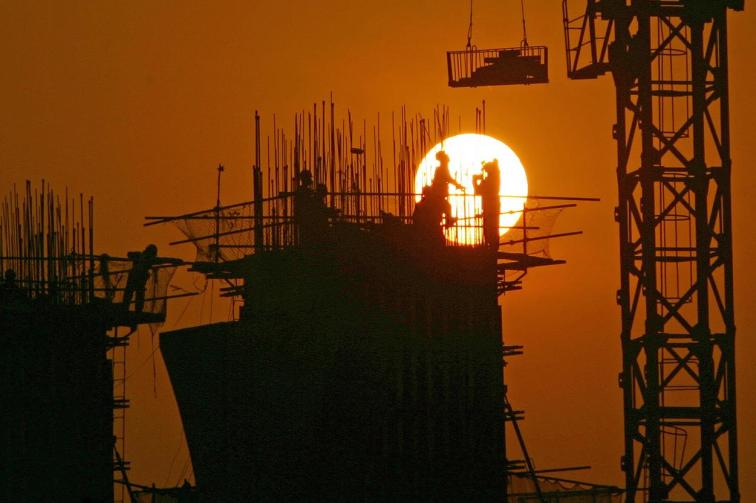
According to Radio Free Asia, Mr Han, a netizen from Jiangsu, stated in an interview this Tuesday (10th) that the authorities' audits of temples are related to local financial difficulties. He pointed out that many industries are currently facing challenges: "The real estate sector is essentially stagnant now. The domestic situation is quite dire; many people are unemployed, and the government's finances are undoubtedly in deficit. They are attempting to compensate for the fiscal shortfall by auditing the tax revenues of these enterprises. Well-managed temples can be profitable, but some temples built with government investment have low visitor numbers and are not generating income."
On Friday (6th), the NetEase account "Fengyan Lun" reported that 33,500 temples and over 9,000 Taoist monasteries nationwide have been included in the financial inspection scope. The inspection items encompass the income and expenditure of these sites, investments and shares held by teaching staff, as well as the commercial connections behind social media accounts.
Mr Han observed that he has noticed a decline in the number of visitors to nearby temples. Temples located in popular tourist areas may generate some income, but others may not have sufficient funds for auditing: "Currently, the visitor flow to temples is not substantial; not many people visit because the general public has limited financial resources. In temples located in key scenic areas, those with higher visitor numbers may have some income, and if audited, it could potentially increase tax revenue."
According to a previous report by Jiangxi Network, on June 9, the Finance Bureau of Shangfu Town in Fengxin County, Jiangxi, conducted a special inspection of three religious activity venues within its jurisdiction. The inspection focused on various aspects, including account usage, ledger management, donation registration, approval of large expenditures, and the public disclosure of income and expenditure. However, the report did not provide specific details regarding the accounts or the outcomes of the inspection.
In September of last year, the Ethnic and Religious Affairs Bureau of Longyan City, Fujian, announced that in the first half of that year, 35 inspection targets were randomly selected, which included religious activity venues and religious organisations. The timing and scope of inspections in Jiangxi and Fujian differ, and there has yet to be a public document indicating that over 30,000 temples nationwide are undergoing simultaneous inspections.
The guest hall of Nanputuo Temple indicated that it was unaware of the accounting inspection situation.
A reporter from Radio Free Asia contacted the guest hall of Nanputuo Temple in Xiamen to ask whether a working group had recently entered the temple for an accounting inspection. The person who answered the phone stated that the temple was currently operating normally. When asked if the income from offerings needed to be taxed, the response was, "This is not our responsibility; we are not clear about this." Regarding the presence of a working group to inspect the accounts, the response was similarly vague.
Mr Mu, a netizen from Shandong, shared in an interview that he learned about the temple accounting inspections online and connected this issue to the local financial situation: "Now everywhere is checking taxes; if you do not pay taxes, they immediately label you as an abnormal company and impose fines. In every aspect, local governments are now 'opening up sources,' looking for ways to impose fines, collect money, and take action."
Mr Mou disclosed that investments made by some local officials in temples have not only failed to recover costs but are also facing potential 'bankruptcy.' He stated, 'From what I understand, there are numerous temples that have been completed but remain closed to the public. Whether they are officials or businessmen, after making substantial profits, they feel a sense of guilt, leading to investments of tens of millions in high-quality sandalwood. For instance, there is a large temple in the eastern mountainous region of Jinan, but currently, the Communist Party imposes strict controls over religion and does not issue permits for venues designated for religious activities.'
Mr Mou further mentioned that several temples funded by officials or wealthy entrepreneurs have not yet opened to the public: 'Currently, these temples are empty, with some employing a guard. If you decide to open, you could be accused of operating in an illegal religious venue, which could result in fines.'
Scholars indicate that auditing serves both fiscal and regulatory objectives.
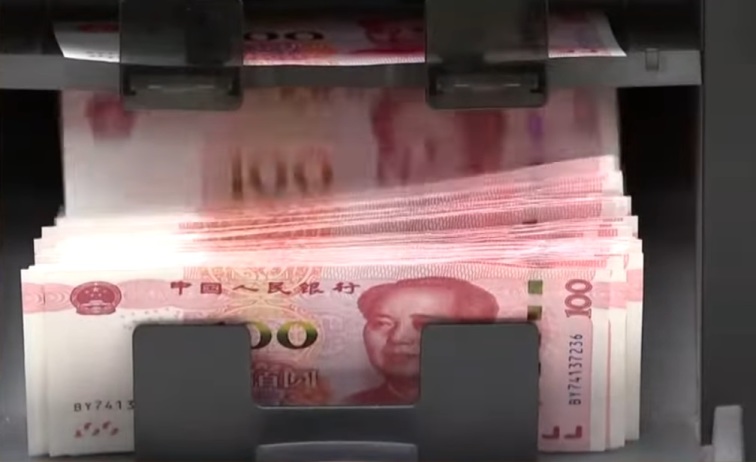
Recently, China's tax authorities have been announcing various tax-related cases involving businesses and individuals, warning that tax evasion could lead to the recovery of owed taxes, late fees, and penalties. In October, the State Administration of Taxation reported that a tax intermediary in the Gui'an New Area of Guizhou was fined 1.4929 million yuan for assisting clients with false declarations. Additionally, the associated construction companies were required to repay taxes and fines totalling 2.5922 million yuan, along with late fees. Earlier, tax authorities had also advised residents to conduct self-assessments of their overseas income from 2022 to 2024.
The offshore trust tax regulations released in July this year specify that income from the transfer of relevant personal property and trust earnings for residents is subject to a 20% personal income tax rate. Furthermore, some undistributed earnings and income from foreign entities controlled by trusts are also included in the taxable scope.
Chinese scholar Mr Zhao has drawn a comparison between the auditing of temples and the earlier tax investigations aimed at private enterprises and online streamers. He noted that the scrutiny of income from merit boxes and the commercial activities of temples pertains to both local fiscal revenue and the authorities' financial oversight of religious sites. He remarked, 'I believe this is not an anti-corruption initiative within the religious sector; rather, it resembles a harvest. Ultimately, it is about tightening the local fiscal budget.'
△




News magazine bootstrap themes!
I like this themes, fast loading and look profesional
Thank you Carlos!
You're welcome!
Please support me with give positive rating!
Yes Sure!