

Chinese netizens predict that by 2026, 80% of stores will be closed. (Video screenshot)
[People News] An analysis of the latest data from the National Bureau of Statistics of the Communist Party of China indicates that many economists believe that in the three-horse carriage of the Chinese economy, two components—consumption and investment—are unable to accelerate, leaving only exports as a potential driver for economic recovery. Currently, a wave of closures is sweeping through multiple industries in China, with grassroots citizens lamenting that "many families can no longer afford to cook."
The economic data for April released by the National Bureau of Statistics of the Communist Party of China on May 18 revealed that nearly all indicators fell short of expectations. Specifically, industrial added value grew by 4.1% year-on-year, marking the lowest level in the past two and a half years; consumption increased by only 0.2% year-on-year, the lowest in nearly three and a half years; and fixed asset investment in the first four months saw a year-on-year decline of 1.6%, representing the first negative growth this year.
Additionally, from January to April this year, the industrial added value of large enterprises rose by 5.6% year-on-year; total retail sales of consumer goods reached 16.49 trillion yuan (RMB, the same below), reflecting a year-on-year increase of 1.9%; and fixed asset investment amounted to 14.13 trillion yuan, down 1.6% year-on-year, with real estate development investment at 2.39 trillion yuan, a year-on-year decrease of 13.7%.
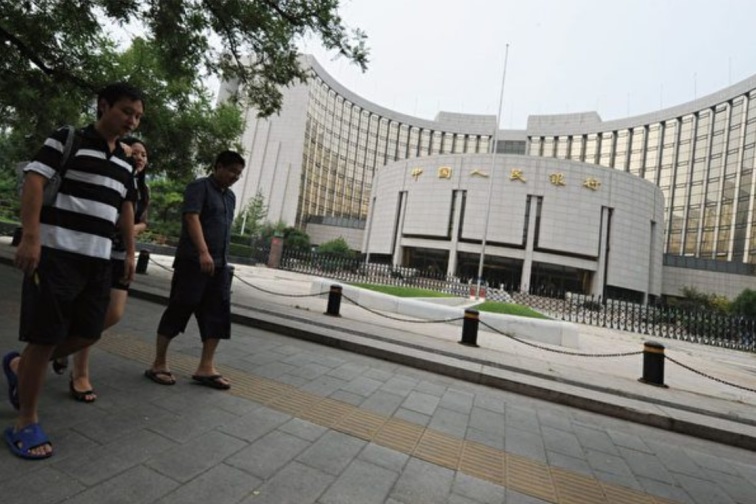
According to the latest data from the central bank of the Communist Party of China, in April this year, loans to Chinese residents plummeted by 786.9 billion yuan, hitting a record low since data collection began. Both short-term and medium-to-long-term loans for residents have contracted, indicating a widespread decline in demand for consumer loans and mortgages.
The current situation for the Chinese populace is characterised by a reluctance to spend, as they tightly hold onto their wallets. Consumption is one of the so-called 'three driving forces' propelling China's economic growth, but it is clear that this engine has stalled. The Chinese consumer market has plunged into an unprecedented recession, leading to a wave of bankruptcies across various industries. Many main streets in cities and county towns are now filled with signs for rentals, transfers, and store closures. The darkened residential areas at night have sparked discussions among many Chinese netizens, who refer to this phenomenon as 'ghost townification.'
1. The restaurant industry is facing the most pronounced wave of closures.
The Chinese Communist Party has never directly disclosed the 'total number of closures,' so much of the current data is sourced from industry research institutions, business cancellation records, or media reports.
Numerous Chinese netizens have shared videos showing a significant number of shops closing in their towns, with some bloggers even predicting that 'by 2026, the number of closed stores will reach 80%,' particularly among various types of restaurants, fast food outlets, cafes, milk tea shops, and snack bars.
Over the past two years, many media outlets have described China's restaurant industry as undergoing 'the worst reshuffle in history.' According to data from the brand monitoring database Jihai Merchant, the closure rate for the restaurant industry in first-tier cities like Beijing, Shanghai, Guangzhou, and Shenzhen was 35% last year, while it was around 32% in third-tier cities and above. Many fast food outlets have shut down within a year of opening. Contributing factors include a downgrade in consumer spending (with people reluctant to spend), intense price wars, high rent and labour costs, and excessive internal competition, with many areas witnessing competition over '9.9 yuan meal sets' and 'penny-pincher meal sets,' which have severely squeezed profit margins.
The China Chain Operation Association, in collaboration with Meituan, recently published the "2026 China Catering Chain Development White Paper," which indicates that by 2025, the number of merchants marked as closed in the Meituan system reached 3.39 million, reflecting a 9.4% increase from 2024. The industry is currently experiencing a new wave of intense market reshuffling. In 2024 alone, around 3 million restaurants closed, with approximately two-thirds of these establishments failing to survive beyond two years.
Among the closed restaurants are many long-standing dining establishments that have been in operation for decades. Notable closures include the only mainland branch of Hong Kong's Michelin three-star restaurant "Fu Lin Restaurant," the local mid-to-high-end dining brand "Min Guo Hong Gong Guan" in Nanjing, the historic "Jin Huang Ting Jiu Jia" located in the "Hua Qiang Bei Landmark," as well as "Hao Xing Seafood Restaurant" in Dongguan, "Tao Ran Xuan," "Hong Kong Fu Lin Palace," "Ming Zhe Chao Zhou Cheng," "Fu Quan Hai Ma Tou," and "Yu Min Xin Cun."
The "Michelin of the tea drink industry," "Chi Cha San Qian," which has been operating for nearly a decade, saw its number of stores in mainland China plummet from over 200 to just 2; the star-studded "CHAFORU Xing Ka Li" closed its main store, leaving only 2 in operation; the Korean coffee brand "Man Coffee" exited Shenzhen, reducing its store count by half; "Cat Poop Coffee," established for over ten years, closed several benchmark stores in Guangzhou; the "New Tea Drink Ancestor" "813 Ba Yi Shan" exited Guangzhou, with its flagship store in Shenzhen shutting down; "CoCo都可," with nearly 30 years of history, closed over 400 stores in just six months; and the well-known chain "Ji Dong Shao Xian Cao" saw its number of stores drop below 1,000.
Simultaneously, the average spending per customer in the dining sector is on the decline. For instance, in the third quarter of 2025, the national average dining expenditure per capita is 33 yuan, reflecting a 23.6% drop compared to the previous two years. Among 45 major cities, only Beijing has a per capita consumption exceeding 100 yuan, while 80% of the cities report figures below 50 yuan. The average spending per customer in dining establishments has reverted to levels seen in 2015, effectively 'returning to ten years ago overnight.'
This clearly indicates that ordinary citizens are truly short on cash; even when it comes to dining out, they are trying to save as much as possible.

In numerous large and small cities across China, once-bustling districts have now become eerily quiet and deserted. (Video screenshot)
2. Widespread Closures of Retail Chain Brands
According to business statistics, at least 17,100 physical stores closed in the first half of 2025, affecting over 100 corporate brands. The categories include dining, clothing (approximately 5,000), supermarkets (around 720), department stores (more than ten), bookstores/cinemas (over 4,000), and pharmacies.
According to incomplete statistics from Ying Shang Wang, more than 60 retail chain brands have closed in 2025, primarily in the sectors of supermarkets, beauty and personal care, luxury goods, and clothing conglomerates, with mass-market and mid-range brands making up over 63% of the closures.
For instance, the 'Hong Kong goods symbol' cherished by the post-80s and post-90s generations, 'Mannings', along with 'Sasa', which was the first to introduce an open product display model, have abruptly exited the Chinese market. The domestic beauty retail pioneer 'Watsons' has withdrawn from several core business districts in first-tier cities, resulting in the lowest number of stores in seven years. Additionally, established Japanese beauty brands 'MENARD' and 'Sekkisei', as well as the Korean beauty brand 'Innisfree', have completely pulled out of the Chinese market.
By 2025, nearly ten luxury brands are expected to close their stores.
Among international apparel brands, the once-celebrated 'Queen of Counter Staff', Triumph, the Korean streetwear brand 'Mardi Mercredi', the European high street brand '&Other Stories', and the brand once recognised as 'one of the most fashionable sports brands', 'OYSHO', have all shut down their stores in China. Meanwhile, numerous girls' wardrobes have experienced revenue declines, with 'White Moonlight' and 'Teenie Weenie' closing over 140 stores in just nine months.
The jewellery brand Lao Feng Xiang, which boasts a history of over 170 years, has seen both its revenue and profits decline consistently over the past two years, with a continuous reduction in the number of stores. Following a closure of 483 stores in 2025, it further reduced its count by 185 stores in the first quarter of this year.
This wave of closures has also impacted various training institutions, pet shops, and pharmacies.
For instance, the well-known dance training institution 'Barbara Little Angel Dance', which has been established for over a decade, has abruptly closed several franchise locations in Guangzhou and Foshan. The 'Bell Robot Programming Centre', which has opened stores in more than 20 cities across the country, has shut down its national headquarters. The British early childhood education organisation' Water Baby International Parent-Child Swimming', which has been operating in China for nearly ten years, no longer has any active stores. The basketball training leader 'Oriental Qimingxing' has seen its number of stores drastically decrease from a peak of over a thousand to just a few dozen.
The Chinese pharmacy industry began experiencing a wave of closures starting in the fourth quarter of 2024, resulting in a net loss of 22,000 pharmacies nationwide in 2025. In this round of industry restructuring, the pace at which small and medium-sized pharmacies are exiting the market has significantly accelerated.
3. Ongoing Real Estate Crisis and Exits
China's real estate sector has faced years of decline, which has become a central issue hindering social consumption. Despite the Chinese Communist Party's efforts to stabilise the market in recent years, the real estate sector remains a disaster zone. Major real estate companies such as Evergrande, Country Garden, and Sunac continue to grapple with crises. Many third- and fourth-tier cities are witnessing widespread problems: construction projects are halted, unfinished buildings are common, housing prices are falling, and land auction revenues are plummeting, all of which directly affect local finances and the construction supply chain.
Recent data indicate that in April of this year, new home prices in 70 large and medium-sized cities in China fell by 3.5% year-on-year, with the decline expanding, marking the largest year-on-year drop since May 2025. This also represents the 34th consecutive month of decline for this data.
The significant decline in market demand has plunged major real estate companies into financial distress, leading to widespread layoffs and even bankruptcies. According to public data, over 1,500 bankruptcy reorganisation and liquidation cases involving real estate companies were reported nationwide in the first half of 2025, marking a roughly 25% increase compared to 2024.
4. The manufacturing sector is experiencing a continued withdrawal of foreign investment and factory closures.
In the Pearl River Delta and Yangtze River Delta regions, there has been a notable exodus of Taiwanese businesses, a shift of foreign supply chains to Southeast Asia, and a halt in operations at many small to medium-sized export factories. The most affected industries include toys, textiles, furniture, electronics manufacturing, and footwear. The mass withdrawal and closure of factories have resulted in rising vacancy rates in some local industrial parks, with Guangdong, Zhejiang, and Jiangsu witnessing a significant number of factories being rented out or entire buildings being put up for sale. Many young and middle-aged individuals who have migrated from various parts of the country to major cities in search of work are now returning to their hometowns after exhausting their savings and failing to find employment. Many netizens report that everyone they know, whether employed or unemployed, is staying at home daily, avoiding going out unless necessary, and refraining from spending money.

Numerous Chinese netizens have noted the emptiness of urban commercial streets and the lack of people in rural areas. Where have all the people gone? They are all in the labour market seeking job opportunities. (Video screenshot)
5. Small and medium-sized banks are rapidly vanishing.
In 2025, around 377 banks in China ceased operations, with over 9,000 bank branches closing their doors.
In the first four months of 2026, 220 small and medium-sized financial institutions have been approved for mergers or dissolutions, including more than 120 village and town banks that have been revoked or merged, representing a fourfold increase compared to the previous year.
This indicates that financial risks are starting to centralise, leading to the rapid closure of small banks.
6. Severe Contraction in the Automotive Market
The domestic automotive market in China is facing significant contraction.
A report from the China Association of Automobile Manufacturers reveals that by 2025, 55.7% of the country's 4S car dealerships are expected to operate at a loss, with only 23.5% of stores turning a profit, and another 20.8% breaking even. Additionally, 81.9% of dealers are experiencing negative margins on new car prices, with over half of the stores seeing a margin drop exceeding 15%.
Recent sales data released by the China Passenger Car Association shows that in April 2026, retail sales of conventional fuel vehicles in China plummeted to just 530,000 units, marking a 37% year-on-year decline and a further 33% drop compared to March.
The new energy vehicle market is also showing signs of fatigue. In April, retail sales of new energy passenger vehicles reached 849,000 units, down 6.8% year-on-year and a slight 0.3% decrease from March. From January to April this year, cumulative retail sales totalled 2.758 million units, reflecting a 17.2% year-on-year decline.
In April, retail sales of domestic passenger cars (small cars) in China were 1.384 million units, representing a 21.5% year-on-year decrease, marking the seventh consecutive month of decline. In the first four months of this year, cumulative sales of domestic passenger cars reached 5.604 million units, down 18% compared to the same period last year.
According to the financial reports published for 2025, among the eight listed automotive dealership groups in China, seven reported losses, while one barely broke even. The leading company, Zhongsheng Holdings, reported revenues of approximately 164.4 billion yuan but incurred a net loss of 1.673 billion yuan. Yongda Automotive transitioned from a profit last year to a loss exceeding 300 million yuan, and Zhengtong Automotive's losses further expanded to 2.49 billion yuan.
While not all sectors are collapsing, small and medium-sized private enterprises linked to domestic demand, the real estate sector, and the traditional physical economy are indeed under significant strain. Consequently, many physical store owners have posted videos lamenting the lack of customers, stating that they can no longer sustain their businesses. Some Chinese merchants have predicted that by 2026, the number of closed stores could reach 80%.
Netizens have commented, 'A few days ago, when I withdrew cash from the ATM, all the bills were sequentially numbered new notes. This is truly alarming. The shop downstairs closed a few years ago, and immediately, there would be an entrepreneur to take over. This year, when one closed, it has been a long time without anyone stepping in... Entrepreneurs have already perished on the beach. It is clear that next year will be even worse! The renminbi should depreciate.'
Commentators have noted that deflation remains unresolved, and instead, economic stagnation has set in, increasing the survival pressure on businesses. This will inevitably lead to a larger wave of unemployment. It is foreseeable that the number of people unable to make ends meet and the unemployed sleeping on the streets will only continue to rise. △







News magazine bootstrap themes!
I like this themes, fast loading and look profesional
Thank you Carlos!
You're welcome!
Please support me with give positive rating!
Yes Sure!