

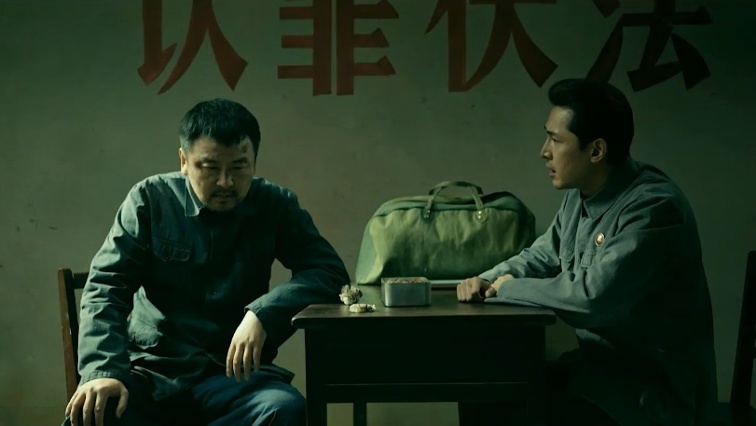
China’s economic downturn has left both major cities and remote towns struggling, with malls and markets facing a wave of closures and street vendors outnumbering customers. Many people have fallen into despair as a result. (Video screenshot)
[People News] In the first half of 2026, China's economy continues to reveal deep-rooted crises. The GDP growth for the second quarter is just 4.3%, marking a new low in three and a half years, significantly below market expectations and the annual target range of 4.5%-5%. The cumulative growth for the first half of the year stands at 4.7%.
This figure not only indicates a severe decline in economic momentum but also underscores the inevitable failure of the state-owned economy, led by Xi Jinping, due to inefficient resource allocation, distorted incentives, and systemic risks.
A report from the British Financial Times indicates that the Communist Party's Politburo plans to accelerate bond issuance for infrastructure stimulus in July. However, this type of superficial state-led intervention will only worsen the debt bubble and structural imbalances.
The core of a state-dominated economy is the Communist Party's monopoly on resources, the suppression of private enterprises, the distortion of market signals, the stifling of market vitality, and the creation of institutional arrangements that lead to unequal distribution. This system undermines the incentive effects of private property rights, resulting in resource misallocation, inefficiency, and the proliferation of corruption. Historically, this model has repeatedly demonstrated its unsustainability, and today, the tragedy of decline is once again unfolding in China.
The harsh reality of recession amid the collapse of domestic demand.
Chinese official statistics have consistently been viewed by external observers as manipulated. Nevertheless, even the adjusted figures expose the stark reality of an economic downturn. In the second quarter, GDP experienced a mere 0.9% growth on a quarter-on-quarter basis, with the annualized rate plummeting to approximately 3.6%. Fixed asset investment saw a year-on-year decline of 5.7% in the first half of the year, with real estate development investment crashing by 18%. Retail sales growth was lackluster, with only a 1% increase in June, and the total retail sales of consumer goods in the first half lagged significantly behind the 27% growth in exports.
The ongoing real estate crisis continues to exert a profound influence on the overall macroeconomic landscape. Local governments, which have depended on land finance and the bubble created by state-owned developers, have witnessed this bubble burst completely. In cities like Shenzhen, foreclosures and non-performing assets accounted for as much as half of commercial real estate transactions in the first half of the year. National housing prices are in a continuous decline, with over 14 million construction workers facing unemployment, household wealth evaporating significantly, and consumer confidence collapsing. This situation is not merely a cyclical adjustment; it is the inevitable outcome of the long-term distortions caused by land finance, credit allocation, and administrative intervention following the collapse of the real estate bubble.
Li Daokui, an economist affiliated with the Chinese Communist Party (CCP), has acknowledged that the broad unemployment rate is estimated to be as high as 10.2%, with youth unemployment and hidden unemployment issues being even more pronounced. A commentary published by Bloomberg on July 20 highlighted that, in the context of persistently high youth unemployment, slowing economic growth, and restricted social mobility, an increasing number of young people in China are turning to Hanfu, historical dramas, and Xianxia culture in search of spiritual comfort from traditional culture. Bloomberg noted that while cultural nostalgia may provide solace, it does not create jobs, stimulate the real estate market, or improve young people's willingness to have children. The article posits that the CCP, which has historically criticized traditional culture under the banner of 'anti-feudalism,' is now leveraging historical narratives like 'national rejuvenation' to bolster its governance legitimacy.
Consumer spending remains weak, with nominal disposable income growth at 5.2%, but actual purchasing power is being eroded by deflation and shrinking assets. Retail sales have even seen negative growth at times, prompting one netizen to remark: 'I can't find a job, I've lost money on my house, the stock market is down, my funds are losing value, and gold and silver are also down. I've finally run out of money, so it's best to just lie at home and not spend anything.' This 'lying flat' mentality among the public reflects a pessimistic outlook on future prospects.
On July 13, the State Council of the CCP unveiled the '15th Five-Year Plan for Expanding Consumption,' marking the first time that consumption issues have been incorporated into the national five-year plan since the CCP's establishment, which can be seen as a novel initiative by Xi Jinping. However, the fundamental issue remains that there is no change in the execution mechanism; it is merely a formal plan, similar to not fundamentally changing the course but simply rotating the train crew, with the ultimate destination still leading to shared poverty.
Xi Jinping's crackdown on the private economy and the extraction of wealth from the middle class, where property rights protection is sacrificed for the sake of common prosperity, is effectively seizing private wealth under the pretense of secondary income redistribution. This has resulted in the ongoing decline and contraction of the middle class, which in turn has caused domestic demand to fall into a prolonged state of weakness and a downward spiral.
Export dependence and excess capacity: a distorted prosperity
In the first half of this year, the Chinese Communist Party's (CCP) exports seemed robust, but this is primarily due to Xi Jinping's strategic allocation of resources and subsidies to state-owned enterprises and prioritized industries, rather than being a product of market choices and free competition. High-tech exports, such as semiconductors and electric vehicles, have benefited from global demand for AI, yet the domestic market is unable to absorb the surplus capacity. The manufacturing surplus index has hit record highs, with nearly all industrial sectors surpassing historical averages. Price wars have led to a collapse in corporate profit margins, with more than a quarter of listed companies reporting losses, marking the highest rate in 25 years.
This model intensifies global tensions. The CCP's trade surplus is projected to reach an astonishing $1.2 trillion by 2025, significantly undermining the industrial foundations of other countries and provoking a wave of protectionist trade responses from the international community. German Chancellor Merz recently remarked that all EU member states are now facing trade deficits with China, with the annual trade deficit exceeding $300 billion. He highlighted that the Chinese Communist Party has consistently suppressed the renminbi exchange rate, implemented substantial industrial subsidies, and relied on excess capacity to flood global markets, thereby shifting costs onto European industries and severely disrupting fair competition. The EU must take decisive action to rectify this imbalance.
The core of state capitalism is not capitalism itself, but rather socialism in disguise, which fails to achieve sustainable development or establish a balanced mechanism for free regulation. Instead, it resorts to lowering wages, environmental costs, and subsidizing the export of surplus, ultimately leading to international isolation and self-harm.
The outflow of foreign capital is accelerating. In the first half of the year, actual foreign investment continued to decline, hitting a multi-year low in 2025. The withdrawal of foreign companies and the disruption of small and medium-sized supply chains underscore the worsening investment environment.
The emerging engine in the AI sector is becoming an accelerator for the economic deflation faced by the Chinese Communist Party.
A recent article in The Wall Street Journal noted that China's soaring export figures and technological capabilities obscure the grim economic realities at home: a contracting labor market, sluggish consumer spending, and a seemingly endless downturn in the real estate sector.
Goldman Sachs' professional team has released a 50-page report on China's AI models, which reveals that these models are aggressively capturing the global market through an 'extreme low-price' strategy. However, the entire industry is currently facing significant losses. The Chinese Communist Party (CCP) is leveraging simple model architectures to drastically reduce resource consumption, benefit from low labor costs, receive substantial state subsidies, utilize inexpensive domestic hardware, and take advantage of low electricity costs. This has led to negative profit margins ranging from -30% to -39% and a model of scaling losses to seize international markets. According to Goldman Sachs' predictive model, if China's total token consumption reaches 25 times its current level by 2030, the scale effect could elevate profit margins to between 14% and 22%. The current losses are viewed as a 'strategic investment with spreadsheets.' Goldman Sachs concludes that the primary goal of Chinese manufacturers is not to compete for the 'model quality throne,' but rather to secure global pricing power over 'how much every million tokens should be worth,' trading losses for scale and using that scale to define standards.
The CCP's approach to AI development ultimately aims for global AI dominance. This strategy continues to rely on unfair competition through state subsidies and the unscrupulous tactics of capturing the market with low quality and low prices, mirroring the model of new energy electric vehicles. While this may produce an attractive development curve in the short term, such an approach—akin to old wine in new bottles—will likely struggle to achieve sustainable development. The ultimate foundation of technological competition lies in the rivalry between institutional frameworks and the free market versus planned economies, making it clear who is likely to emerge victorious.
China currently has a flexible employment population of 320 million, which is equivalent to the entire population of the United States. Xi Jinping is leveraging national resources to invest in AI, transitioning to a new technological engine. However, as the Chinese Communist Party (CCP) attempts to shift from a labor-intensive economy to a high-tech economy, it often encounters tragic setbacks before reaching its goals. With 320 million people in flexible employment at risk of being replaced by AI, and in light of the failure of infrastructure investment and a significant drop in consumption, Xi Jinping finds himself grappling with a vicious cycle of deflation and rising grassroots discontent, seemingly without effective solutions.
Debt, Deflation, and Population Crisis: Risks of Systemic Collapse
Recently, Yicai reported that the CCP has acknowledged that local government debt has surpassed 100 trillion yuan, with total debt nearing GDP levels. The previous reliance on infrastructure and real estate for economic stimulation has now run its course, leaving persistent deflationary pressures. Moreover, the long-term risks associated with a population crisis are becoming increasingly apparent. Low birth rates and an aging population are leading to a shrinking labor force and an unsustainable pension burden.
During the Politburo meeting in July, there was a proposal to accelerate bond issuance for infrastructure projects, utilizing unused quotas and policy financial tools. However, this approach is merely an outdated remedy for a new problem. The stimulus measures are unlikely to directly benefit the public and instead continue to favor high-tech and state-owned sectors, neglecting the financial needs of ordinary citizens. The remarkable advancements in the AI sector cannot mask the structural failures of the broader economy. The benefits of technology are concentrated in a few areas, serving only Xi Jinping's narrative of national strength and global dominance, while failing to promote widespread employment and consumption, and having no real impact on people's livelihoods.
The world must recognize this reality: an authoritarian economy that does not protect private property rights cannot genuinely integrate into the developed economies of the world, nor will it willingly comply with the rules of a free market. Its so-called prosperity is merely a deceptive facade, with its true nature being one of destructiveness, leading inevitably to decline. This situation is causing a reorganization of global supply chains and the emergence of geopolitical risks that are becoming increasingly evident. The sacrifices, suffering, and costs endured by the Chinese people serve as the inexhaustible fuel for the enforcement of the authoritarian economic system of the Chinese Communist Party.
(Originally published by People News)△





News magazine bootstrap themes!
I like this themes, fast loading and look profesional
Thank you Carlos!
You're welcome!
Please support me with give positive rating!
Yes Sure!