
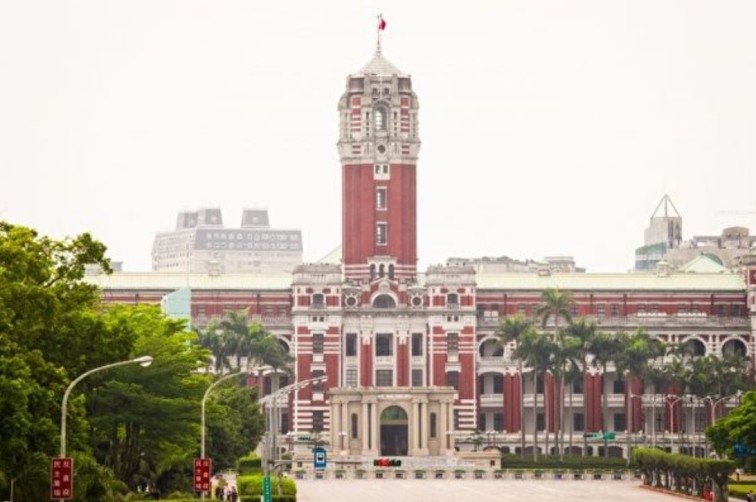
Taiwan Presidential Office. (Chen Bozhou / Dajiyuan)
[People News] April 9 marked the third day of Kuomintang Chairman Zheng Liwen's visit to the mainland. On this day, she travelled between Shanghai and Beijing, making it yet another visually striking "branding" journey.
In Shanghai, she stood at the Yangshan Deep-Water Port, reflecting on how this location was once the starting point of dispersion and tragedy in 1949, while today it symbolises the height of prosperity. She even had a personal experience of a 15-minute "heavenly drop" of milk tea at Meituan's headquarters, attempting to illustrate that the mainland's technology is not merely a threat to Taiwan, but also a "dividend" that can improve lives. She emphasised that peace is the most powerful force, and given time, anything is possible.
However, is this "warmth" a standard experience, or was it specially prepared for the occasion? What Zheng Liwen observed in Shanghai was a carefully curated, highly civilised, and advanced mainland. She sought to foster a sense of shared identity: since both sides of the strait have a common technological future and engage in business exchanges, peace should be seen as a natural outcome.
We must not only consider the temperature of the milk tea; we should also examine the cost behind this warmth. Is this peace genuinely free? Or is it a carefully orchestrated "boiling frog" scenario? When she stated, "Only with peace can one lie flat," is she advocating a value system where, as long as you are "obedient," you can partake in this prosperity? But can we truly trade prosperity for sovereignty and use dividends to alleviate the sense of crisis?
The "Taiwan National Theory" of shell companies
Zheng Liwen's recent speech at the Sun Yat-sen Mausoleum in Nanjing has drawn significant media attention and interpretation. In her address, Zheng sharply criticised the damage inflicted on Taiwan by Japanese imperialism, igniting fervent discussions across the Taiwan Strait. The BBC noted that this reflects the Kuomintang's departure from its traditional stance of being 'pro-American and friendly to Japan.' Meanwhile, Taiwan's Mainland Affairs Council has expressed that this represents a historical error that could jeopardise Taiwan's safety.
Nevertheless, many observers have pointed out that Zheng Liwen referred to the 'Taiwanese nation' twice during her speech. These six words, uttered in front of the Sun Yat-sen Mausoleum—a political shrine for the Chinese nation—are nothing short of a political earthquake.
She recalled that when Sun Yat-sen died in 1925, the Taiwanese people under Japanese rule referred to him as the 'Father of the Weak Nation.' She then introduced an audacious term—declaring Sun Yat-sen as the 'mentor of Taiwan's national liberation.' This was not a casual remark. She referenced the establishment of the 'Taiwan People's Party' by Mr Jiang Weishui in 1927, highlighting that it was a 'Taiwanese national liberation movement' rooted in Sun Yat-sen's ideology.
Why bring up the 'Taiwanese nation'? This concept has never been part of the Kuomintang's history. Friends, this is an exceptionally bold 'shell listing.'
What is she aiming to achieve? First, she is vying for recognition. She wants to convey to the Democratic Progressive Party that they should not assume they are the only ones who can discuss Taiwan's subjectivity; the Kuomintang can address it as well, and our 'theory of the Taiwanese nation' has Sun Yat-sen as its guiding figure.
The majority of voters in Taiwan, particularly the younger generation, feel a weaker connection to the concept of the 'Chinese nation,' while their identification as 'Taiwanese' is notably strong. By using the term 'Taiwanese nation,' she aims to create an emotional resonance with these voters, thereby mitigating the potential losses the Kuomintang (KMT) could face in the elections due to identity issues.
Additionally, she is testing Beijing's response. Right under Beijing's watch, she is assertively establishing a 'Taiwan subject' status. This gives the people of Taiwan a sense of dignity: look, I spoke of 'liberation', and the 'Taiwanese nation' in Nanjing, and Beijing did not react negatively.
So why didn't Beijing react? Because if they were to refute her statements, it would mean denying Sun Yat-sen's historical contributions to Taiwan.
In reality, Beijing is engaged in a larger strategic game. As long as one operates within this broader framework, Beijing may believe that the 'Taiwanese nation theory' ultimately leads to 'cross-strait unification' or 'opposition to the Democratic Progressive Party (DPP),' allowing them to temporarily tolerate this linguistic 'shell listing.'
However, Beijing's current tolerance is tactical. They need a KMT that can engage in dialogue to counterbalance the DPP, which is why they are pretending not to hear the term 'Taiwanese nation.' Yet, once substantial political negotiations commence, Beijing's logic of 'Chinese national unification' will quickly overshadow all of this. At that point, the 'Taiwanese nation theory' will be regarded as historical ashes, or even classified as a mistake that needs to be corrected.
Zheng Liwen has attempted to integrate Taiwan's sense of identity into the historical narrative of Sun Yat-sen, a task that requires a delicate balance—she needs to project strength to the Taiwanese while ensuring that Beijing perceives her as compliant. But is this narrative genuinely a 'new path for cross-strait relations,' or is it simply a 'word game' that leads to nowhere?
The reality is that the PLA's 'toolbox' is expanding rapidly.
If you believe that merely recognising the 'mentor' and discussing 'nationality' will automatically usher in peace, you may be overly optimistic. Today's peace, if it is merely a temporary calm granted by Beijing because they feel 'you are still obedient,' is not true peace; it is more akin to 'probation.'
On the afternoon of the 9th, as Zheng Liwen arrived in Beijing to prepare for her meeting with Xi Jinping the following day, the PLA presented a starkly different 'gift' for their encounter.
PLA spokesperson Zhang Xiaogang issued a strong warning following the successful maiden flight of the world's largest cargo drone, the 'Changying-8.' He remarked that the PLA's methods for 'countering separatism and interference will become increasingly sophisticated.'
This exemplifies 'power connection.' While Zheng Liwen in Shanghai is focused on drones that 'deliver milk tea,' Zhang Xiaogang in Beijing is discussing drones designed to 'counter aircraft carriers and separatism.' The same technology is viewed by Zheng Liwen as 'peace dividends,' but in the hands of the PLA, it represents 'the military's bottom line.'
This highlights that peace is not something that can simply be 'waited' for, nor can it be 'demanded' by uttering a few phrases about 'Taiwanese nationalism' at the Sun Yat-sen Mausoleum. Genuine peace should be an agreement reached when both parties sit down as equals, recognising that 'the cost of war is too great to bear.' However, at this moment, while Zheng Liwen discusses identity, Beijing's drones are busy calculating the costs of a blockade.
Polls indicate that 36% of the Taiwanese population supports her, longing for a stable life, and this sentiment deserves understanding. Conversely, 31% strongly oppose her stance, viewing it as a form of surrender.
In truth, the people of Taiwan desire peace, but peace cannot be achieved through 'waiting' or 'pleading.' If one's own strength and resilience are inadequate to uphold dignity, will the opposing side abandon their 'increasingly sophisticated means'? That would represent a grave miscalculation of the dynamics of power.
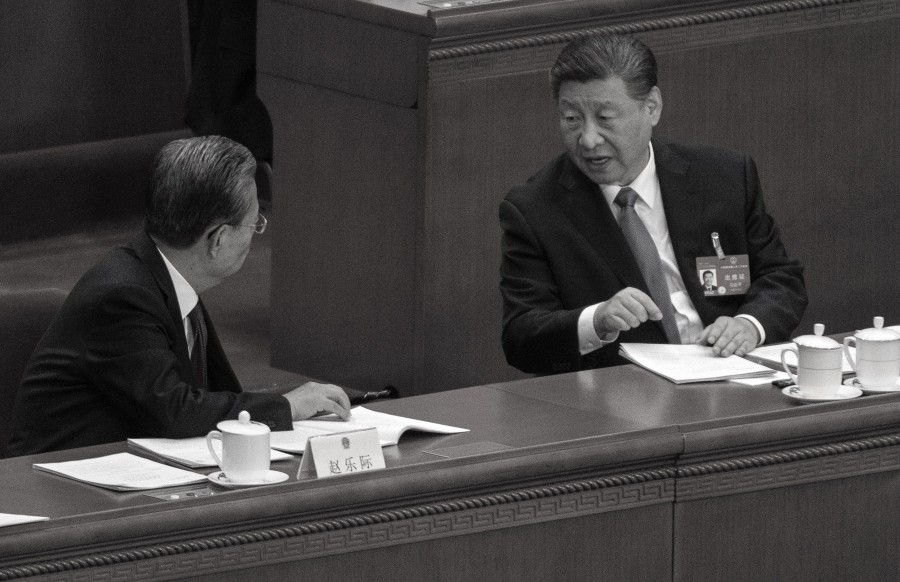
The 'Zheng-Xi Meeting' is set to occur in Beijing soon. This will serve as the ultimate confrontation in this 'peace journey.' We do not criticise those who seek peace, but we must remain cautious of illusions that encourage a 'lie flat' mentality. Only by recognising the reality of our strength can Taiwan attain true and dignified peace.
(First published in People News) △




News magazine bootstrap themes!
I like this themes, fast loading and look profesional
Thank you Carlos!
You're welcome!
Please support me with give positive rating!
Yes Sure!