
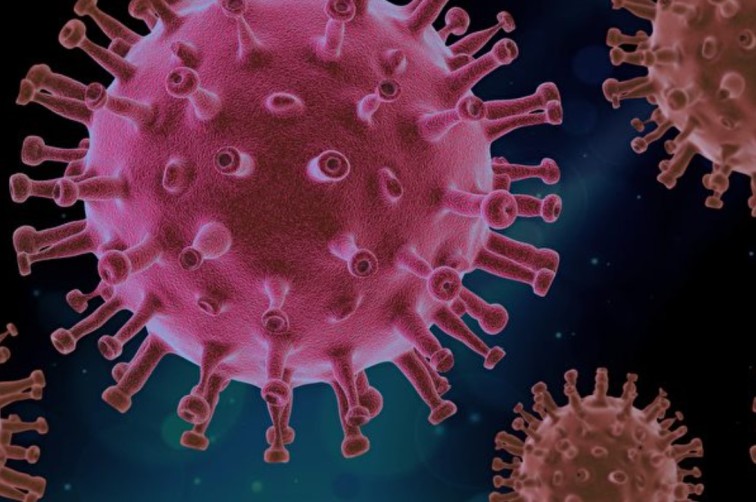
The image shows a representation of the CCP Virus (COVID-19 virus). (Pixabay)
[People News] The World Health Organisation (WHO) has stated that the Ebola virus outbreak in the Democratic Republic of the Congo and Uganda has resulted in nearly 600 suspected cases and 139 deaths. Here are the latest updates you need to know regarding this Ebola outbreak.
How did the outbreak begin?
The World Health Organisation indicates that this outbreak is believed to have originated in the Mongbwalu area of the Democratic Republic of the Congo. As patients sought treatment in neighbouring regions, the outbreak subsequently spread. The first known case was reported by a healthcare worker on April 24. Since then, the disease has continued to spread among healthcare workers in the Democratic Republic of the Congo.
On May 15, the World Health Organisation confirmed that the outbreak was caused by the Bundibugyo strain of the Ebola virus. It is thought that this strain is primarily transmitted through fruit bats, specifically through contact with the blood or secretions of these infected animals. Furthermore, human-to-human transmission can occur through contact with the bodily fluids of patients or contaminated surfaces of objects.
What regions has the virus spread to?
Currently, both the Democratic Republic of the Congo and Uganda have confirmed cases of the virus. While Uganda has not reported any local transmission cases, it has confirmed two cases involving individuals who travelled to the Democratic Republic of the Congo. Although South Sudan has not yet reported any confirmed cases, concerns are rising that the virus may spread to South Sudan due to its geographical proximity to the outbreak area. An American doctor involved in treatment efforts in the Congo was confirmed to have contracted the virus on May 18 and is currently receiving treatment in Germany.
What is the Bundibugyo strain of the Ebola virus?
According to the Centres for Disease Control and Prevention (CDC), the Bundibugyo strain was first identified in 2007. The last outbreak of this strain occurred in 2012 in the Democratic Republic of the Congo, resulting in 38 infections and 13 deaths. The virus has an incubation period that ranges from 2 to 21 days.
However, patients are typically only infectious after they begin to show symptoms. Given that there is currently no vaccine for the virus, the World Health Organisation's public health response measures primarily include: 'rapid case identification, implementation of isolation and treatment, contact tracing, ensuring safe burials, and enhancing community engagement.' This outbreak marks the third recorded large-scale outbreak caused by the Bundibugyo strain of the Ebola virus.
What are the symptoms of the Bundibugyo strain of the Ebola virus?
The World Health Organisation indicates that early symptoms of the virus include 'fever, fatigue, muscle pain, headache, and sore throat.' As the illness progresses, symptoms may develop further into vomiting, internal and external bleeding, diarrhoea, and abdominal pain.
What is the danger level of the Bendibujiao strain?
In previous outbreaks, the mortality rate of the Bendibujiao strain has been between 30% and 50%. Currently, there are no specific treatments or vaccines available for this strain. Experts caution that a vaccine may not be developed for several months.
What actions is the United States taking in response?
To address this outbreak, the U.S. State Department has issued a Level 4 travel warning for the Democratic Republic of the Congo (DRC), Uganda, and South Sudan, advising U.S. citizens against travelling to these areas "for any reason."
Furthermore, the State Department is working to restrict entry for foreign nationals who have travelled to these regions in the past three weeks.
Both the Centres for Disease Control and Prevention (CDC) and the World Health Organisation (WHO) have indicated that the public health risk in the United States is currently low. Satish Pillai, the CDC's Ebola response coordinator, mentioned on Wednesday (May 20) that some U.S. citizens who had "high-risk contact" with the virus are being transported to Germany and the Czech Republic for treatment.
The United States has activated an Ebola response task force and allocated $23 million in funding to support public health prevention efforts in countries like the Democratic Republic of the Congo and Uganda. (Source: Voice of America)
△








News magazine bootstrap themes!
I like this themes, fast loading and look profesional
Thank you Carlos!
You're welcome!
Please support me with give positive rating!
Yes Sure!