

March 10, 2025, Beijing Great Hall of the People—A security guard stands at the entrance before the closing ceremony of the Chinese People&9;s Political Consultative Conference. (WANG ZHAO/AFP via Getty Images)
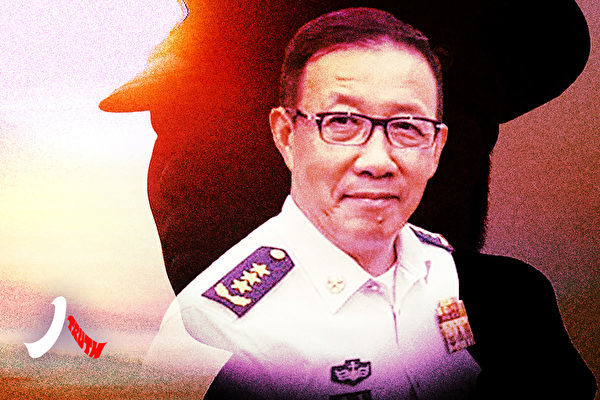
[People News] The abrupt downfall of Zhang Youxia has sent shockwaves through the ranks of generals and officials at all levels of the Communist Party, leaving many feeling anxious and vulnerable. The political atmosphere in Beijing has been immediately impacted. Recent information reveals that a former deputy minister of the Organisation Department of the Central Committee of the Communist Party has successfully fled China, signalling a rapid collapse of the loyalty system among the Party's upper echelons. Former officials in exile are urging Communist Party generals to take bold action during this critical historical moment to dismantle the Party's oppressive regime, pledging to do everything possible to rescue the families of these generals.
Since Xi Jinping assumed power, he has initiated a "Cultural Revolution within the Party" to root out dissent. This movement is distinct from the mass mobilisation seen during the Mao Zedong era, as it primarily unfolds within the Party itself. Its main objective is to achieve absolute control by systematically purging officials who do not align with its faction.
In this latest phase of the "Cultural Revolution within the Party," Communist Party officials may face dire consequences. Historically, once an individual is labelled within the Party's internal struggles, there is rarely a favourable outcome. In recent years, there have been numerous instances of high-ranking officials committing suicide or dying under mysterious circumstances. Political prisoners often endure severe mistreatment in detention, including being denied water, medical attention, and being forcibly medicated, resulting in conditions where they emerge unable to speak and fearful of walking. Current officials are acutely aware of these realities, prompting many to seek escape routes, with Vietnam being considered as one option, despite its own dangers.
The recent purge of influential figure Zhang Youxia has instilled a sense of fear among officials in party media. As a large-scale crackdown looms, China is witnessing an unprecedented exodus of officials fleeing the country. Many are abandoning their posts without even submitting resignation letters, escaping in a hurry.
Reliable sources from Shanghai entrepreneur Hu Liren indicate that the former deputy minister of the Central Organisation Department successfully fled China on January 17 and has since reached an undisclosed country. The Central Organisation Department, which holds significant personnel authority within the Communist Party, views the escape of a deputy minister-level official as a major blow to the Communist regime. Hu Liren describes this situation as a storm on the horizon.
Hu Liren remarked, "What will follow after the Communist Party? It will lead to the exposure of many confidential matters; the government’s so-called secrets will begin to leak extensively. Thus, the end of the Communist Party is approaching. These issues may gradually be revealed in the future. Those who manage to escape have substantial knowledge of the internal workings of the Communist Party, including its history, and much of this information is verifiable."
Hu Liren believes this is not an isolated incident but rather a collective anticipation within the system regarding future purges, accountability, and political reckoning. In essence, when even key figures responsible for personnel appointments opt to "flee" as a means of self-preservation, it indicates a fundamental breakdown in the security logic of the Communist regime.
In a moment of utmost crisis, Du Wen, the Executive Director of the Legal Advisory Office of the former Inner Mongolia Autonomous Region government, currently residing in Europe, issued a final appeal to domestic military leaders, including Zhang Youxia, He Weidong, Miao Hua, and Liu Zhenli. Du Wen is a political prisoner of the Chinese Communist Party (CCP), having been imprisoned for 12 years and 8 months, and has previously served as a legal advisor to prominent figures such as Yang Jing, Ba Te'er, and Hu Chunhua.
During his program, Du Wen emphasised that the military leaders face two possible futures: they can either passively await their fate as the executioner's knife descends, or they can take decisive action to seize control. He highlighted that the current purge is not about whether officials have made mistakes, but rather about whether they are '100% controllable.'
Du Wen stated: 'You must confront a reality: every action you take now is shaping the future of 1.4 billion Chinese people. I need to clarify what I mean by 'fighting hard.' It is not about engaging in conflict, taking reckless risks, or gambling your life on uncertain actions. True fighting hard involves recognising opportunities and acting decisively; it is not about being impulsive, but rather about exercising rational judgment. It is the choice to stand up and act rather than wait on your knees when the executioner's knife is poised to fall. It is better to cry out and live than to remain silent and perish.'
Additionally, Du Wen made a remarkable commitment: if the military leaders are willing to take action, he will collaborate with international funding groups to rescue their families through international channels, alleviating their worries.
Du Wen expressed that he possesses the capability and sees it as his responsibility. 'If you make a decision, have your family reach out to me. They don’t need to bring anything; Lao Du will not take a penny and will legally assist them in settling down wherever they wish, alleviating your concerns.' Du Wen stressed that this is not a call to action or incitement; it is a form of redemption.
He also publicly shared his email address: [email protected], emphasising that there is no need for any words in the email—just enter the three digits 999, and he will provide a secure contact method for the relatives of the generals.
At present, China resembles a massive powder keg, where any disturbance could have widespread repercussions. While various provinces and cities appear to be functioning normally on the surface, beneath the politically charged atmosphere, turbulent undercurrents have already begun to stir.
Can Xi Jinping's 'Emperor Dream' remain stable? Will the turmoil sparked by the Zhang Youxia case become the final straw that overwhelms the anti-Xi forces? Does the exodus of officials indicate that the CCP regime is on the brink of collapse?
△






News magazine bootstrap themes!
I like this themes, fast loading and look profesional
Thank you Carlos!
You're welcome!
Please support me with give positive rating!
Yes Sure!