
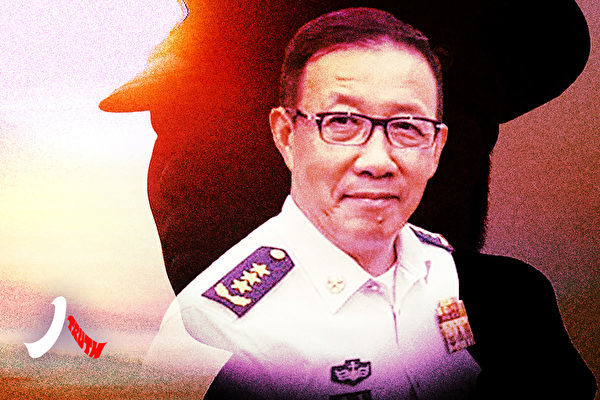
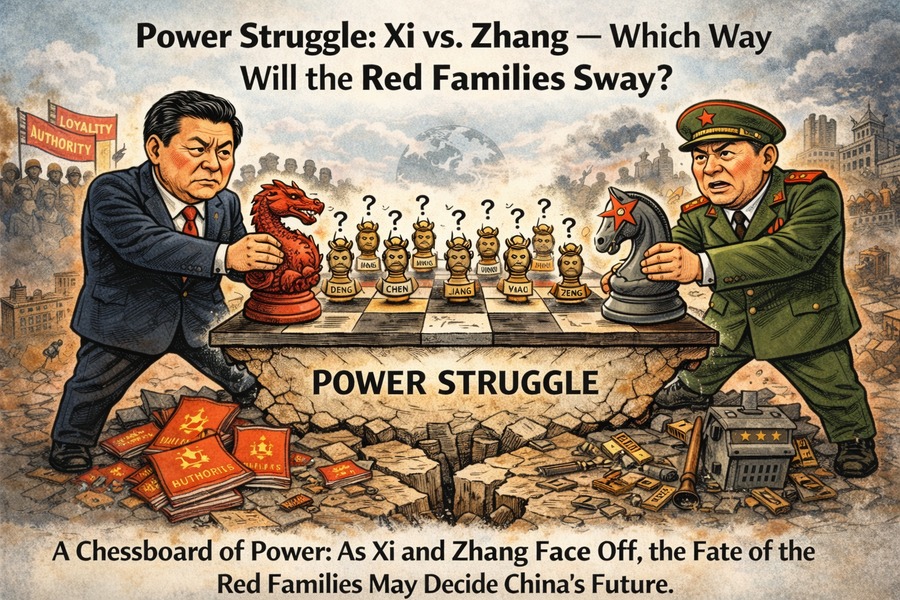
[People News] The downfall of Zhang Youxia was like a sledgehammer striking the very top of the power pyramid, shattering the outside world’s last illusions about absolute loyalty and monolithic unity. Unlike many previous routine anti-corruption campaigns, this marks the boiling point of the struggle over military power: if even a childhood family friend, a representative “red princeling,” and a core figure within the military can instantly become a prisoner, then it signals the official arrival of a new era in which no one is safe.
From a domestic perspective, the shock of this purge goes far beyond what people see on the surface. Clear fractures have appeared in the military command chain — from the Rocket Force to the Equipment Development Department, and now reaching the Vice Chairman of the Central Military Commission. Continuous upheaval at the top has made it difficult for the PLA to maintain efficient operations in the short term. The unusually heavy wording in the PLA Daily editorial — “seriously trampling and undermining the CMC Chairman responsibility system” and “causing enormous damage to the military’s political ecology and combat effectiveness” — is unprecedented. This is not a routine corruption label, but a direct accusation of political problems. Within the system, officials remaining silent out of fear has become the norm. In the past, they could still shout slogans to show loyalty; now, even saying one extra sentence risks misinterpretation. Privately, everyone will focus on self-preservation. When facing decisions, no one will dare to make firm conclusions; matters must be passed up layer by layer, with responsibility pushed around. Execution capacity is rapidly collapsing.
Even more fatal is the accelerating loss of public support. This incident is like the final straw that breaks the camel’s back, pushing many people from a state of reluctant endurance into a clear-eyed refusal to believe or continue sacrificing for the system. Among the public, the “lead the way” sentiment — welcoming outside intervention — is surging as never before. Many say bluntly: “If even die-hard figures like Zhang Youxia can be arrested at any moment, who would still be willing to risk their life for a system like this?”
Military recruitment will only grow more difficult, the appeal of civil service jobs continues to decline, and among the younger generation, the mindsets of “running away” and “lying flat” are becoming further entrenched. Loyalty is no longer a protective talisman but a high-risk variable. Fear has replaced trust as the last pillar holding the system together.
This kind of internally consumptive disintegration is more destructive than any external pressure. On the surface it appears highly unified, but in reality it is centrifugal and fragmented, with everyone acting for themselves.
The international community, meanwhile, is shifting from awe at China’s rise to a view that is more wary but less fearful. Western mainstream media uniformly interpret that China’s “no-forbidden-zones anti-corruption” campaign has reached the very top, and regime stability is far lower than previously expected. The PLA’s combat readiness is seen as seriously downgraded, its command system in a period of confusion — who would still bet on its ability to organize high-intensity operations in the short term? Questions over nuclear security, whether allegations of leaked core materials are true or not, have further magnified panic and cast doubt on the credibility of nuclear deterrence.
The United States and its allies view this as a strategic window: the time has come to increase arms sales to Taiwan and strengthen Indo-Pacific deployments. Taiwan breathes a sigh of relief; Japan, South Korea, and Australia accelerate de-risking; Russia privately worries about disruptions in the supply chain supporting it. The overall impression is of a major power that looks more dangerous and unstable, yet also weaker and more internally consumed.
The Zhang Youxia incident marks a moment when supreme power appears more concentrated than ever on the surface, yet in reality has entered an extremely fragile period of dead silence. The purge has eliminated potential checks and balances but also hollowed out the vitality of the military and bureaucratic system. Fear can sustain things for a time, but cohesion is rapidly evaporating. From 2026 to 2028, absent a major shift, this kind of internally driven self-disintegration may become the most lethal risk.
History has proven countless times: when loyalty is reduced to performance, trust collapses completely, and any fortress that appears impregnable may crumble in silence.
(Excerpted from the X platform) △





News magazine bootstrap themes!
I like this themes, fast loading and look profesional
Thank you Carlos!
You're welcome!
Please support me with give positive rating!
Yes Sure!