
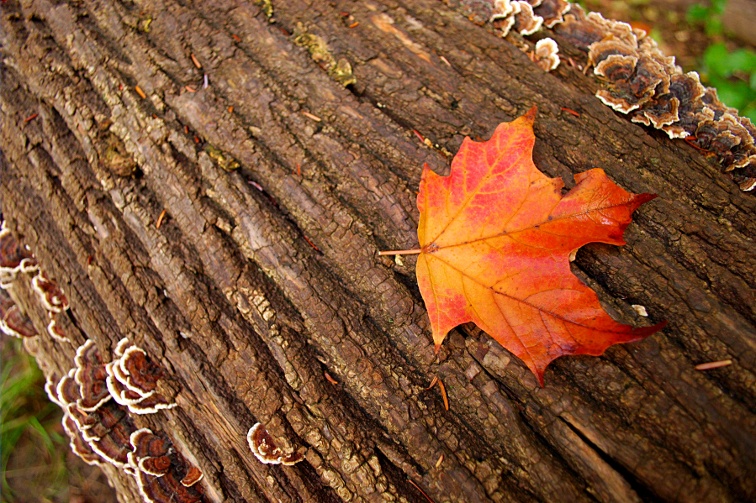
(Ian Muttoo from Mississauga, Canada, CC BY-SA 2.0 , via Wikimedia Commons)
For the past month, my daughter has started driving herself to school. As a new driver, she is understandably nervous. Today, when she got out of the car, she forgot her phone in the holder. I drove back to the school to bring it to her. As I arrived, the school broadcast began playing O Canada. For a moment, I felt as though I had been carried back more than twenty years, to my second day in Canada.
After the father of my children passed away, I often told my daughters, “Our family is in a different situation. You need to learn to stand on your own feet as early as you can.”
They understood. They helped with household chores, worked hard at school, and quietly learned to take care of themselves—like young trees finding their own direction in the wind.
My older daughter is sixteen this year. As soon as she turned sixteen, I arranged for her to take her G1 test. With a G1 licence, she could drive under my supervision. But for safety, I still had her complete Ontario’s required driver-education course during the summer holiday. It not only gave her more knowledge, but also allowed her to become eligible to take the G2 road test four months earlier and eventually drive on her own. I also arranged ten hours of lessons with a professional driving instructor.
It was only after school started, when she needed to bring her cello to school, that I began accompanying her on the drive.
The cello sat quietly in the back seat, like a silent passenger. Although she had travelled that route countless times as a passenger, behind the wheel it suddenly felt like an unfamiliar road. Slowly, she had to turn it into her own.
Every time we arrived at school, she looked relieved—so relieved that today she left her phone behind in the car.
I had already driven some distance before I noticed it. I had no choice but to turn around.
When I returned to the school, I handed her the phone. It felt as though I were placing a small piece of reassurance back into her hands. Then I hurried toward the exit.
That was when the announcement came over the speakers: O Canada was about to begin.
The children who had been sitting on the hallway floor began standing up, one after another, like a quiet field of wheat stirred by the wind.
I quickened my steps, because I knew that when the national anthem begins, everything should come to a stop.
But I was still ten metres from the entrance when the opening notes had already begun. So I stopped.
I stood at attention, facing forward. Suddenly, those ten metres seemed very long—long enough to carry me across more than twenty years of time.
I returned to my first morning in Canada. I was standing in a classroom among students half my age, singing a song I did not yet know.
It was my first time hearing O Canada, but somehow, I understood its words. For the first time, I felt that I was standing in the morning light of a country that was still foreign to me, listening to the words: “God keep our land glorious and free.”
My tears nearly fell onto the classroom floor, because I knew that here, I could live a safe and dignified life.
Only later did I learn that Canadian elementary and secondary schools traditionally begin the day with the national anthem, either played or sung, and that it is also often part of major public ceremonies.
That kind of love for a country is not loud. It is not something people constantly talk about or wear as a slogan. Instead, it is absorbed day after day.
Like snowflakes settling on your shoulders and quietly melting into the fibres of your clothes. Like maple leaves naturally turning the landscape red in autumn, until a passerby suddenly looks up and discovers a breathtaking beauty that has made no sound at all. What we hear every day as children can eventually become a quiet and natural sense of belonging.
Only after the anthem ended did I continue walking out of the school.
At that moment, I suddenly thought that what my daughter had left behind in the car was not merely a phone. It was also a small moment of hesitation left behind by a child who is learning to become independent.
And I, a mother who has lived in Canada for more than twenty years, am still learning too. I am learning how to love one place without hating another. I am learning how to cherish my own homeland while respecting other people’s love for theirs.
Canadians hope for—and should work to protect—a country that is free, peaceful, and secure. Choosing not to fight with anyone is one choice. But when the place we call home is threatened, the willingness to stand up and protect it is also a deeply natural human emotion.
My daughter is learning to drive. And she is learning how to grow up. Along the roads where I accompany her, I am still learning how to be an immigrant mother—still learning to understand the country that welcomed us, and the country that we have come to call home.
https://www.ganjingworld.com/s/GxogGn9Ww
Cindy’s Singing “O Canada”







News magazine bootstrap themes!
I like this themes, fast loading and look profesional
Thank you Carlos!
You're welcome!
Please support me with give positive rating!
Yes Sure!