
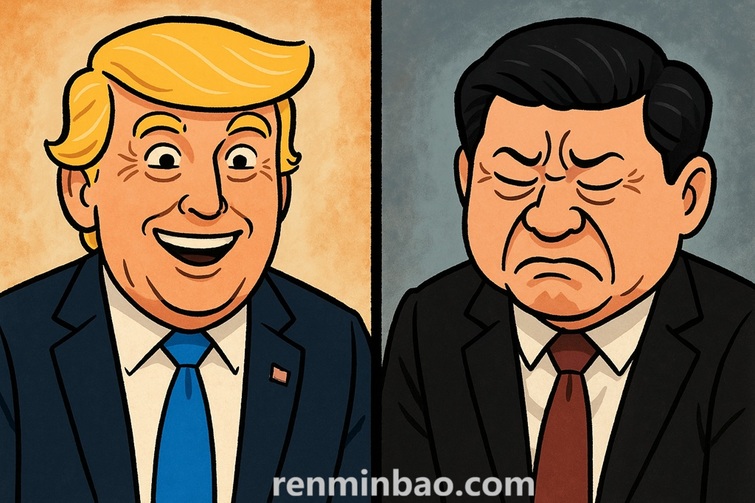
Thinking about taking action against Taiwan? Trump: You are free to think about it, but what are you actually going to do? (People News/AI-generated image)
[People News] After wrapping up his visit to the United States today (25th), Chinese President Xi Jinping received a message from U.S. President Trump on 'Truth Social', indicating that the meeting was characterized by friendship and achievements for both China and the U.S.
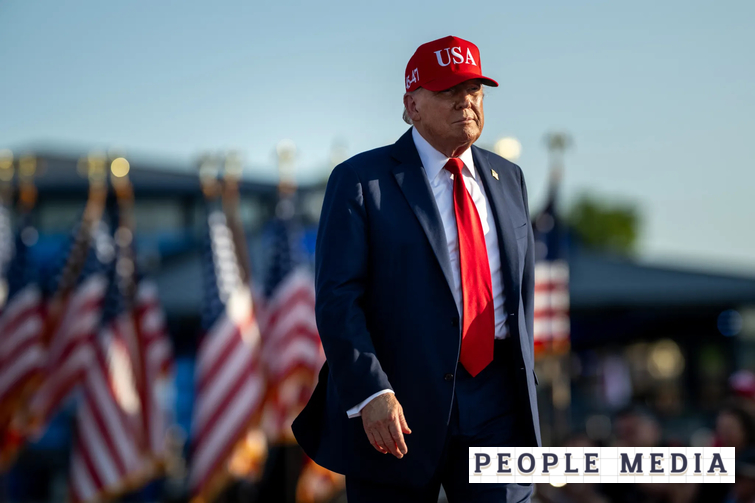
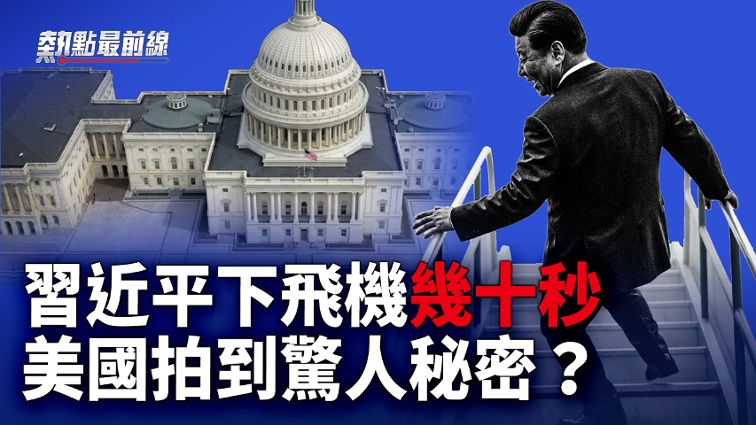
On the morning of the 25th, the Trump couple hosted a tea gathering with Xi Jinping and his wife at the White House, followed by a visit to the National Archives, marking the final stop of Xi Jinping's U.S. itinerary.
Once Xi Jinping departed from Washington, Trump promptly posted on his social media platform 'Truth Social', announcing that the Xi couple had begun their journey back to China. He remarked, 'This meeting was filled with friendship, strength, and achievements, and it is so for both China and the United States.'
Trump further stated, 'We will meet again in November in China, and then in December at the G20 summit in Miami, Florida. Many things have been accomplished, and many more will be achieved. I look forward to our next meeting!'
Trump was referring to the APEC summit scheduled to take place in Shenzhen, China, in November.
In light of Xi Jinping's visit, major Western media outlets have provided various analyses and interpretations. Let's take a look at the report from The Dajiyuan.
The Guardian: Diplomacy or Diplomatic Performance?
The British newspaper "Guardian" published an analysis by Mark Saunokonoko on September 25, highlighting that Xi Jinping's visit to the United States carries significant symbolic weight. However, the closed-door discussions did not achieve breakthroughs on contentious topics such as artificial intelligence, trade, Taiwan, and Iran.
Following the meeting on Thursday, Trump took Xi Jinping to see the newly built helicopter landing pad on the South Lawn of the White House. "He (Xi Jinping) likes good granite," Trump told reporters, adding that their meeting was "fantastic," though he did not provide specific details.
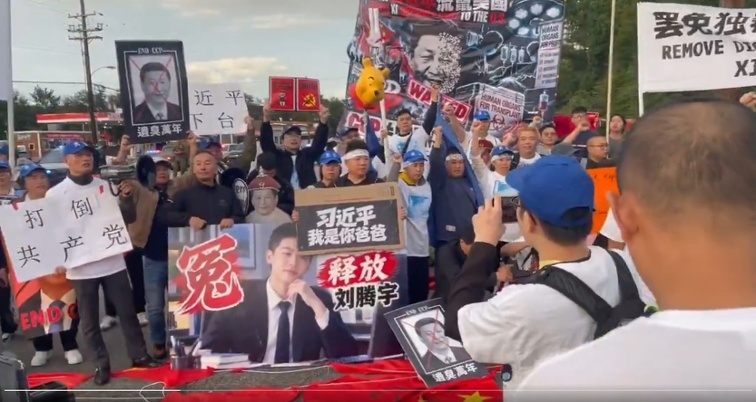
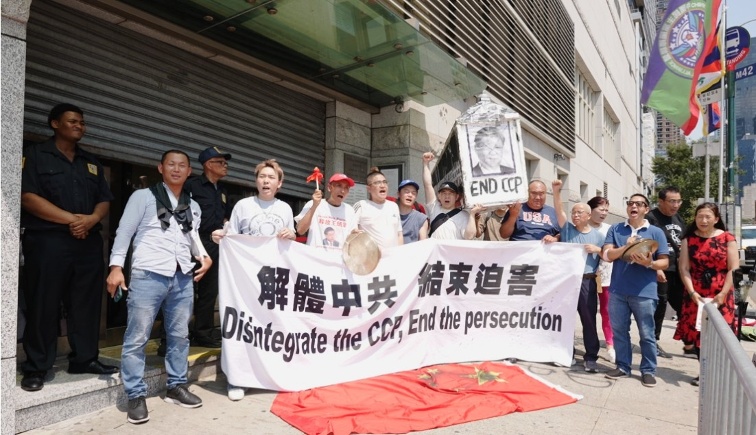
Reports indicate that outside the White House gates, a group of protesters shouted slogans like "CCP get out of Hong Kong," and these chants were clearly audible as the leaders posed for photos on the red-carpeted steps of the White House.
Reuters: Surface De-escalation, Strategic Competition Persists
A report from Reuters on September 24 noted that the two countries agreed to extend the trade war suspension agreement until January 10. However, this extension does not appear to have led to a lasting agreement, instead deferring key issues such as tariffs, China's procurement, rare earth supply, and technology restrictions to the next round of negotiations.
U.S. Treasury Secretary Scott Bessent stated on September 23 that Beijing has met its obligation to purchase 25 million tons of soybeans as outlined in the previous agreement, but has fallen behind in acquiring other agricultural products worth $17 billion. U.S. officials also noted that rare earth deliveries did not meet targets, further indicating that significant gaps remain between the two sides.
BBC: Xi's Visit to the U.S. is Impressive, but Progress on Urgent Issues is Minimal
An analysis article by Anthony Zurcher published by the BBC on September 24 highlights that, so far, Xi Jinping's visit to Washington has been quite grand, yet there has been little significant progress on pressing issues.
The military band performance and flyover of military aircraft on Thursday may serve a larger purpose, particularly for Trump. Jennifer Welch, Chief Geoeconomic Analyst at Bloomberg Economics, stated to the BBC: 'These somewhat deliberately orchestrated grand displays are intended to foster a positive atmosphere for the summit.'
The one-year trade 'truce' between China and the United States will be extended for an additional two months. Financial analysts anticipate that, since neither side wishes to see a repeat of last year's trade war, this arrangement may be further prolonged before the summit concludes this week.
Regarding other topics, such as the conflict between the United States and Iran, the war in Ukraine, and regulations on artificial intelligence, the prospects for progress appear much bleaker.
The Chinese Communist Party has yet to fulfill its commitments to increase purchases of American agricultural products and to sell more rare earth minerals to the United States, which further complicates the outlook.
Meanwhile, the Chinese Communist Party is closely monitoring whether Trump will proceed with a proposed arms sale to Taiwan. This plan to sell American weapons to Taiwan has been on hold for several months.
Professor Robyn Klingler-Vidra from King's College London told the BBC that the United States and China have markedly different objectives when it comes to any agreements related to the technological competition in artificial intelligence. She remarked, 'The U.S. is focused on survival risks and whether it might be necessary to slow down the development of artificial intelligence.'
'In contrast, China is focused on accelerating development, possibly aiming to win the technological race in artificial intelligence, and applying AI to the real economy.'
Beyond demonstrating strength, a more elaborate diplomatic display and a commitment to maintaining stability may ultimately be the key outcomes of Xi Jinping's visit this time.
CSIS: This visit is solely about maintaining stability
The Center for Strategic and International Studies (CSIS) has analyzed that while this visit may carry significant symbolic weight and serve as a diplomatic showcase, actual policy advancements may be limited.
The analysis suggests that both parties wish to sustain a relationship characterized by 'strategic stability,' yet deep-seated mutual distrust and competition persist.
A crucial message from Xi Jinping's visit to the U.S. is that both nations are keen to avoid a breakdown in their relationship, but this does not imply that the strategic competition between them has concluded. From trade to high technology, and from Taiwan to global geopolitics, a range of structural differences still exists between China and the U.S.
Consequently, one common observation among Western media regarding this summit is the coexistence of 'stable relations' and 'strategic competition.' △




News magazine bootstrap themes!
I like this themes, fast loading and look profesional
Thank you Carlos!
You're welcome!
Please support me with give positive rating!
Yes Sure!