

Heilongjiang Women's Prison is notorious for its persecution of Falun Gong practitioners, with at least 56 individuals reported to have died due to such persecution to date (Minghui.org).
[People News] Lü Yinghua from Jiamusi City, Heilongjiang Province began practising Falun Gong in 2001 while in detention. In 2002, she was transferred to Heilongjiang Women's Prison, where she faced severe torture for refusing to abandon her practice. Reports from Minghui.org indicate that she was persecuted to death in June 2026.
Dajiyuan journalist Li Jiesi reported that Lü Yinghua had previously been sentenced to death with a two-year reprieve for murder. While detained at Tangyuan Detention Center in January 2001, she encountered Falun Gong practitioners and began to practice the teachings, genuinely striving to be a good person. However, her unwavering commitment to the principles of 'Truthfulness, Compassion, Forbearance' led to over twenty years of torture, culminating in her death from persecution in May 2026 at Heilongjiang Women's Prison. Lü Yinghua was not the only inmate in this facility to experience such a tragic fate.
Her refusal to undergo 'transformation' resulted in torture.
Minghui.org reported that since Lü Yinghua began practicing Falun Dafa during her imprisonment, it was well-known that she had gained significant benefits from the practice. Following the Chinese Communist Party's crackdown, she remained steadfast in her belief in 'Truthfulness, Compassion, Forbearance,' making her a primary target for persecution within the prison. Between 2001 and 2013, she was placed in solitary confinement, referred to as the 'small cell,' 18 times. The repeated detentions and abuse inflicted severe harm on her body.
She recounted that in early 2003, after refusing to work, she was prohibited from wearing cotton pants and was handcuffed, forced to sit on the ground for a month, which left her waist frozen and unable to stand straight. Subsequently, she was subjected to reverse handcuffing, causing her body to convulse, and the handcuffs cut off the tendons in her wrists, resulting in swollen hands for three months.
In 2004, after being sentenced to life imprisonment, she was denied any reduction in her sentence due to her practice of Falun Gong until her death.
In 2006, she was confined in a dark room, not allowed to leave for twenty-four hours a day, and this confinement lasted for six years.
In 2013, prison guard Qu Jialiang violently slapped Lu Yinghua and kicked her with military-style leather shoes, which led to a sudden heart attack. She was rushed to the hospital for emergency treatment and required several hours of oxygen to stabilize her condition.
Before 1999: Serious offenders began practicing in prison
Lü Yinghua is not the only inmate in this prison to have faced a similar situation. Notably, prior to 1999, a group of inmates began practicing Falun Gong, which led to significant improvements in their physical and mental health. However, once the persecution commenced, they became targets for forced 'transformation' within the prison.
Reports indicate that in 1996, some police officers at Heilongjiang Women's Prison started practicing Falun Gong and encouraged inmates who were in poor health and difficult to manage to take up the practice.
Falun Gong is a Buddhist cultivation practice introduced in China by Mr. Li Hongzhi in 1992. He teaches individuals to cultivate themselves according to the principles of 'Truth, Compassion, and Forbearance' and provides instruction on five sets of exercises. At that time, mainland media extensively reported on the true stories of individuals who experienced health improvements and moral enhancement after practicing Falun Gong.
According to a report by Minghui.org, over eighty inmates at Heilongjiang Women's Prison had been exposed to Falun Gong at that time. Among them, some were sentenced to death with a two-year reprieve for murder, some had previously abused others in prison, and others were suffering from serious illnesses and felt pessimistic and desperate. Reports indicate that after they began practicing, their temperaments, behaviors, and even physical conditions changed.
Liu Lingling, a resident of Daqing, brutally murdered her husband and showed little reflection on her actions after being incarcerated. As reported by Minghui.org, after she began practicing Falun Gong, Liu Lingling experienced a significant transformation, starting to treat others with kindness, which astonished her fellow inmates.
Gao Guobo killed her husband with a hammer and was sentenced to death with a two-year reprieve after turning herself in. Following her practice of Falun Gong, she quit smoking and drinking and stopped physically and verbally abusing others. Police even commented, 'Gao Guobo has become like a sheep.' At that moment, Gao Guobo reflected: if only I had practiced Falun Gong earlier, I would never have committed murder or harmed myself or others.
After the onset of the persecution, the so-called 'transformation' became a policy in prisons.
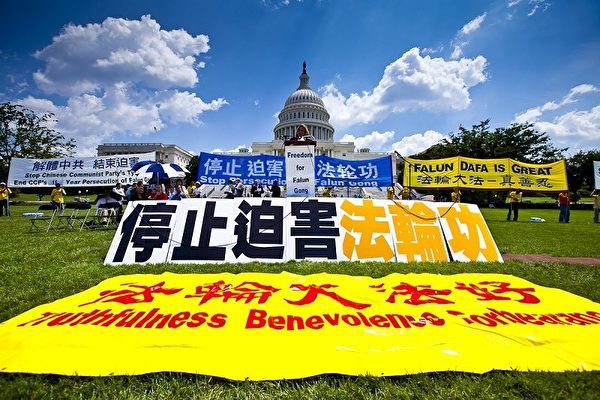
In July 1999, following the Chinese Communist Party's initiation of the persecution against Falun Gong, prisons and other detention facilities began enforcing a so-called 'transformation' policy, which coerced practitioners into renouncing their beliefs and practices. According to Minghui.org, Heilongjiang Women's Prison subsequently employed various methods to pressure inmates into abandoning their practice.
Zhang Yanfang, residing in the Daxing'anling area of Heilongjiang Province, was sentenced to death with a two-year reprieve for a criminal offense in 1993. She began her practice in prison in 1995. As reported by Minghui.org, she was placed in solitary confinement approximately 16 times for refusing to abandon her practice, accumulating nearly four years in isolation.
In September 2003, she was stripped of her pants and brutally beaten over a hundred times with a wooden stick and a plastic pipe. Salt water was then applied to her injured body, causing her immense pain. On November 2, 2010, she succumbed to the persecution after being imprisoned for 16 years, at the age of 54.
Liu Lingling (Liu Lingling) faced severe violence from prison guards for refusing to abandon her practice. They struck her repeatedly on the head and face with the lid of a large red plastic bucket until it broke. In the spring of 2017, Liu Lingling died under tragic circumstances.
According to reports from Minghui.org, a prison guard named Liu once remarked, "I would prefer the old Liu Lingling who would hit and curse rather than the current Liu Lingling who tries to be a good person according to 'Truthfulness, Compassion, Forbearance'!"
Why does the Chinese Communist Party (CCP) insist on transforming inmates who have already become good people? Canadian international human rights lawyer David Matas believes that the CCP perceives Falun Gong as an ideological threat to its existence; Falun Gong is spiritual in nature and does not fit within the communist framework.
A 2017 report from Freedom House noted that the CCP typically cannot tolerate any group that places spiritual authority above loyalty to the Party. The report indicated that the CCP began to worry that some Falun Gong practitioners within the Party, government, and military might prioritize their loyalty to Falun Gong teachings over their allegiance to the CCP leadership.△







News magazine bootstrap themes!
I like this themes, fast loading and look profesional
Thank you Carlos!
You're welcome!
Please support me with give positive rating!
Yes Sure!