
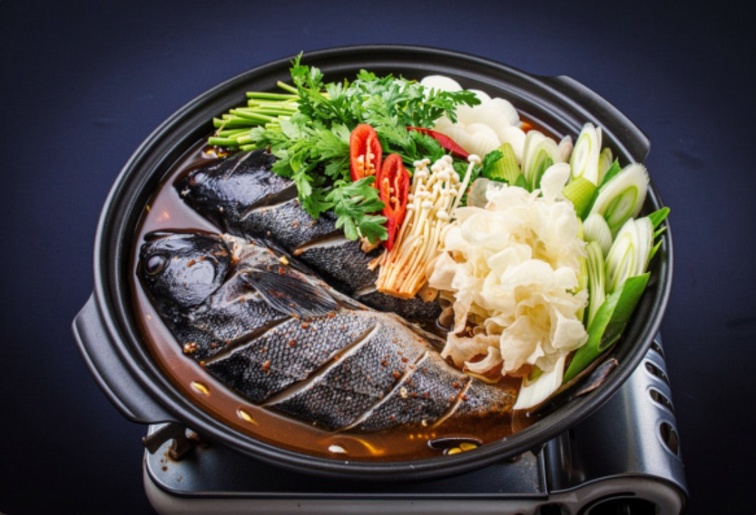
Illegal fishing bait containing the second-class psychotropic drug 'Diazepam' has emerged in various provinces and cities across China, leading to the formation of a black industrial chain. (AI illustration)
[People News] Food safety issues have resurfaced! China's food safety and drug regulation authorities have once again issued a red alert. On June 12, Chinese media published a shocking exclusive investigation that uncovered a cross-provincial black industrial chain illegally adding the strictly controlled second-class psychotropic drug 'Diazepam' (commonly referred to as 'An Ding' or sleeping pills) to fishing bait. Chinese netizens have labelled the incident as 'poisoning' and have raised concerns about what food produced in China is 'not drugged'?
The black industrial chain is producing ten tons of drugged fish bait daily
Between April and June of this year, the 'Shadow Investigation Team' from The Paper conducted undercover investigations and tracing in Sichuan, Zhejiang, Anhui, and other regions. The investigation was prompted by the recent surge of abnormal fishing bait products on several mainstream e-commerce platforms, which claimed to be 'highly effective bait' and 'connected rod formula.' Some product packaging even openly displayed 'Diazepam' or the abbreviation 'DXP,' with sales reaching tens of thousands of units.
The investigation team conducted a probe on platforms like Douyin Mall, Taobao, JD.com, and Pinduoduo, uncovering that the stores selling such illegal bait have significant backgrounds. Among the five core stores on Douyin that sold 'Old Technology Stream Alternative Old Formula Restructured Bait' and achieved substantial sales, three (Xidiaozhijia, Liangan Yuer, Wanbao Xiliu) are registered under 'Sichuan Yuquantianxia Fishing Gear Co., Ltd.', and remarkably, the legal representative for all five stores is a man named 'Zhao Kunlong'. Data from Tianyan's investigation indicates that the main operator of this illicit network is indeed Zhao Kunlong, along with another associate, Wu Ling.
Even more astonishing is that the sellers of this product on other e-commerce platforms include completely unrelated businesses such as pet food, home appliances, and tyres, many of which lack any qualifications to operate fishing gear and are even unlicensed individual sellers. The investigation team purchased six samples from these stores, all with identical packaging and no quality certification, and sent them to a professional testing institution. The results revealed that all samples tested positive for benzodiazepine drugs, confirming that they contain 'Diazepam' components 100% of the time.
According to incomplete statistics from factory shipping information, an upstream factory that claims a "daily output of ten tons" and a midstream supplier with profit margins exceeding 50% is part of a black industrial chain. This chain has infiltrated at least 14 offline fishing tackle stores across the provinces of Zhejiang, Anhui, and Sichuan. Zhejiang Province is particularly affected, with 11 stores located in Hangzhou, Jinhua, Yiwu, Wenzhou, Taizhou, and Lishui. Media conducted random undercover visits to five fishing tackle stores in Hangzhou and Jinhua, where store owners openly acknowledged their awareness of the "medicated fish bait" and praised its remarkable ability to "make fish bite crazily." Some even admitted that they produced the products themselves.
Following the revelation of the "medicated fish" incident, a significant public outcry regarding various toxic food phenomena erupted on the Chinese internet. Online reactions were a mix of shock, disgust, anger, and a profound sense of helplessness regarding regulatory failures. The public discourse primarily focused on five major points:
1. Resurgence of food safety panic: Toxic fish are being served
Many netizens expressed strong disgust, and pessimistic sentiments began to spread. Comments included: "People take sleeping pills, and now even fish are taking sleeping pills," and "In the past, we were cautious about 'technology and ruthless practices' in food, but now when we go out to buy a live fish, we might end up with 'medicated fish.'" This scandal immediately brought to mind past food safety crises, such as lean meat powder, gutter oil, and malachite green, leading to lamentations about the complete breakdown of safety on the common people's dining tables.
2. Where are the nationally regulated psychotropic drugs coming from?
This situation has become a major source of confusion and anger for bloggers in the finance and medical fields. Diazepam, categorised as a 'Class II psychotropic drug' by the government, is subject to stringent regulations concerning its production, prescription, and distribution. Internet users have been vocally criticising the situation, asking questions like, 'Who is supplying such a massive quantity of tranquilliser raw materials that can reach a daily production of ten tons?' and 'What is the drug regulatory department doing every day? Is the regulatory system completely paralysed?' Medical experts warn that the most alarming aspect of this incident is not the bait itself, but the significant systemic loopholes in the national drug supply chain regulation.
3. Social Qualitative Assessment: This is 'disguised poisoning'
Medical experts have pointed out that diazepam has a long retention time in fish and that its use in food animals is explicitly prohibited by law. As a result, public opinion generally characterises this black market operation as a serious crime. In trending discussions on Weibo, highly upvoted comments highlight concerns such as: 'This is not fishing at all; this is cross-province drugging,' 'The fish are anaesthetised, and the regulators cannot be numb to this,' and 'The fishermen are enjoying themselves, but ultimately, it is society as a whole that suffers from consuming the fish. If humans accumulate poisoning over time, who will take responsibility?'
4. Outrage in the Fishing Community: Cleansing the Bad Apples
The incident has sparked a strong backlash from the community of fishing enthusiasts. Many legitimate anglers have stepped forward to distance themselves from the black market operation, expressing their outrage: 'Real anglers who value technique would never resort to such despicable means,' and 'Using sleeping pills to gather fish is cheating and completely undermines the joy of fishing.' There is a strong call within the fishing community for authorities to conduct thorough investigations and ensure that a few lawbreakers do not tarnish the reputation of the entire group.
5. Typical Collective Helplessness: 'Living is Like Opening a Blind Box'
Once the initial anger faded, the comment section became a hub for a typical brand of Chinese black humour and mental fatigue. Many netizens humorously commented: 'At first, it was shocking, but upon reflection, it seems quite logical for such incidents to occur in our country,' 'Chinese people's stomachs are incredibly resilient, honed over years of exposure to toxins,' 'Living in the country now feels like opening a blind box every day; you never know what chemical element you might ingest next.'
Regulatory Failure: Market and Life Cannot Coexist with 'Anaesthesia'
Legal experts and financial commentators have highlighted that this case reveals a serious dereliction of duty in the review mechanisms of online e-commerce platforms. Offenders can openly sell tens of thousands of items on major platforms like Douyin and Taobao using homophones and abbreviations such as 'Dizipang' and 'DXP,' while the platforms remain completely oblivious to the issue of non-fishing gear merchants selling 'three-no fish bait,' rendering the regulations effectively meaningless.
The public is not only shocked that the fish on their dining tables were sedated, but also astonished that under a comprehensive high-pressure regulatory system, controlled psychiatric medications that should be securely locked in hospital pharmacies can be so easily smuggled, industrially mass-produced, and circulated across provinces.
The Crisis on the Tip of the Tongue: The Dual Roots of Food Safety Issues
In recent years, incidents such as 'gutter oil', 'toxic milk powder', and 'mixed industrial oil', along with the seemingly endless campus 'mouse head duck neck' events and the previously mentioned 'stabilised fish', have highlighted the pervasive and elusive nature of food safety issues in China. This nationwide 'food safety crisis' not only poses a threat to public health but also reveals deep-rooted social and systemic challenges. The unbreakable roots of this crisis are primarily intertwined with two core factors: moral decay and the dictatorial regime.
Moral decline and the profit-driven obsession with materialism
Driven by an excessive pursuit of economic gain, the mantra 'looking to money' has become the sole principle for some businesses. When traditional values such as 'benevolence in medicine and trust in business' are abandoned, ethical boundaries vanish. In their quest to cut costs and maximise profits, some practitioners disregard the safety of others, incorporating toxic and harmful substances into oils, salts, sauces, and staple foods. This mutually harmful social mentality—'I don’t consume what I produce, so I can poison others without hesitation'—reflects a chilling indifference and a complete breakdown of social trust.
Furthermore, more fundamental issues arise from the regulatory failures and institutional leniency fostered by the dictatorial regime of the Chinese Communist Party.
Lack of independent oversight and freedom of public opinion
In a totalitarian system, the media is tightly controlled, and grassroots investigative journalists and rights advocates often face repression. When the voices that seek to expose the truth are silenced, society loses its most effective means of public opinion oversight. The absence of press freedom and judicial independence allows unscrupulous businesses and local officials to easily form a collusive community of interests, enabling corruption between officials and enterprises.
Special supply system and power separation
The long-standing "special supply" system within the government has enabled high-ranking officials with decision-making authority to access exclusive and secure food supply channels. When those responsible for policy-making and law enforcement do not have to confront the "food safety risks" faced by ordinary citizens, the system inherently lacks the urgent motivation to thoroughly investigate and resolve these issues.
The governance logic of prioritising stability over the well-being of the populace
For local governments, the promotion of officials is determined by economic indicators and "social stability," rather than the happiness of the people. In response to food safety scandals, officials often choose to "address the individuals raising the issues" to protect their image, rather than "tackling the problems themselves," leading to inadequate penalties and extremely low costs for violations.
On the surface, China's food safety issues appear to be a test of merchants' conscience, but fundamentally, they represent a chronic ailment of the system. Food safety is a matter of the most basic right to survival for everyone. When a society cannot even ensure "safe eating" as a basic expectation, it indeed reflects a dual dilemma of morality and systemic failure.
(First published by People News)
△






News magazine bootstrap themes!
I like this themes, fast loading and look profesional
Thank you Carlos!
You're welcome!
Please support me with give positive rating!
Yes Sure!