
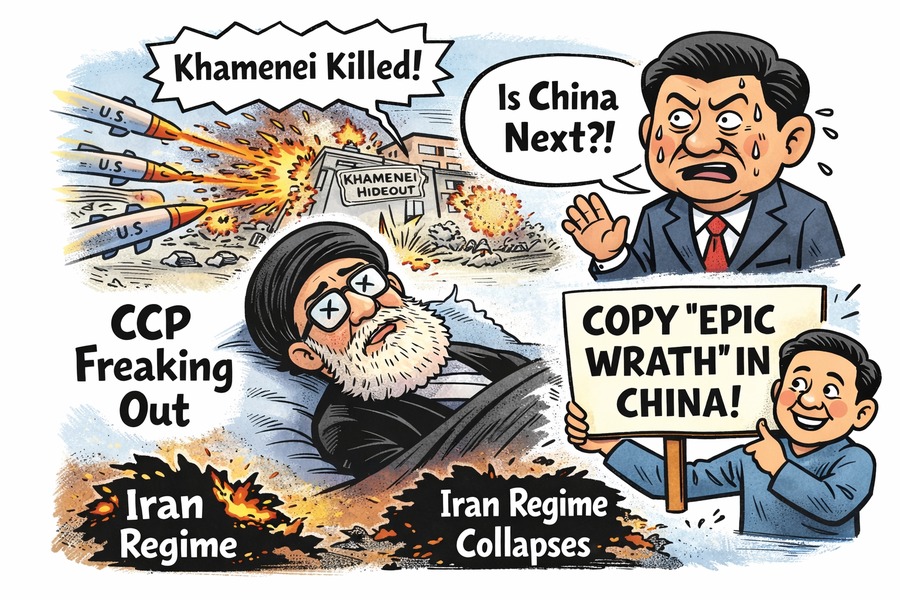
Khamenei Killed, CCP Alarmed; Chinese Call on U.S. to “Replicate” the Operation
[People News] On February 28, a U.S.–Israeli joint force launched a military operation against Iran, code-named “Epic Wrath,” directly targeting and eliminating the top leadership of the current regime in an effort to bring about regime change. Iran retaliated the same day by firing missiles at Israel and U.S. forces. However, as of the afternoon of March 1 (local time), the U.S. stated that there were no American casualties; damage to U.S. facilities was minor and did not affect operations; and no U.S. naval vessels were attacked.
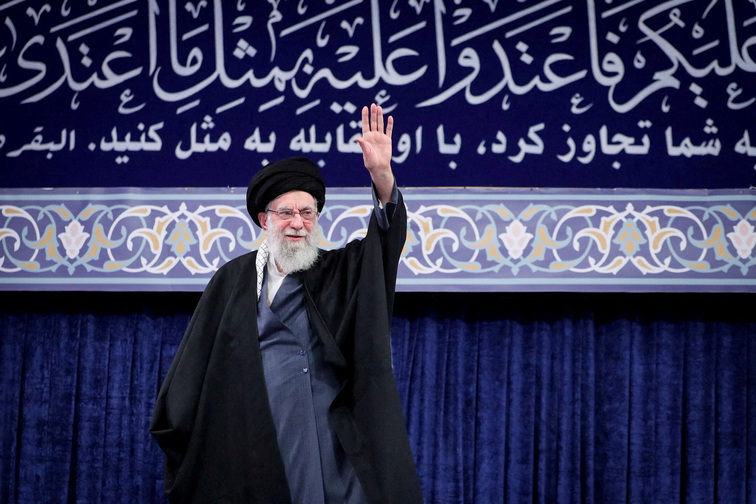
In contrast, U.S. forces reportedly carried out 900 airstrikes on Iran within 12 hours. Supreme Leader Ayatollah Ali Khamenei’s residence was said to have been hit by 30 bombs. Khamenei and 40 others were killed. At the time of his death, Khamenei was reportedly meeting with senior Iranian military and political officials at a secret location. U.S. President Donald Trump announced that after intelligence agencies locked onto Khamenei’s whereabouts, he was eliminated.
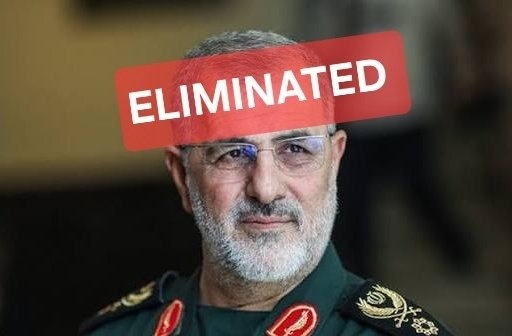
Those reportedly killed in the strikes included Khamenei’s daughter, son-in-law, and granddaughter; former National Security Council Secretary Ali Shamkhani; Islamic Revolutionary Guard Corps Commander Mohammad Pakpour; Iranian Defense Minister Aziz Nasirzadeh; Saleh Asadi, head of intelligence at the Armed Forces Emergency Command Headquarters; and Hossein Jabal Amelian, head of the Organization of Defensive Innovation and Research (SPND), among others. Reports also claimed that Mojtaba Khamenei, the supreme leader’s second son and a potential successor, was killed in the airstrike, though Iranian authorities have not confirmed his death.
Observers believe that regime change in Iran has now become inevitable.
Iran Falls; CCP Trembles
On the evening of the operation, President Trump told CBS in a phone interview that he already had someone in mind to lead Iran. “I know who it is,” he said, “but I can’t tell you.” He added, “I think there are some good candidates.”
Trump called on the Iranian people to take over their government. “Your moment of freedom is coming,” he said. “After we finish our action, you take over your government. This may be the only opportunity in generations.”
Numerous videos circulated online showing large crowds of Iranians celebrating in the streets.
The Chinese Communist Party (CCP) appeared visibly shaken.
In the early hours of March 1 (02:45:43), China’s state-run Xinhua News Agency cited Iran’s Tasnim News Agency in reporting that Khamenei had entered a command center to direct combat operations, just as he had during last year’s “Twelve-Day War” with Israel. Xinhua also claimed Khamenei would deliver a speech “within minutes.”
China News Service similarly reported that Khamenei was safe and sound. However, Khamenei did not appear publicly. When Iranian authorities later confirmed his death, the CCP’s earlier reports were proven false.
So who has been destabilizing the Middle East?
It is widely known that Iran has supported organizations designated as terrorist groups by some Western countries, including Hezbollah in Lebanon, Hamas, Palestinian Islamic Jihad, Shiite militias in Iraq, and the Houthis. These groups have, in various ways, received backing linked to the CCP. How much Beijing encouraged Iran to support such organizations in creating instability in the Middle East and beyond remains known only to the CCP and Iran.
Moreover, China’s provision of nuclear-related materials and technology to Iran, as well as drone development assistance, is no longer a secret. Iranian-made drones, reportedly developed with Chinese support, have been purchased in large quantities by Russia for use in the war in Ukraine. The depth of China’s involvement in Iran’s military infrastructure, joint exercises, missile cooperation, and potential defense support is known only to the two governments.
However, critics note that China’s overseas assistance projects are often plagued by poor quality. During a previous U.S. operation to capture Venezuela’s president and his wife, Chinese-supplied air defense systems reportedly failed. Similarly, Iran’s Negah air defense command system reportedly incorporated China’s JY-10 air defense command and control technology—yet U.S. and Israeli aircraft and drones operated largely unimpeded.
CCP and Iran: Similar Systems, Greater Evil?
After launching the operation, Trump issued a statement describing Iran’s rulers as “extremely evil and brutal.” He accused the regime of orchestrating countless attacks on international shipping lanes through its proxies, calling it “large-scale terrorism.” He declared that Iran must never obtain nuclear weapons and criticized the regime’s repeated wavering on agreements.
Trump warned members of the Islamic Revolutionary Guard Corps, armed forces, and police: “You must lay down your weapons. We will grant you full immunity. Otherwise, you will face death.”
Some analysts argue that Trump’s words also serve as a warning to the CCP. They point to similarities between Iran’s theocratic system and the CCP’s atheist, party-state system—both combining ideology with absolute political control. They also draw parallels between Iran’s repeated reversals on nuclear negotiations and the CCP’s shifting stances, including its role in North Korea’s nuclear program. Both regimes, critics say, have been accused of suppressing their own citizens and contributing to global instability.
Some have even claimed that Iran’s fate was influenced by its alignment with Beijing—that China encouraged Tehran to confront Israel and test the United States.
They argue that the CCP’s global influence and actions are even more far-reaching than Iran’s.
Who Might Lead Iran?
Reza Pahlavi, the exiled Crown Prince of Iran, delivered a national address declaring that “the Islamic Republic is collapsing” and that “we are close to victory.”
He stated that the operation was not directed at the Iranian people but at the theocratic regime controlled by Khamenei. He urged the military and police to pledge loyalty to the nation and the people, warning that continuing to support a collapsing regime would mean “sinking with it.”
Analysts say Pahlavi’s remarks suggest he intends to play a key role in any political transition. However, there is no evidence of prior coordination with the Trump administration.
Chinese Call for “Epic Wrath” to Be Replicated
What alarms Beijing even more is that some Chinese citizens are openly calling for a similar operation to be carried out in China.
On mainland social media, users have posted: “After Maduro and Khamenei, who’s next?”
Overseas commentator Xiang Yang wrote on X that if Iran falls, the CCP could be next. He described Iran as “a bulletproof vest” for Xi Jinping, shielding China from Middle Eastern pressure and securing energy supplies. With that shield gone, he argued, Xi would face the United States without strategic buffers.
Hudson Institute China Center Director Yu Maochun (Miles Yu) recently shared an article calling on the United States to consider “regime change” in China. He argued that when authoritarian regimes threaten America’s core interests, supporting regime change can be a strategic choice, a moral responsibility, and an act of self-defense.
He warned that the CCP is conducting its own form of “regime change” against the U.S. through systematic infiltration. “If we do not try to change their regime,” he wrote, “they will change ours.”
Shockwaves for Beijing
Experts say Khamenei’s elimination has dealt a heavy blow to Beijing and may impact the anticipated Trump–Xi meeting in Beijing later this month.
The CCP once referred to Khamenei as an “old friend,” and China–Iran relations were described as a “comprehensive strategic partnership.” When Xi visited Iran in 2016, he praised the friendship as “precious” and called China a “trustworthy partner.”
Following confirmation of Khamenei’s death, Chinese state media expressed condolences and highlighted his advocacy of a “resistance economy” under sanctions. Phoenix Television described him as a “fighter against the U.S. and Israel.”
Commentator Chen Pokong said that Khamenei’s death primarily impacts the CCP, which relied on Iranian oil imports while sustaining Tehran economically. Iran was also a key node in China’s Belt and Road Initiative.
With Iran’s regime collapsing, some analysts argue that Beijing’s strategic foothold in the Middle East has been severely weakened. After developments in Venezuela and now Iran, they say, China’s global positioning faces new uncertainty.
Taiwan’s Institute for National Defense and Security Research scholar Shen Ming-shih stated that if Iran shifts toward a pro-U.S. government, China will lose a strategic base in the Middle East, undermining its ambitions as a global power. He suggested a possible domino effect: “Venezuela first, then Iran, possibly Russia next, and perhaps even China.”
Commentator Li Linyi said Iran’s situation casts a shadow over the CCP’s upcoming “Two Sessions.”
Some observers conclude that if Iran’s regime has fallen, the CCP’s future may also be at stake. △






News magazine bootstrap themes!
I like this themes, fast loading and look profesional
Thank you Carlos!
You're welcome!
Please support me with give positive rating!
Yes Sure!