

Iran Ships Gold Abroad, Regime on the Brink of Collapse; Chinese Netizens Take a Veiled Jab at the CCP: “Want to Change the Channel”
[People News] The Khamenei regime in Iran, a proxy of the Chinese Communist Party (CCP) in the Middle East, is rapidly collapsing.
In a debate in the UK House of Commons in January 2026, British Conservative MP and former Security Minister Tom Tugendhat cited British intelligence sources, stating that Russian cargo aircraft are landing in Tehran and transporting large quantities of gold out of Iran. Tugendhat said: “We have seen Russian cargo planes arriving in Tehran, clearly delivering military supplies, and we have also heard reports of large amounts of gold leaving the country.”
According to the International Monetary Fund and other official sources, as of 2021 Iran’s gold reserves were approximately between 300 and 400 tons. Due to international sanctions and the gangsterization of the Khamenei regime, the exact size of Iran’s gold reserves is not transparent. Some Western media and analysts speculate that the wealth of Khamenei and his close associates — including assets in banking, mining, oil, and other resources — may reach as much as US$90 billion, though this figure may be conservative. Khamenei’s wealth may far exceed US$90 billion through cross-linkages with state-owned enterprises, the military-industrial sector, and the Islamic Revolutionary Guard Corps.
Whether Iran’s current shipment of gold abroad is merely an underground deal exchanging gold for weapons, or a doomsday “abandon-ship” plan implemented by the current regime as a form of crisis management, remains unknown to the outside world. However, the large-scale mass protests that have continued inside Iran for two weeks and are intensifying indicate that Khamenei may be making preparations for a final escape.
According to data from the internet monitoring organization Netblocks, Iran’s internet connectivity rate plunged from 100% to 5% on January 8. During last June’s 12-day Iran–Israel war, Iran experienced a similar severe internet blackout, which Iranian authorities said was an attempt to prevent Israeli surveillance. This time, the blackout signals that Iran may be preparing to crack down on protesters.
On the day of the internet shutdown, Trump said in an interview with The Hugh Hewitt Show that if “Iran starts killing people,” they will face “very heavy blows.”
On January 9, 2026, protests in Iran entered their 13th day. According to reports by the Norwegian NGO Iran Human Rights, so far Iranian security forces have killed at least 51 protesters, including 9 under the age of 18, and hundreds more have been injured. The number of people detained in connection with the protests has exceeded 2,200.
Trump again stated on January 9 that the Iranian government is “in big trouble.” In just a few short weeks, some cities that were previously considered impossible to lose are now being taken over by the people. The United States is closely monitoring developments. If the Iranian regime begins large-scale massacres of civilians as it has in the past, the U.S. will definitely intervene — and will strike hard at their most painful points. Trump also specifically emphasized that this would not involve “ground troops,” but rather high-intensity, precise, and lethal strikes.
Some media reports say that the U.S. military has already redeployed assets including B-2 bombers and C-17 military transport aircraft to the Middle East. This may indicate that the United States is preparing for possible large-scale strikes against Iran. It is reported that the U.S. has begun using heavy transport aircraft to deliver ammunition and other military equipment to its regional bases.
Trump’s potential targets may include, but are not limited to, Iran’s nuclear facilities and missile bases; command centers, training camps, and weapons depots of the Islamic Revolutionary Guard Corps; and refineries and oil infrastructure near the Strait of Hormuz. If Trump takes action against Iran, it is likely to be a multi-pronged approach combining “nuclear facilities, decapitation strikes, and oil lifelines,” using external force to completely paralyze the Khamenei regime.
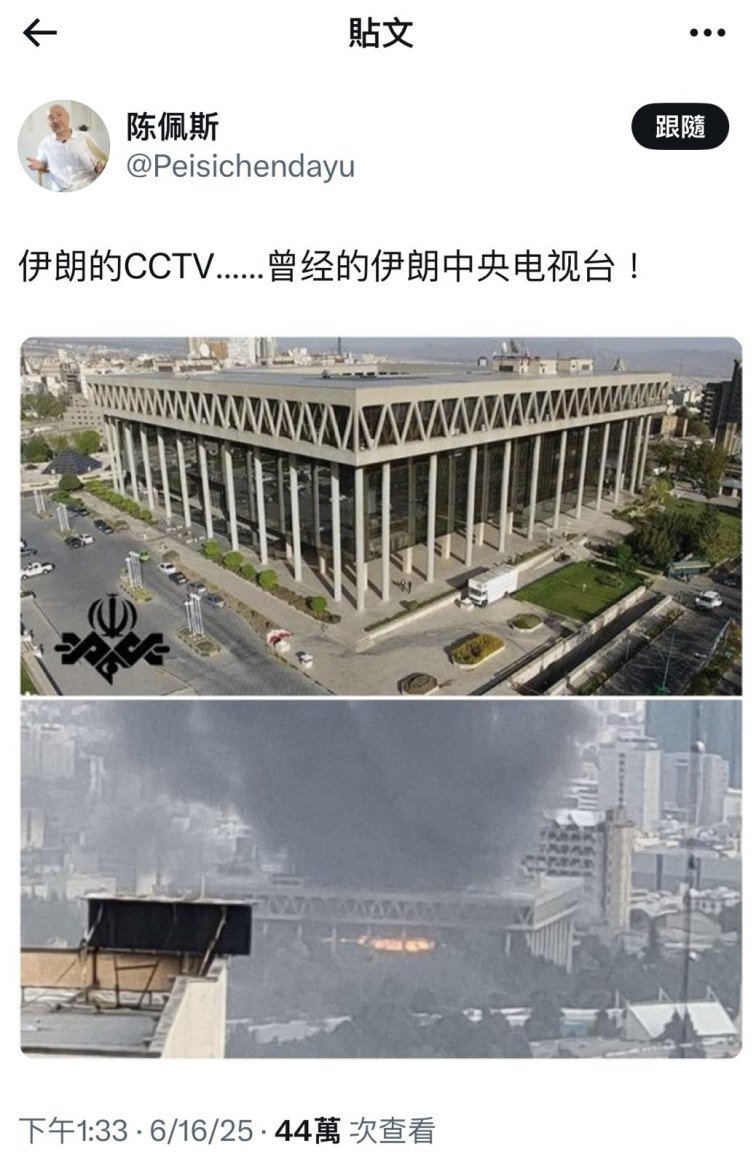
Nationwide mass demonstrations have plunged Iran into its most severe regime crisis in nearly half a century. Waves of street protests are spreading like wildfire. In Tehran late at night, crowds of people gather like mountains and seas, lighting fires everywhere, burning mosques, angrily toppling statues of Revolutionary Guard commander Soleimani, and tearing down the flags of the Islamic regime — symbolizing a total rejection of the damned regime. Protesters have made Molotov cocktails and bravely chased groups of Islamic regime security personnel.
In the second-largest city, Mashhad, regime forces are also completely losing control. Protesters have taken over police vehicles, freed detainees inside them, and written “Long live the King” on the vehicles to express their hope for the return of the Pahlavi dynasty.
Even more interestingly, on January 9, X officially updated the design of the Iranian flag emoji, changing it entirely to the lion-and-sun flag used by the Kingdom of Iran before 1979. Musk effectively made the Khamenei regime disappear from the X platform in advance. Musk also opened Starlink to the Iranian people for free, enabling them to break through the internet blackout and transmit real protest videos to the outside world in real time.
Shocking and deeply moving protest videos continue to emerge. In Mashhad, a young couple holding hands stood in front of a line of riot police shields; their fearless figures further ignited public morale. In Shiraz, a mobile phone video captured a middle-aged mother who, ignoring her daughter’s tearful eyes, walked straight toward heavily armed security forces. Gunfire erupted, and she fell in a pool of blood. The sacrifices of Iranian mothers have ignited even greater anger, with more people joining the street demonstrations.
One screenshot shows citizens climbing streetlight poles and dismantling Chinese-made surveillance cameras. Crowds fill the streets, heads packed together, looking up at the young man as if erupting in thunderous cheers. On X, a video circulated of a beautiful young Iranian woman without a headscarf angrily burning a portrait of Khamenei by the roadside, then coolly lighting a cigarette with the flames. The video’s visual impact shocked the world, signaling that the people have completely shed their fear and demonstrating the younger generation’s contempt and rejection of Iran’s dictatorial and corrupt regime.
At the same time, Iran’s regime is far from monolithic internally; cracks are clearly emerging. Discontent has spread among rank-and-file Revolutionary Guard troops, with many soldiers unwilling to participate in suppressing their compatriots. Some mid-level officers have privately stated that “the Khamenei era is over.” In the Shiite holy city of Qom, the clerical camp is split — one faction advocates moderate reform, while another insists on a hardline approach. The issue of Khamenei’s successor has become a focal point of internal infighting, with his son Mojtaba implicated in corruption, sparking dissatisfaction among senior leaders.
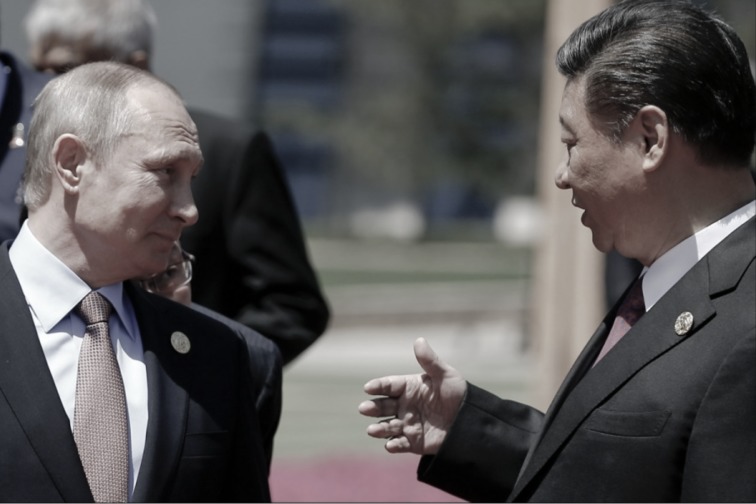
The Iranian crisis has also left Beijing’s Zhongnanhai sleepless. China’s Foreign Ministry spokesperson made a low-key statement claiming to “oppose any external forces interfering in Iran’s internal affairs” and expressing hope that Iran would “maintain national stability and development.” The platitudes reveal fear and helplessness. Iran has long been an anti-American proxy cultivated by the CCP in the Middle East. In geopolitical conflicts, oil politics, authoritarian interaction, and military cooperation, Iran and the CCP form what can be called a community of shared interests and an axis of evil. The collapse of the Iranian regime on one hand signifies the decline and incompetence of its backers — the CCP and Russia — and on the other hand will in turn accelerate the collapse of the China–Russia axis of evil.
From the decapitation of the Venezuelan regime to the mass protests and raging flames across Iran, all of this seems to be a rehearsal and preview for the CCP’s final downfall. It also provides historical reference for Chinese citizens rising up to overthrow the CCP’s cult-like regime, nurturing the seeds of civil resistance and harboring forces for change.
With the Iranian regime on the verge of collapse, Beijing feels the sorrow of the hunted fox, while authoritarian alliances appear fierce on the surface but are weak and fragile at their core. Ordinary Chinese people are also beginning to emerge from fear of CCP tyranny. On mainland China’s Douyin platform, ordinary citizens occasionally “charge the tower.” One male blogger posted a video reflecting:
“Before, I could never understand what ‘physiological disgust’ meant. Now I truly and concretely understand it — it’s when you hear that voice, when you see that face, you instinctively feel nauseous, you want to escape, you want to change the channel. Doing despicable things on one hand while boasting about how great you are on the other, labeling yourself a good person. And you’re not allowed to criticize him — the moment you do, he finds ways to mess with you. Isn’t that being a whore while erecting a chastity arch? When we encounter people like this in real life, we must stay far away, because when lightning strikes, it’s easy to get caught in the blast.”
Netizens did not name names, but everyone on Earth knows who he was talking about. Stay away from the CCP, hurry to do the “Three Withdrawals” (publicly withdrawing from the Party, the Youth League, and the Young Pioneers). The CCP and the Xi Jinping authorities are not far from being struck by lightning.
(People News exclusive) △





News magazine bootstrap themes!
I like this themes, fast loading and look profesional
Thank you Carlos!
You're welcome!
Please support me with give positive rating!
Yes Sure!