

Li Qiang at the Two Sessions in 2025
[People News] Recently, the Chinese Communist Party (CCP) issued two documents related to rectifying the officialdom. One is the joint notice issued by the Central Commission for Discipline Inspection and the Central Organization Department titled “Notice on Strictly Enforcing Discipline in Party Committee Re-elections and Strengthening Supervision of Election Conduct,” which lays out the so-called “Ten Strict Prohibitions.” The second is a directive from the CCP Central Committee’s General Office requiring the entire Party to carry out study sessions on “establishing and practicing a correct view of political achievements.”
As provincial and lower-level Party committees are entering a new round of leadership reshuffles, the timing of these two political movements has drawn particular attention. Why is the CCP tightening discipline in officialdom at this moment? Will large numbers of officials fall? And what impact will this have on the regime’s future operations?
The “Ten Strict Prohibitions” — A Tool to Attack Rivals and Seize Positions
The Notice on Strictly Enforcing Discipline in Party Committee Re-elections includes the “Ten Strict Prohibitions,” such as:
-
Strictly prohibiting forming factions and cliques
-
Strictly prohibiting currying favor and associating with “political swindlers”
-
Strictly prohibiting vote-buying and election bribery
-
Strictly prohibiting lobbying for promotion
-
Strictly prohibiting using personal influence
-
Strictly prohibiting one-person rule
-
Strictly prohibiting “promotion while ill” (promoting officials under investigation)
-
Strictly prohibiting improper personnel appointments
-
Strictly prohibiting falsification
It emphasizes “zero tolerance” for violations and calls for “immediate action at the first sign” of misconduct, as well as holding higher-level leaders accountable.
These prohibitions expose the systemic rot within the CCP. The very need to ban factionalism, clique-building, and political deception suggests how rampant such behavior has become. From Zhou Yongkang and Bo Xilai to Sun Lijun and Miao Hua, almost every major purge has involved interconnected networks of corruption.
If lobbying, bribery, and favoritism are truly banned, nearly every official could be charged. If “one-person rule” and “promotion while ill” were seriously enforced, that would implicate Xi Jinping himself. Many recently purged officials — including He Weidong, Miao Hua, Yi Lianhong, Li Yuchao, and Li Shangfu — were personally elevated under Xi’s watch.
Thus, the “Ten Strict Prohibitions” are widely viewed as political theater. The real purpose, critics argue, is intimidation, targeting rivals, and clearing the field ahead of the 21st Party Congress.
A source familiar with internal Party affairs told The Epoch Times that issuing such discipline guidelines before local Party reshuffles is not merely about election conduct, but about preemptive political consolidation. By tightening control over personnel pipelines, the leadership seeks to ensure absolute loyalty to the top leader and eliminate any space for local independence.
“Study Education” — A Warning to Top Leaders
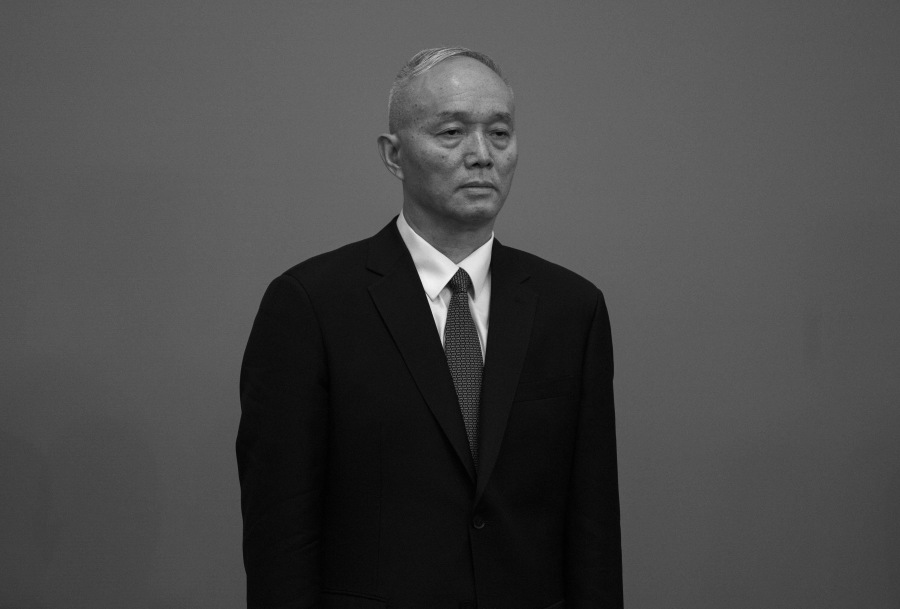
Simultaneously, the Party’s Central Leading Group on Party Building convened a meeting chaired by Cai Qi, with Li Xi in attendance, to deploy the campaign on “correct political achievements.”
The campaign targets leadership teams at the county level and above, especially top officials (“first-in-command” leaders). It will run from after the 2026 Spring Festival through July.
State media described the process as “integrated study, investigation, and rectification.” In practice:
-
“Study” means reinforcing political alignment with Xi Jinping.
-
“Investigate” means digging into violations of discipline.
-
“Rectify” means targeting so-called “problematic statements” — especially dissenting views.
This effectively ties promotions directly to political loyalty.
Insider Tian Guangyao (pseudonym) told The Epoch Times that the campaign is essentially a political lineup exercise. He described it as Cai Qi issuing a political warning to high-level officials, forcing them to publicly declare allegiance.
Observers argue this reveals Xi’s insecurity. If his authority were truly secure, such repeated loyalty checks would not be necessary. The campaign suggests anxiety at the top amid economic slowdown and growing structural tensions.
With China’s economy weakening and social pressures mounting, the CCP leadership appears to prioritize political control over governance reform.
Fear That the “Two Sessions” Will Become a “Banquet of Doom”
The National People’s Congress (NPC) and Chinese People’s Political Consultative Conference (CPPCC) meetings are approaching. But insiders say many delegates are anxious.
Once a symbol of prestige and privilege, the NPC delegate badge used to function as a political shield. Now, many fear attending the meetings could lead to arrest.
Shanghai-based businessman Hu Liren, now overseas, claims many wealthy delegates are deeply worried. Some have reportedly feigned illness to avoid traveling to Beijing.
According to him, many delegates are already “registered” by the Central Commission for Discipline Inspection. Once they appear in Beijing, they may be detained and pressured to surrender assets. He alleges the regime is engaged in “wealth harvesting.”
In recent years, arrests have frequently occurred during official meetings — including cases like Bo Xilai and others. Such tactics minimize resistance and maximize deterrence.
With the new “Ten Strict Prohibitions” in place, nearly any official could be accused of violating some clause.
As one official reportedly said:
“Outsiders don’t realize it — many officials inside the Party are restless. They even dream of being reported and dragged to prison.”
Public opinion suggests that as fiscal resources shrink, local authorities form tighter patronage networks around projects and funding. The scarcer the resources, the stronger the factional alliances.
Observers warn that beneath the surface of discipline campaigns lies deep instability within the CCP’s political structure.
(First published by People News)





News magazine bootstrap themes!
I like this themes, fast loading and look profesional
Thank you Carlos!
You're welcome!
Please support me with give positive rating!
Yes Sure!