

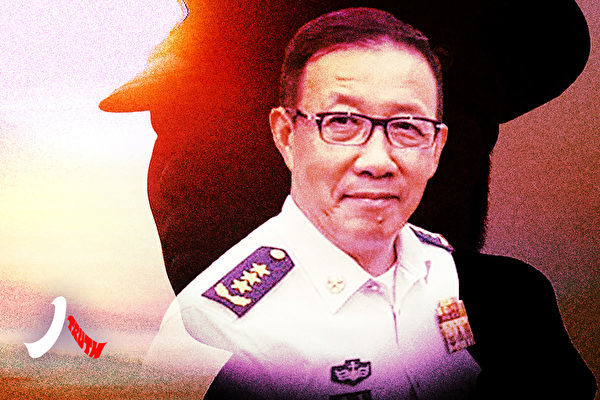
Cai Qi (right) and Wang Xiaohong (left) serve as Xi Jinping's gatekeepers. (Composite image)
[People News] On February 23, the final day of the Chinese New Year holiday—just as CCP officials were preparing to return to work—state media outlet Xinhua suddenly published a highly significant article. Judging from its content, while it ostensibly discusses the routine advancement and demotion of officials, it reads in practice like a tailor-made “instruction manual for stepping down” aimed at the current top leader.
A Party Media “Manual for Stepping Down” — Targeting the Supreme Leader?
The Xinhua article, titled “How to Understand the Normalization of Promoting Officials’ Ability to Rise and Fall,” appears on the surface to address organizational discipline in the upcoming “15th Five-Year Plan.” It emphasizes that officials must be able to “step down accurately,” “step down smoothly,” and “step down properly.”
But a closer look at the listed criteria for “stepping down” makes each one seem as if it were written with a certain “core leader” in mind.
First, it states that officials must step down if they have “serious deviations in their understanding of political achievements, or have made chaotic decisions and reckless actions that caused major losses.”
Consider this: Who in today’s China has the authority to “personally command and personally deploy”? Whose chaotic decisions have resulted in “major losses”?
Before the 20th Party Congress, netizens once compiled a ranking of major failed initiatives during Xi Jinping’s ten years in power. The top three “unfinished disasters” were reportedly the “10-trillion-yuan semiconductor project,” the “Belt and Road Initiative,” and the “Xiong’an New Area.”
Other troubled or stalled projects cited include the Beijing Stock Exchange, the Asian Infrastructure Investment Bank, “Made in China 2025,” the Thousand Talents Plan, the real estate sector, poverty alleviation campaigns, energy-saving and carbon reduction drives, 21 free trade zones, the attempt to block Nancy Pelosi’s Taiwan visit, “One Country, Two Systems,” and the transformation of Hong Kong into what critics call a diminished version of itself.
Three more years have now passed. Add to that the real estate collapse, the stagnation of the Hainan Free Trade Port, soaring youth unemployment, and more.
With each political and economic failure, who besides the top leader fits the description? If he does not need to step down, then who does?
Another clause states that officials whose “spouses or children have emigrated abroad or are involved in irregular business operations” must step down. This is particularly sensitive within the Party elite.
Questions about the nationality of Xi’s daughter, and the vast business network linked to his sister Qi Qiaoqiao and other relatives, have long been taboo topics. Previously, anyone raising them risked being accused of “improperly discussing the central leadership.” Now, Xinhua has explicitly written such family issues into the criteria for mandatory resignation. Is this not a form of political pressure?
Perhaps the most striking clause concerns officials who are “unable to perform their duties normally due to health reasons.”
It is widely rumored that Xi suffered a stroke at the Third Plenum in 2024 and underwent brain surgery. During his public appearances, observers often scrutinize his health—his complexion, slow gait, and even subtle head movements.
Thus, this clause seems less like a general regulation and more like a prepared exit ramp. Whether the illness is real or politically declared, once the system deems someone “unfit,” stepping down can be justified on health grounds.
Consider Wang Xiaohong, Xi’s close ally, who was rumored to have cancer and possibly removed from office due to health concerns. Yet recent posts by lawyer Zheng Cunzhu on X (February 23) claim that Wang Xiaohong has already been detained and that an official announcement may follow.
Reports suggest Wang Xiaohong was implicated by Chen Zhi, a figure accused of involvement in telecom fraud, money laundering, and human trafficking. These alleged crimes reportedly persisted with the tacit protection of security organs. Former CCP insider Eric previously claimed that public security and state security services colluded with Chen Zhi for years.
More importantly, Chen Zhi was reportedly selected by Qi Qiaoqiao as a manager of the family’s overseas wealth. If Wang Xiaohong were merely dismissed, it could be interpreted as Xi protecting both him and himself. But if his arrest is confirmed, it would signal more than a personal downfall—it would suggest that a political force powerful enough to override Xi’s protection has emerged. Such a force could influence Xi’s prospects for reappointment at the 21st Party Congress and disrupt his personnel arrangements.
Given all this, does the Xinhua “stepping down manual” hint at a quiet internal power struggle? Is it possible that behind this article lies the shadow of a concealed political shift?





News magazine bootstrap themes!
I like this themes, fast loading and look profesional
Thank you Carlos!
You're welcome!
Please support me with give positive rating!
Yes Sure!