

Artwork depicting Presidents Trump, Putin and Xi unveiled in Crimea
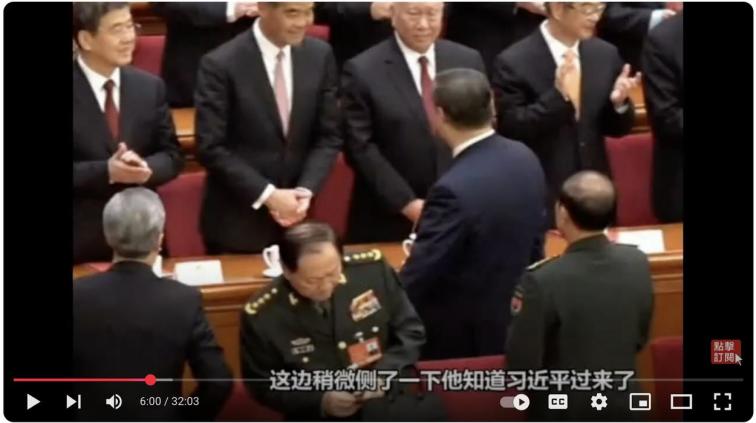
[People News] After CCP leader Xi Jinping launched a surprise move to arrest Zhang Youxia and Liu Zhenli, the military has remained silent, with no one publicly expressing support. In addition, an emergency session of the National People’s Congress (NPC) was convened on February 4 but did not revoke Zhang and Liu’s status as NPC deputies. This suggests Xi’s arrests violated the CCP’s own legal procedures and may also be seen as the NPC signaling opposition to Xi’s actions, further indicating that Xi’s authority within the Party is not what it once was.
On February 4, Xi Jinping made rare phone calls to U.S. President Donald Trump and Russian President Vladimir Putin, discussing trade, Taiwan, Iran, and other issues, and promising to significantly increase purchases of American agricultural products. Many commentators believe this move was an attempt to “borrow foreign influence to bolster his position,” creating an image of international stature to break out of the isolation and political crisis he faces following strong resistance after the Zhang Youxia incident.
According to a report by The Epoch Times, well-known current affairs commentator Tang Jingyuan said on his self-media program that neither call was described as being made “at the invitation” of the other side, indicating they were initiated by Xi. He believes Xi chose his counterparts carefully — Trump as his biggest rival and Putin as his biggest ally — both of whom can influence Xi’s power status.
According to Trump’s post, Xi promised to purchase 20 million tons of U.S. soybeans this quarter and another 25 million tons next quarter, far exceeding last year’s annual quota of 25 million tons under the agreement. China will also increase imports of U.S. oil, natural gas, and aircraft engines.
Tang Jingyuan analyzed that in 2024 China’s imports of U.S. oil accounted for only 1.74% and natural gas 5.43%, totaling $8.4 billion — far below China’s nearly $300 billion trade surplus with the United States. He bluntly stated this was a “big gift package” Xi offered Trump, trading economic concessions for political returns such as Trump’s April visit to China and the resumption of engine exports, calling it “almost groveling.”
On February 4, the NPC Standing Committee held an emergency meeting. Afterward it announced the removal of three military-industrial executives — Zhou Xinmin, former chairman of AVIC; Luo Qi, former chief engineer of CNNC; and Liu Cangli, former president of the China Academy of Engineering Physics — from their positions as NPC deputies. This did not include the anticipated removal of Zhang Youxia and Liu Zhenli.
Zhang Tianliang, a professor in the Department of Humanities at Feitian University in the United States, said on a self-media program that all three are vice-ministerial-level officials from the military-industrial sector and were closely linked to benefit exchanges with Zhang Youxia during his tenure as head of the Central Military Commission’s Equipment Development Department.
Zhang Tianliang believes Zhang Youxia, as the “buyer,” controlled massive weapons procurement power, while the institutions of Zhou Xinmin and the other two formed the core “seller” suppliers, creating a closed loop of interests. Removing the three suggests a breakthrough in the investigation into Zhang Youxia’s case, exposing corruption in the Equipment Development Department.
Tang Jingyuan pointed out that Xi underestimated the backlash after arresting Zhang Youxia, noting that “no one is expressing a stance or support.” With the annual “Two Sessions” approaching next month, it would be untenable to keep Zhang and Liu as NPC deputies; normally they would have been removed this month. But the meeting did not act, marking a second failed attempt to “retroactively legitimize” the move after the late-January Politburo meeting, showing strong internal Party resistance.
He believes Xi’s move against Zhang Youxia amounts to declaring war on the entire Party and the “red second generation,” aiming to shift from “the Party’s empire” to “Xi’s family empire.” Party elders, however, are reluctant to publicly move against Xi for fear of undermining the CCP’s legitimacy. But Xi refuses to compromise and insists on fighting to the end, creating a stalemate. Now, after failing to secure internal approval, Xi has turned to seeking foreign backing to shore up his position. This shows the internal situation is unstable and he needs to “borrow foreign weight” to bolster himself. “If Xi were already as solid as Mount Tai, he wouldn’t need to throw money around to invite others to stand by him.”
Zhang Tianliang noted that half a month after the Zhang Youxia incident, the military still has not expressed a stance — a rare occurrence in CCP history — indicating passive resistance.
He cited U.S. intelligence assessments suggesting Xi’s purges stem from developing “paranoid” tendencies marked by extreme suspicion. Referring to German political scientist Marcel Dirsus, he noted that a dictator’s greatest threat comes from close insiders, not grassroots protests. Xi has offended many factions and has no way out except to hold power for life to avoid reckoning.
Zhang Tianliang stressed that if Xi continues purging, he will be left only with sycophants lacking ability and support. Should he suddenly die, it could lead to CCP fragmentation and collapse. “This may plant the seeds for the CCP’s demise.”△





News magazine bootstrap themes!
I like this themes, fast loading and look profesional
Thank you Carlos!
You're welcome!
Please support me with give positive rating!
Yes Sure!