

CCP Seeks to Tie Down the U.S. and Create Divisions — Its Plot Is Seen Through
[People News] Since U.S. President Trump and Xi Jinping held a summit in South Korea last October, U.S.–China relations have shown signs of stabilizing. However, the top U.S. military commander in the Indo‑Pacific region has stated that unity between the United States and its allied nations is crucial, because the Chinese Communist Party (CCP) continues to exert military pressure on countries in the South China Sea and Southeast Asia, attempting to create rifts between the United States and its allies in order to restrain the U.S.
According to a report by the Financial Times cited by Liberty Times, U.S. Indo‑Pacific Commander Admiral Samuel Paparo said at the Honolulu Defense Forum in Hawaii that the CCP military continues to take a hard‑line approach toward Southeast Asian countries.
When asked whether this meant that the CCP military had become less aggressive in the South China Sea and toward Taiwan, Paparo responded, “You can see that the pressure the CCP applies to ASEAN countries is still there.”
He added that although overall U.S.–China relations appear to be stabilizing, China continues to apply pressure throughout the region and test that stability. Therefore, “the cohesion of our alliances and partnerships is extremely important.”
Although Paparo did not name specific countries, the People’s Liberation Army has recently continued to take tough actions against the Philippines, particularly near the disputed Scarborough Shoal.
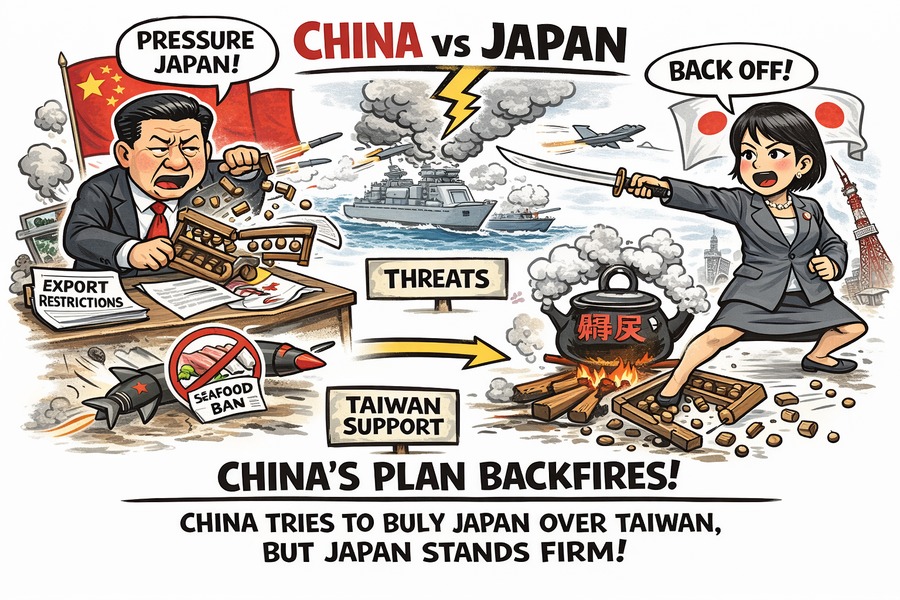
After Japanese Prime Minister Sanae Takaichi made remarks last November stating that “a Taiwan contingency is a Japanese contingency,” the PLA also increased its activities near the Diaoyu Islands. Both China and Japan claim sovereignty over the islands.
In December of last year, the Trump administration released a new National Security Strategy that appeared to downplay the security threat posed by China and shift focus toward the Western Hemisphere, raising concerns among some U.S. allies.
However, Paparo said that U.S. Secretary of Defense Pete Hegseth has made it clear that the Indo‑Pacific region is vital to the United States and represents the potential source of the “greatest threat.”
Ely Ratner, former Assistant Secretary of Defense for Indo‑Pacific Security Affairs, also said that overemphasizing the stability of U.S.–China relations is a mistake.
He stated: “Beijing’s strategy is very clear: use promises of cooperation to tie down the United States, create rifts between Washington and its allies, and force the entire region into submission. When we place U.S.–China relations above alliance relationships, we are actually doing Beijing’s work for it.” △






News magazine bootstrap themes!
I like this themes, fast loading and look profesional
Thank you Carlos!
You're welcome!
Please support me with give positive rating!
Yes Sure!