
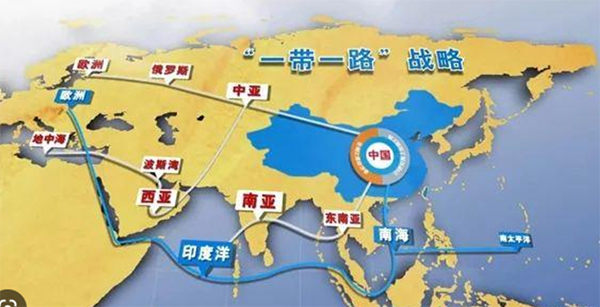
Investment data shows that the Chinese Communist Party's Belt and Road Initiative (BRI) has shifted from large-scale infrastructure projects to less capital-intensive sectors such as IT and biotechnology.
[People News] On November 18, General Secretary of the Communist Party of China Xi Jinping announced at the APEC opening ceremony in Shenzhen that the Communist Party supports the establishment of a World Bay Area Economic Cooperation Alliance aimed at building an Asia-Pacific community and promoting co-prosperity in the region.
This new terminology quickly caught the attention of major media outlets around the world. Radio France Internationale, Yahoo, and various Southeast Asian and Taiwanese media commented that Xi often introduces complex terms during his speeches, and only after listening to the entire address does one realise that the so-called World Bay Area refers specifically to the Guangdong-Hong Kong-Macao Greater Bay Area. In essence, the Communist Party aims to promote the Guangdong-Hong Kong-Macao Bay Area as an 'international first-class bay area and world-class urban agglomeration.' In the current narrative of the Communist Party, it seeks to position the Guangdong-Hong Kong-Macao Greater Bay Area Economic Alliance alongside the major bay areas of New York and San Francisco in the United States, as well as Tokyo Bay in Japan, collectively referred to as the four major bay areas in the world.
In past international conferences, the Communist Party has frequently proposed various initiatives, cooperation platforms, or organisations, such as the World Artificial Intelligence Cooperation Organisation and the Lancang-Mekong Cooperation Mechanism. However, many of these initiatives have often faded into silence, with several left unfinished.
In Xi Jinping's speech outlining the vision for the World Bay Area, there was similarly no clarification regarding the alliance's members, organisational structure, or operational details. What concerns observers, however, is the Communist Party's ambition to establish 'communities' with regions worldwide; previously, this included impoverished nations in Africa, South America, and West Asia, and now it is also targeting developed areas in Europe, America, and East Asia. Some have suggested that this so-called community is merely a facade for co-prosperity and shared destiny, under which the Communist Party pursues its own interests while disregarding cultural considerations, ultimately dragging others down with it.
The term 'Asia-Pacific co-prosperity' particularly evokes memories of the 'Greater East Asia Co-Prosperity Sphere' that was put forth by the Imperial Japanese Army during its invasion of China more than 80 years ago.
The Greater East Asia Co-Prosperity Sphere was a concept introduced by the Japanese Empire during World War II. It ostensibly represented an economic community among Japan, Manchukuo, and the Republic of China. However, in reality, the Imperial Army exploited this notion to justify the Greater East Asia War, serving as a rationale for its imperialist ambitions. The military alliances and economic cooperation under this co-prosperity framework extended across parts of East Asia, Southeast Asia, South Asia, and Oceania. While the Imperial Army professed ideals of co-prosperity and coexistence, it ruthlessly plundered resources such as rice, oil, coal, tin, and rubber from Southeast Asia, leading to the deaths of tens of millions of Asian civilians and subjecting countless labourers and comfort women to horrific conditions.
In November 1943, Japanese Prime Minister Tojo Hideki gathered representatives of the 'Greater East Asia Co-Prosperity Sphere' in Tokyo for the Greater East Asia Conference. At this conference, the 'Greater East Asia Declaration' was presented, advocating for the creation of a co-prosperity sphere free from racial discrimination, aimed at contributing to global peace.
This bears a striking resemblance to the APEC meeting organised by the Chinese Communist Party (CCP) in Shenzhen, which focuses on the 'Asia-Pacific Co-prosperity and Peace Declaration.' Japan, under the pretence of promoting peace, is invading China and engaging in military occupation, resource exploitation, and political control in the name of co-prosperity. The 'Peace Declaration' from this APEC meeting also claims to contribute to global peace; while the slogan sounds impressive, it actually exacerbates and even undermines peace and stability in regions such as Ukraine, the Middle East, and East Asia. Some argue that the CCP is, in fact, a Marxist-Leninist invader from the West that, upon arriving in China, has systematically undermined Chinese culture, nature, social order, morality, and faith. Compared to the Imperial Army, this represents a more insidious form of internal invasion that is harder to detect.
The phrase 'Greater East Asia Co-prosperity' has been in existence for over eighty years since its inception, and this eerily similar term always evokes a sense of dread.
Why does this concept persist? For the Japanese invading forces, it is simply too convenient. It can reframe invasion as liberation, plunder as co-prosperity, and massacre as an unfortunate but unavoidable aspect of war, serving as a perfect cover. This cover has consistently been favoured by those with imperial ambitions. The glory is claimed by oneself while the destruction is inflicted on others. When one's own destruction looms, there will be those who share the burden of the consequences together. Under the banner of 'common prosperity,' the impoverished are left to face the repercussions of ecological imbalance and disasters; the notion of 'equality for all, a paradise on earth' merely allows party officials to bask in earthly luxuries; and under the 'Belt and Road' initiative, some are left to suffer the dire consequences of debt entrapment, among other issues. These are all the enduring repercussions of 'co-prosperity,' even though the terminology sounds appealing. However, to be frank, who grants you the right to claim 'glory'?
(First published by People News) △






News magazine bootstrap themes!
I like this themes, fast loading and look profesional
Thank you Carlos!
You're welcome!
Please support me with give positive rating!
Yes Sure!