

A photo of Professor Yu Maochun, a China expert at the Hudson Institute. (Song Bilong / The Dajiyuan)
[People News] Yu Maochun, a China expert at the American think tank Hudson Institute, stated that one of the greatest strategic challenges posed by (Communist) China to the world is what would happen if it were to suddenly collapse.
In a recent article in The Washington Times, Yu pointed out that Western policies towards China over the past few decades have been almost entirely based on a fundamental assumption: that the Chinese Communist Party (CCP) will exist for the long term and continue to be an important factor in international politics. However, few have seriously considered another possibility: how the world would respond if the CCP were to suddenly fall.
He argues that Washington and its allies should view planning for the 'post-CCP era' as a strategic contingency preparation, essentially purchasing a form of 'strategic insurance' in advance for the most influential political event of the 21st century.
This article discusses a report published by the Hudson Institute titled 'China after Communism: Preparing for a Post-CCP China.' The report was authored by experts in various fields, including military, intelligence, economics, human rights, transitional justice, and constitutional governance. It examines the challenges that the international community and Chinese society may encounter during the initial stabilization phase after the Chinese Communist Party (CCP) loses centralized control over the country, as well as the potential paths for transformation that may follow. Yu Maochun is the lead author of the report.
Dictatorships are not necessarily unbreakable.
In the article, Yu Maochun uses the significant political changes at the end of the Cold War as an example, highlighting that a regime that appears stable can lose control in a remarkably short period.
In 1989, several communist regimes in Eastern Europe fell within months, culminating in the fall of the Berlin Wall; approximately two years later, the Soviet Union collapsed.
'History has repeatedly demonstrated that seemingly unbreakable dictatorships can vanish at an astonishing speed,' he warned.
He argues that as the longest-ruling communist dictatorship and the world's second-largest economy, the sudden collapse of its political system is certainly not beyond imagination.
Furthermore, it is anticipated that the repercussions of such a collapse would extend far beyond China itself.
Nuclear weapons, military, and economic risks.
Yu Maochun raised a series of pressing questions: If the power of the Central Committee of the Communist Party of China were to suddenly collapse, who would control the nuclear arsenal? Who would command the military? Who would take charge of the armed police, militia, Ministry of State Security, and the extensive domestic surveillance apparatus? Who would ensure the safety of hazardous biological facilities? Who would prevent local military commanders or security leaders from establishing their own territories, potentially leading to warlordism?
He argues that these issues cannot be left unaddressed until a regime crisis occurs. Should central authority disintegrate, the competition for control over strategic weapons, the military, intelligence systems, and security sectors could swiftly escalate a political crisis into a regional and international security crisis.
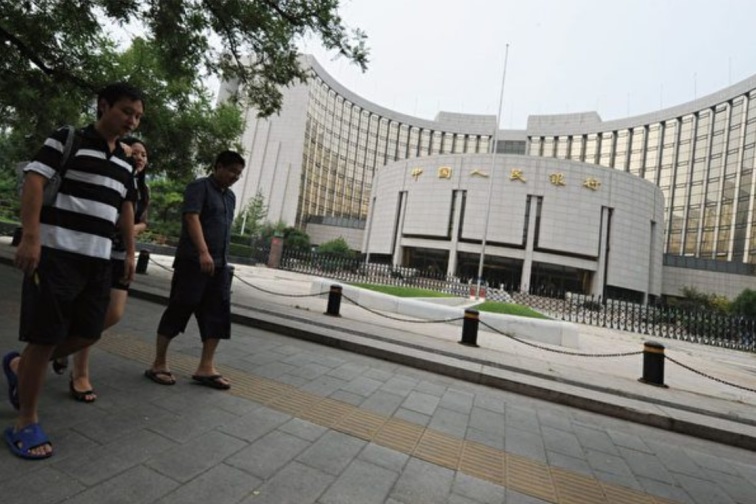
The economic risks are equally substantial. How will the renminbi be sustained? What will happen to China's banks, sovereign debt, state-owned enterprises, foreign exchange reserves, and domestic assets amounting to trillions of dollars?
Yu Maochun emphasized that these assets could face disputes over control and legitimacy in a political vacuum, making them targets for various political and security factions.
"If China's trillions of dollars in national assets are divided among party-state elites, military leaders, heads of security agencies, or vested interest groups in a political vacuum, a new oligarchic system could rapidly emerge from the ruins of the old communist regime," he warned. "This would not signify the birth of a free China, but rather the onset of another form of dictatorship."
Avoiding a Repeat of the Russian-style Transition
Yu Maochun believes that the transformation experiences in Europe following the Cold War demonstrate that the downfall of authoritarian regimes does not automatically result in the establishment of democracy.
He referenced Poland, Czechoslovakia, and East Germany as examples, noting that after the collapse of communist regimes, these countries, despite undergoing painful adjustments, were able to establish new systems relatively quickly. The crucial factor was that prior to the collapse of the old system, society had already accumulated sufficient talent, organizations, institutional ideas, and public principles.
He stated: "The most important lesson from the regime transitions of the 20th century is that preparation determines success or failure."
In contrast, he regarded Russia following the dissolution of the Soviet Union as a cautionary tale. Yu Maochun believes that at that time, Russia lacked a mature design for democratic systems, an independent civil society capable of taking on governance responsibilities, a privatization mechanism for state-owned assets that had broad legitimacy, and a solid constitutional consensus. Consequently, the intertwining of economic reforms and political expediency resulted in a significant amount of state wealth being seized by a small number of oligarchs, which weakened the state system and ultimately led to a return to nationalist authoritarian rule.
He also pointed out that Ukraine has long struggled with the corruption networks, oligarchic politics, and institutional weaknesses left over from the Soviet era after gaining independence, taking decades to gradually establish a more democratic and accountable political order.
"The death of a dictatorship does not mean the birth of a democratic system," Yu Maochun remarked. "If a similar upheaval were to occur in China, the scale and consequences would be far greater."
The future of China is to be determined by the Chinese people themselves.
Yu Maochun stressed that planning for the 'post-Communist Party era' does not imply that the United States will design a political system for China, nor does it advocate imposing an American-style system on the country.
"This is not about deciding China's future for the Chinese people, nor is it about imposing a government designed by the United States on them. The future of China can only be determined by the Chinese people themselves," he wrote.
However, he believes that the United States, Japan, Taiwan, Europe, Australia, South Korea, India, and other democratic nations all have direct security and economic interests. They must work to prevent China from quickly descending into civil war, strategic weapons proliferation, financial collapse, ethnic retaliation, or another form of authoritarian rule in the event of a sudden regime breakdown.
To address this, he recommends that Washington establish a permanent, cross-departmental contingency planning mechanism for the 'post-Communist Party of China' era. This should involve collaboration with allies, overseas Chinese democrats, economists, constitutional scholars, dissidents, religious leaders, the overseas Chinese community, and experts in transitional justice to develop policy options for various scenarios.
Yu Maocun emphasizes that the goal is not to create a 'U.S.-style China,' but rather to foster conditions that enable the Chinese people to build a free and peaceful China that upholds the rule of law and constitutional governance.
We should not wait until the Communist Party of China collapses to start considering these issues.
Yu Maocun points out that during the Cold War, the West spent over forty years studying how to contain and defeat Soviet communism, yet surprisingly little serious preparation was made for the question: what to do the morning after communism collapses?
'Next time, we cannot leave history to chance,' he wrote.
He noted that the Hudson Institute's report regards 'post-Communist Party of China' planning as a strategic necessity rather than a political fantasy. The report raises critical questions, including how to ensure the safety of dangerous facilities and strategic weapons, stabilize the financial system, manage state-owned assets, restructure the Chinese military and security agencies, protect vulnerable groups, open secret police archives, establish mechanisms for truth and reconciliation, and ultimately initiate a new constitutional process.
He stressed the importance of starting preparations now, rather than waiting until the Chinese Communist Party (CCP) collapses, as it may be too late to get ready by that time.
He stated, "The key lesson from regime transitions in the 20th century is that preparation is crucial for success or failure."
"The CCP might continue to govern for several more decades, or it could suddenly disintegrate at a pace that nearly all experts fail to foresee, much like the Eastern European communist regimes did in 1989. We cannot predict when that day will arrive. However, history does not allow us a second chance to be caught unprepared," he added.
Yu Maochun further cautioned that preparing for 'post-communist China' is not about seeking a change in power or promoting chaos. Instead, the aim is to prevent the end of an authoritarian regime from leading to a larger civil war, the proliferation of weapons, economic collapse, or the emergence of a new dictator.
He characterized this effort as a form of 'strategic insurance' that the free world is proactively acquiring for the most significant political crisis of the 21st century.
(Reported by Dajiyuan journalist Lin Yan)
△







News magazine bootstrap themes!
I like this themes, fast loading and look profesional
Thank you Carlos!
You're welcome!
Please support me with give positive rating!
Yes Sure!