

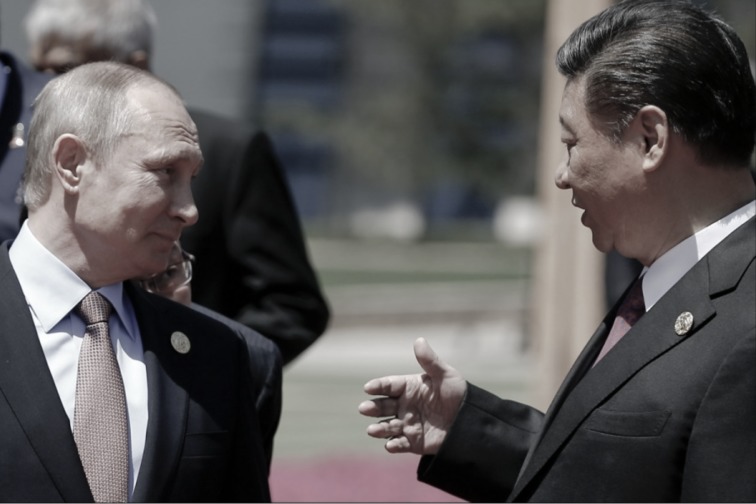
Xi Jinping is more focused on competing with Western powers. (People News Illustration)
[People News] On June 8, 2026, The Economist published an article titled "China is innovative. Its economy is a mess. Which matters more?" The article vividly illustrates the stark duality of the Chinese economy, using examples from places like Yingtan in Jiangxi. On one hand, there is a digital wave sweeping through high-tech industrial parks, with rapid advancements in AI and robotics, and global leadership in new energy and advanced manufacturing. On the other hand, there is a Great Depression affecting inland towns, a collapse in the real estate market, mounting local debt pressures, sluggish consumer spending, and a significant loss of public confidence in livelihoods.
The article encapsulates this as the defining question of the 21st century: can the remarkable achievements in technological innovation rescue the economy from its structural challenges?
The article precisely identifies the core contradiction in China's economic strategy during the Xi Jinping era: a global expansion strategy that prioritises national security, technological self-sufficiency, and global influence. This strategy includes the Belt and Road Initiative, Made in China 2025, and its updated approach to new quality productivity. By leveraging substantial subsidies, industry policy adjustments, and a global presence, it seeks to promote the narrative of great power revival. However, this state-driven economic model has simultaneously led to a grim scenario characterised by resource misallocation, inefficiencies, weak demand, and the systematic erosion of economic growth potential.
The private economy is facing suppression, the foundation of people's livelihoods is fragile, the unemployment rate remains high, and the fiscal situation is continuously worsening. These structural issues are swiftly undermining the achievements that the Chinese Communist Party (CCP) has accumulated over the past forty years of reform and opening up. It is important to note that Xi Jinping has framed his ambition for global communist dominance as the 'Chinese Dream' through the consolidation of personal power, pursuing state advancement at the expense of the private sector, and promoting a movement-style governance approach, which has effectively dismantled the comprehensive foundation of the Chinese economy.
A Historical Shift from Reform and Opening Up to National Security Prioritisation
During Deng Xiaoping's era, the most notable phrase regarding the Chinese economy was 'crossing the river by feeling the stones.' Regardless of whether the river was ultimately crossed, market-oriented reforms, supported by foreign investment and demographic dividends, allowed the CCP's economy to achieve rapid growth, leading to wealth accumulation among the populace.
Since Xi Jinping took office in 2012, the direction of the CCP's economic policies has undergone a significant shift. Economic growth is no longer the primary focus; instead, a 'high-quality development' model centred on national security has taken precedence. The 'Belt and Road Initiative' introduced in 2013 aims to reshape the global supply chain through infrastructure exports, channelling China's excess capacity and capital into developing countries while also serving geopolitical goals. The 'Made in China 2025' initiative launched in 2015 targets ten strategic industries, aiming for self-sufficiency in core technologies. In recent years, 'new quality productivity' has emerged as the leading narrative, emphasising technology, talent, and data as new production factors, with the state taking the lead in resource allocation.
The recent shift by the Chinese Communist Party (CCP) marks a significant revelation of the logic behind the global expansion of communism in the Xi Jinping era. The CCP has discarded the facade of Deng Xiaoping's strategy of keeping a low profile, opting instead for wolf warrior diplomacy on the international stage and a wartime economic model domestically. In the context of escalating strategic competition between the U.S. and China, the vanishing benefits of globalisation, and increasing supply chain risks, Xi Jinping has revived the rhetoric of competing with the U.S., reminiscent of the Mao Zedong era, stressing self-reliance and an internal economic cycle. He views high-tech independent innovation and global manufacturing dominance as instruments for extending totalitarian influence abroad. However, this nationalist approach has intensified the Party's extensive intervention in the economy, characterised by a dominance of state-owned enterprises, subsidy-driven initiatives, and a technological leap that ignores market principles. While this has resulted in remarkable growth in sectors like new energy vehicles, solar energy, and drones in the short term, it has also caused imbalances in resource distribution, irrational industrial structures, distorted market signals, and reduced consumer space. After a downturn in the real estate market and investment failures, the struggling export sector now faces the challenge of international tariff barriers.
The price of global expansion: The Belt and Road Initiative and the fiscal black hole of capacity output.
The Belt and Road Initiative was once heralded by the Chinese Communist Party (CCP) as a landmark project aimed at mutual benefit, with promises of trillions of dollars in infrastructure financing. By the mid-2020s, actual investments had reached hundreds of billions of dollars, spanning over 150 countries and encompassing sectors such as ports, railways, and energy. However, the economic returns have significantly underperformed expectations. Numerous projects have faced challenges due to host country debt traps, geopolitical risks, corruption, and governance issues, resulting in substantial non-performing loans within the Chinese banking system. Rather than effectively absorbing domestic excess capacity, the Belt and Road Initiative has intensified domestic debt accumulation. Local government financing platforms and state-owned enterprise debts have consumed a significant portion of GDP, forcing the CCP to rely on issuing new debt to pay off old debts and extending debt maturities to buy time.
This situation is likely to result in a strategic misallocation of resources. The CCP has invested heavily in high-risk overseas projects while undermining the domestic consumption base. The real estate sector, once a key driver of China's growth contributing around 30% to GDP, has collapsed under Xi Jinping's deleveraging efforts and macroeconomic shifts, leading to a breakdown in local land finances. The concentration of resources driven by policy and the pressures of the state's grand narrative have highlighted structural issues, with resources intended for consumption stimulation and improving livelihoods often resulting in much talk but little action, causing widespread industry decline and plunging the economy into a severe deflationary spiral.
The 'new productive forces' trap under the banner of technological ambition.
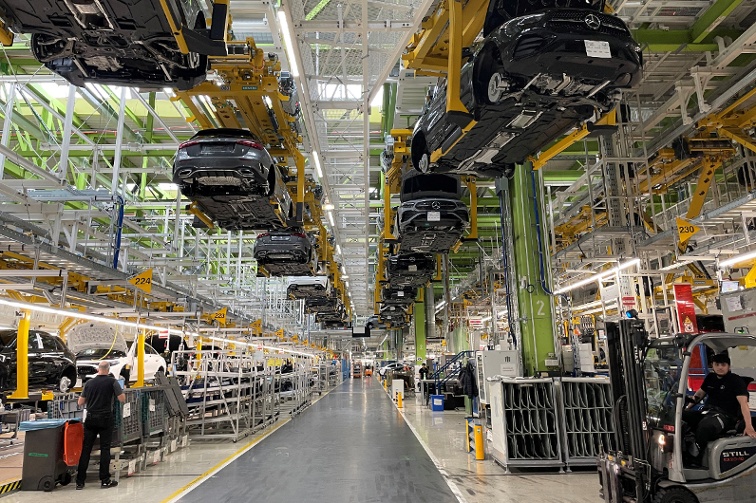
The "Great Technology Strategy" strongly advocated by Xi Jinping is at the heart of the current economic policy. This strategy, termed "new quality productivity," focuses on cutting-edge sectors such as artificial intelligence (AI), quantum technology, biomanufacturing, and green technology, channeling efforts through a novel national system. An article in The Economist highlights laboratories and industrial parks in locations like Yingtan, but it also notes that these advancements have not effectively translated into overall economic growth.
To meet performance targets, local governments have heavily subsidised high-tech projects, resulting in overcapacity, fierce competition, and inefficient investments. While significant breakthroughs have been achieved in areas like chips, electric vehicles (EV), and new energy—with leading patent numbers and manufacturing scales—there remains a substantial gap in the conversion rate of high-quality innovations and the originality of core technologies. These massive investments increasingly depend on government funding, which has severely stifled the vitality of private enterprises. Under Xi Jinping's leadership, the real estate sector, internet economy, and education and training industries have faced severe setbacks, leading to a loss of confidence among entrepreneurs and a prolonged slump in private investment.
The high-tech strategy has resulted in the costs associated with a dual-track economy: on one side, there is capital- and skill-intensive advanced manufacturing with limited capacity to absorb employment; on the other, traditional service industries, consumer spending, and small and micro enterprises are struggling. The consequences of this imbalance are evident in rising youth unemployment, stagnant wage growth, and declining consumer confidence, alongside sluggish retail sales and negative growth in household loans. The technological successes have not translated into broader benefits for the populace; rather, due to distorted subsidies and a focus on "state priority" sectors, inequality has worsened and domestic demand has weakened. Currently, the AI sector is projected to replace 51% of jobs, which will further exacerbate social instability.
International repercussions: decoupling, tariffs, and the risks of geopolitical isolation.
The global expansion strategy of the Chinese Communist Party (CCP) has sparked a significant international backlash. The United States and its allies have imposed export controls, entity lists, and tariffs on China's technology and manufacturing sectors, which have raised manufacturing costs in China and blocked the CCP's ability to dump excess production capacity abroad. The global price war initiated by the CCP's capacity exports has deteriorated trade relations, increased uncertainty, and further weakened domestic investment, while also discouraging foreign investment.
China's economy is now facing the risk of 'Japanification' or even more severe stagnation, characterised by low growth, high debt, and an ageing population, with technological advancements failing to offset widespread productivity and demand shortfalls. The legitimacy of the CCP regime has historically depended on economic growth; however, as the economy falters, the CCP has shifted towards nationalism and national security narratives to mask signs of its legitimacy weakening. The resulting dire conditions for the populace have led to collective dissatisfaction and middle-class dissent, with protests on platforms like Douyin and displays of loyalty becoming widespread, leaving Xi Jinping's regime in a vulnerable state.
Historical precedents from the Soviet Union and Japan provide cautionary lessons: excessive state intervention and geopolitical ambitions, when disconnected from the needs of the people and market fundamentals, often lead to adverse outcomes. Xi Jinping's global expansion and major technology strategy are rooted in the original ambition of communist global export, which is systematically undermining the vitality and potential of the Chinese economy. The Economist's characterisation of the CCP's economy as 'a mess' accurately reflects the consequences of Xi Jinping's economic policies.
(Originally published by the People News)△







News magazine bootstrap themes!
I like this themes, fast loading and look profesional
Thank you Carlos!
You're welcome!
Please support me with give positive rating!
Yes Sure!