

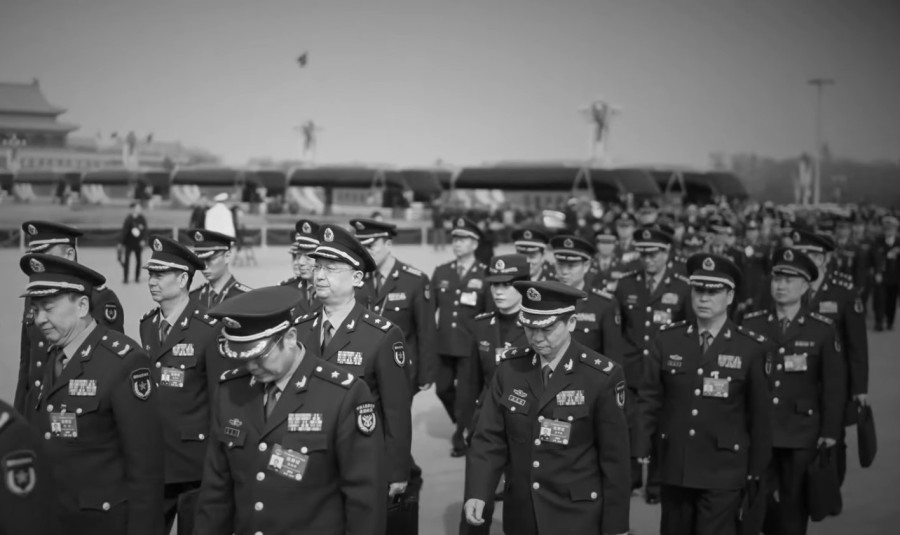
The Chinese Communist Party (CCP) is aggressively expanding its military, with its nuclear arsenal expected to reach 1,500 warheads by 2035, approaching the scale of the U.S. and Russia. The United States is increasingly concerned about Chin's nuclear expansion. (Video screenshot)
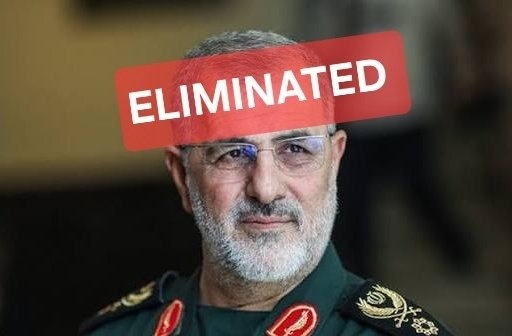
[People News] The joint U.S.–Israeli strike against Iran eliminated 49 core Iranian military and political leaders, including Supreme Leader Khamenei, within just a few hours. The shock to the Chinese Communist Party (CCP), in some respects, may even exceed that of the Gulf War more than 30 years ago.
“Operation Desert Storm,” which began on January 17, 1991, saw a U.S.-led coalition liberate Kuwait from Iraqi occupying forces after 42 days of airstrikes and less than 100 hours of ground combat. The Gulf War demonstrated a new model of warfare centered on informationization and precision-guided weapons. It was regarded as a “psychological atomic bomb” that made the CCP acutely aware of its own backwardness at the time.
Afterward, the CCP proposed achieving “two fundamental transformations,” shifting the “basic point of preparation for military struggle” from dealing with local wars under ordinary conditions to winning local wars under modern technological conditions, especially high-tech conditions. After Xi Jinping came to power, this was further adjusted to “winning informationized local wars” and “improving the capability to win informationized and intelligentized wars.”
As a result, over the past several decades the CCP has invested massively in the military. Military spending rose from about 29 billion yuan in 1990 to 1.81 trillion yuan in 2025. Defense spending has continued to grow rapidly, with its growth rate exceeding that of GDP. The scale of military spending has expanded dozens of times and is now second only to that of the United States, far surpassing other countries.
The CCP’s path of military development first emphasized “mechanization.” After the Gulf War it added “informationization,” and after 2019 it further added “intelligentization.” These “three transformations” are required to develop in an integrated manner (along with the selective development of so-called “assassin’s mace” weapons). The CCP also demands “ensuring the achievement of the centenary goal of building the military by 2027,” which essentially means seeking the military capability to take Taiwan even under circumstances where the United States might intervene militarily.
Decades of heavy spending have made the CCP increasingly arrogant. It began boasting slogans such as “Amazing, my country,” claiming achievements like building warships “like dumplings being dropped into boiling water,” leading the world in hypersonic missiles, being the first to test sixth-generation fighter jets, holding the world’s largest drone production capacity, and possessing AI capable of competing with the United States—seemingly suggesting it could challenge the U.S. directly.
However, in recent years the CCP has been severely embarrassed at least three times.
The first was the Russia–Ukraine war, which broke out in February 2022 and continues today. The CCP initially judged that the huge disparity in military strength meant Russia would quickly take Ukraine. Unexpectedly, events unfolded very differently. With support from the United States and NATO, Ukraine fought fiercely, dragging Russia into a prolonged war. Even without direct U.S. military involvement, the combat power reflected in the support provided to Ukraine clearly exceeded Russia’s by at least one level.
The CCP’s weapons systems, military structure, and defense technologies largely originate from Russia (the former Soviet Union). If Russia performs so poorly, how much better can the CCP, as its student, be? Although the CCP has also tried to learn from the United States, it has only grasped the superficial aspects. Moreover, Russia still holds one advantage over China: over the past decades the Russian military has continued fighting wars of various scales, while the Chinese military has enjoyed a long period of peace and has not been tempered by actual combat. If the Russian military performs this way, what about the PLA?
The second embarrassment occurred on January 3, 2026, when the U.S. military captured Venezuelan President Nicolás Maduro alive. The CCP had invested heavily in supporting the Maduro regime, including large quantities of weapons and military technology. Just hours before his capture, Maduro had been holding secret talks with a CCP envoy. Yet the U.S. military used high technology to paralyze the military defense systems supported by China, entered almost as if no one were there, and brought Maduro and his wife back to the United States within hours. For the CCP, even more important than Maduro’s capture was the demonstration of the U.S. military’s formidable information and tactical capabilities, which were chilling.
Before the CCP had recovered from this shock, a third blow arrived—the current large-scale U.S.–Israeli strike on Iran.
Since the 1979 Islamic Revolution, Iran has been continuously involved in wars and has extremely rich combat experience. Its military strength is far greater than that of Venezuela. For example, Iran is close to crossing the “nuclear threshold,” possesses capable drones and missiles, and has even assisted Russia in the Ukraine war. In addition, the military cooperation between China, Russia, and Iran far exceeds anything Venezuela could match. Therefore, CCP military experts had judged that: (1) Trump would not easily launch a military attack on Iran; and (2) if the U.S. did attack Iran, it might fall into a prolonged war similar to the Iraq War or the Afghanistan War.
Once again, the CCP was wrong. Trump not only dared to strike Iran but, in lightning fashion and together with Israel, almost completely eliminated Iran’s core leadership.
Everyone knows that when Russia invaded Ukraine it also attempted a decapitation strike at the outset but failed. How, then, did the United States and Israel succeed?
In addition, Russia made another major mistake—it failed to quickly concentrate forces to paralyze Ukraine’s operational system. Judging from the current situation on the Iranian battlefield, the United States and Israel appear to have achieved decisive progress in precisely this area.
On March 3, Trump told German Chancellor Friedrich Merz at the White House that Iran’s leaders were expected to lay down their weapons soon. Trump said that Iran now had no navy, no air force, and no aerial reconnaissance capability; its radar was paralyzed and its equipment malfunctioning, and “almost everything (of Iran’s military power) has been destroyed.”
“From a military perspective, they are still launching some missiles. But one day they won’t even be able to do that, because we are destroying all their warships,” Trump said. “We are destroying all their missile stockpiles. You know, over the past few years they have been stockpiling these missiles. They had a lot, they launched many, and we destroyed many.”
Why did the United States succeed where Russia failed? Because the U.S. military has truly realized what the CCP has long desired—“system-destruction warfare.” This means destroying or damaging key targets to paralyze the enemy’s operational system, undermine and crush the enemy’s will to fight, seize comprehensive battlefield control, and achieve operational objectives rapidly at relatively low cost.
To accomplish this requires mature informationized and intelligentized warfare capabilities. While the CCP is still calling for the integration of the “three transformations” (mechanization, informationization, and intelligentization), the United States has already begun enjoying the rich fruits of such capabilities.
Khamenei’s death and the battlefield situation in Iran have once again made the CCP leadership deeply aware of the real gap in military power between China and the United States.
On March 1, during a phone call with Russia’s foreign minister, Chinese Foreign Minister Wang Yi said that the United States and Israel had “brazenly assassinated the leader of a sovereign state and incited regime change, which is unacceptable.” In essence, this remark reveals the CCP’s fear—could the United States apply the same method used against Iran to China itself?
— The Dajiyuan
△



News magazine bootstrap themes!
I like this themes, fast loading and look profesional
Thank you Carlos!
You're welcome!
Please support me with give positive rating!
Yes Sure!