

The image shows a warning cone in Tiananmen Square. (Feng Li / Getty Images) Dajiyuan
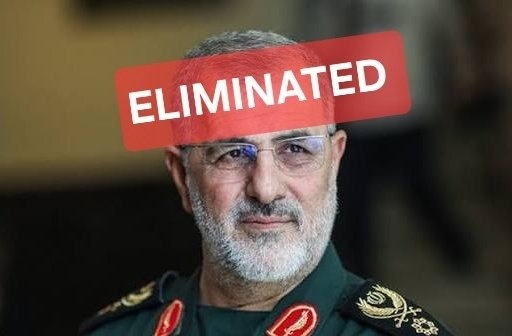
[People News] On February 28, the United States and Israel launched "Operation Epic Fury," conducting airstrikes in Iran that led to the death of Iran's Supreme Leader Khamenei. Many Iranians celebrated with joy, singing and dancing in the streets. Global media reported on the scenes of nationwide celebration in Iran. In stark contrast, the official media of the Chinese Communist Party (CCP) expressed Xi Jinping's shock and anger by stating they "resolutely oppose and strongly condemn" the actions taken. This clearly shows that the CCP's position is at odds with both global media and the sentiments of the Chinese public. Some commentators have likened the relationship between the CCP and Khamenei to the saying, "when the lips are gone, the teeth are cold."
A review of Chinese online platforms reveals that all CCP state media used the same headline to report Khamenei's death: "Iran's Supreme Leader Khamenei Assassinated; China Strongly Condemns the Attack and Killing." This headline effectively conveys the CCP's intense animosity towards the U.S. over Khamenei's assassination.
The CCP's Ministry of Foreign Affairs also publicly declared, "The U.S. and Israel's attack on Iran and the killing of its Supreme Leader Khamenei is a violation of United Nations principles and the basic norms of international relations. China firmly opposes and strongly condemns this."
Khamenei's Death: A Warning to Xi Jinping
On March 1, Du Wen, a former senior official of the Chinese Communist Party in Inner Mongolia, titled his YouTube program 'Khamenei Beheaded, Xi Jinping is Shaking.' He emphasised that this event is not merely a military action but also a politically significant upheaval. A theocratic regime that has long maintained a hardline stance lost its top leadership in just a few hours. Global public opinion quickly escalated, with a flood of commentary emerging. Many analysts pointed out that the signals sent by this 'decapitation-style war' extend far beyond Iran itself.
Du Wen highlighted that the repercussions are being felt in Beijing. As a long-term strategic partner, China has substantial investments in Iran across energy, infrastructure, and finance, amounting to hundreds of billions of dollars. Should the Iranian regime collapse or lose control entirely, these investments could rapidly become high-risk assets, potentially leading to total losses. Additionally, a significant portion of China's energy structure depends on Iranian crude oil; if the supply chain is disrupted, it would trigger a chain reaction affecting the domestic industrial system and energy security. Moreover, if the Strait of Hormuz is blocked or militarised for an extended period, it would not only impact global oil prices but also directly affect the security of China's foreign trade and strategic routes.
Du Wen remarked that what is even more striking is the military-level reflection. For a long time, military cooperation between China and Iran has been regarded by external observers as a crucial element of strategic coordination. Equipment such as drone systems, remote radar, layered air defence systems, and medium- to long-range missiles have been touted as symbols of technological superiority, breakthroughs, and independent innovation. However, in the face of this sudden high-intensity precision strike, these systems have largely failed to provide effective early warning or interception. The Iranian leadership was taken out almost entirely unprepared, and this outcome has sparked extensive discussion within the international military observation community. It has become evident that trust in the military equipment of the Chinese Communist Party (CCP) has been gravely misplaced! The assertion of technological superiority is nothing short of a dangerous lie! These issues have quickly become the focal point of analysis. The myth surrounding CCP military equipment has crumbled in real combat, and its repercussions will extend far beyond the battlefield itself—it will impact the CCP's reputation in arms sales, its strategic credibility, and the core deterrent power of China as a major nation. This situation also raises a legal question: given that the Iranian leadership's trust in Chinese equipment led to their decapitation, does the CCP have a responsibility to provide compensation?
Du Wen also remarked that the more profound upheaval stems from the complete overhaul of the logic surrounding power security. In recent years, a coalition of authoritarian regimes, exemplified by China, Russia, Iran, Syria, North Korea, Venezuela, and Cuba, has gradually emerged. As China's economic strength has grown, it has become the financial lifeline and driving force for other authoritarian states. The conflict in Iran has introduced a novel warfare paradigm: the focus is no longer on capturing cities or advancing front lines, but rather on dismantling the opponent's decision-making core within hours through intelligence infiltration, cyber suppression, and precision strikes from a distance. Warfare has transitioned from 'depleting the enemy's forces' to 'destroying the enemy's brain.' When both the supreme leader and the top command are eliminated simultaneously, the state apparatus loses its central authority in an instant, and the power structure is left without its backbone.
Du Wen emphasised that what is even more critical is that the arrest of Maduro in Venezuela and the beheading of Khamenei in Iran have demonstrated that dictators are no longer shielded by international law. This serves as a stark and direct warning to Xi Jinping. The image of a sitting head of state from a sovereign nation being forcibly removed from power by another country marks an unprecedented moment of upheaval in international political history. In that instant, the world became acutely aware that the old order is unravelling, and the dynamics between strongmen and power have entered a new phase that no longer adheres to traditional narratives.
Chinese citizens: 'Dictators deserve such a fate.'
According to reports from The Epoch Times, several citizens from Baotou in Inner Mongolia, Wenzhou in Zhejiang, Beijing, Tianjin, and Shanghai expressed their excitement and joy during interviews, viewing the death of Khamenei as a 'symbol of the end of the dictatorial regime.'
Liu Ling from Wenzhou, Zhejiang, smiled as she told reporters that she was very happy to hear this news. Iran has long been under a highly centralised regime, suppressing the rights of its people. She believes that a gradual reduction in the number of totalitarian countries worldwide would benefit ordinary citizens. Liu noted that the common people are suffering greatly, with officials wielding immense power. Although there appear to be many oversight bodies, they do not effectively constrain those in power. She emphasised that the core issue in Chinese society is the lack of effective checks and balances on authority.
Wang Bo, a resident of Beijing, candidly remarked, 'Dictators should meet such an end.' He expressed confidence that justice will ultimately prevail and hopes that China will move towards democracy and development, free from dictatorship in the future.
Yang Ying, a citizen of Tianjin, expressed her shock, stating, 'It's too shocking.' She voiced her dissatisfaction with the Chinese Communist Party's media outlet Xinhua, which described Khamenei as having 'met his demise.' Yang argued that this term is inappropriate and that the reporting is biased, suggesting it should be changed to 'Khamenei was removed.' She stated, 'I believe all dictators worldwide should be eradicated. The people of China are suffering immensely, and we have reached a breaking point where we can no longer endure. I look forward to China also breaking free from the dictatorial regime and achieving freedom and democracy.'
Cai Yong from Baotou City, Inner Mongolia, contextualises the event within a broader international framework, expressing his support for the assertive approach of the United States in global affairs. He specifically commends President Trump, asserting that Trump is a remarkable leader and that 'seeking peace through strength' is the most effective strategy.
Cai Yong argues that for authoritarian regimes, moderate negotiations and economic concessions are often ineffective; only by demonstrating strength can a deterrent effect be achieved. He points out that dictators like Venezuelan President Maduro and Iranian leader Khamenei have been overthrown one after another, and this series of events serves as a deterrent to certain countries, which will also influence the global energy and geopolitical landscape.
'Water can carry a boat, but it can also capsize it.'
Lu Xiang, a resident of Shanghai, reflects on the historical and social changes in Iran. He reminisces about the social conditions in Iran before the 1979 revolution, when women did not have to wear face coverings or headscarves, allowing their faces to be visible. He criticises the current regime for its restrictions on women's attire and social freedoms, stating that the government forces women to wear headscarves and cover their faces, which he considers inhumane. The Iranian people have been stripped of their rights and are subjected to severe repression. Recently, during an internet blackout in Iran, many citizens were massacred, and he describes the Iranian government as an evil, privileged organisation.
He believes that throughout history, wise monarchs have appointed virtuous individuals as ministers, earning the affection of the people, and that unity among the populace is crucial for a stable regime. 'Water can carry a boat, but it can also capsize it,' highlighting the significance of public opinion.
Lin Jianze from Shaoyang, Hunan, expressed that the death of Khamenei marks the collapse of a dictatorial regime, and the Iranian people have now risen up in resistance, resulting in many casualties during this uprising. He believes the Chinese Communist Party (CCP) should adapt to this situation, stating, 'In today's world, democracy, freedom, and human rights are universal values. I hope China can soon become a truly trustworthy nation.'
Overseas netizens: The CCP supports those who are doomed.
On the X platform, numerous users applauded the U.S. for eliminating Khamenei. Comments included, 'The CCP supports whoever is doomed! The CCP is not only a calamity for the Chinese people but also for its old allies!' and 'This isn't just hitting Khamenei; it's clearly a blow to the CCP's face.'
An X user known as 'News Investigation' reported that on the streets of London, Israelis and Iranians celebrated together, singing and dancing in joy over the complete downfall of the Iranian theocratic regime and the historic victory for both peoples. The CCP's crucial West Asia pillar of the Belt and Road Initiative has crumbled, and Xi Jinping is increasingly cornered!
Another X user, 'No King No Emperor (Aoxite Special Forces),' humorously noted: It's amusing! Reports indicate that the CCP is planning to sign a defence agreement with Iran, yet the U.S. military has just taken action against Khamenei! What agreement can they sign now? The man is gone! This reminds me of when the CCP sent a funeral delegation to Maduro; are they looking to send off the theocrat too? Seven missiles struck near the Iranian presidential palace and the theocrat's residence; this is a slap in Xi Jinping's face! Israel has stated that Tehran will be completely transformed as soon as tomorrow. Wonderful! When will Beijing also undergo a transformation? △




News magazine bootstrap themes!
I like this themes, fast loading and look profesional
Thank you Carlos!
You're welcome!
Please support me with give positive rating!
Yes Sure!