

Dark clouds hang over Tiananmen Square in Beijing. (Lintao Zhang/Getty Images)
[People News] The countdown to the downfall of the Iranian regime has begun. While Iran may seem distant on the map, it stands as a natural ally to China in the international arena due to their shared anti-American stance. The Iranian theocratic regime is teetering on the brink, and its path bears many similarities to that of the Chinese Communist Party (CCP). The crisis confronting Khamenei is urgent, and Xi Jinping finds himself in a difficult position, as the CCP is running out of funds; a comprehensive financial crisis has erupted, signalling a deadly threat to the foundation of the dictatorial regime.
As of January 14, the protests in Iran have entered their 18th day, with the death toll reaching at least 12,000. Under mounting pressure from U.S. President Trump, Iranian authorities have been compelled to cease the killing of demonstrators. The protests continue to unfold.
One Iranian protester conveyed a message: "We are just one step away from freedom. This freedom has come at a painful cost. We will continue to advance with tears, anger, and unwavering determination."
The chaotic political landscape in Iran has left officials in Zhongnanhai restless through the night. The cries of Iranian protesters not only instil fear in Khamenei but also create unease for Xi Jinping. The sentiment that "dictators do not last long; after Iran, the next will be the CCP" is gaining traction both inside and outside the Great Wall.
The Maduro couple was taken from their bedroom by U.S. special forces while they were still asleep. Following this, Trump announced that the U.S. would directly 'take over' Venezuela until a power transfer he approved was completed. Trump's sudden and direct action of capturing a foreign leader across the ocean has instilled fear in the heads of anti-American dictatorial regimes.
In the last year or two, a clear trend has emerged globally, with dictatorial regimes that adopt 'anti-Americanism' as a national policy facing crises one after another. What is keeping Iran barely functioning internally, and how has it gradually reached this point of imminent collapse? The path to the downfall of dictatorial regimes seems all too familiar.
First, let’s state an objective fact: pro-American countries tend to have a higher level of development than anti-American countries. Even when excluding anti-American nations, those that are simply not in conflict with the U.S. generally do not develop as well as pro-American countries.
This is not meant to be a tribute to the U.S. During the first thirty years of the CCP's (Chinese Communist Party) anti-American stance, economic development was quite challenging. However, during the reform and opening-up period, when relations with the U.S. entered a honeymoon phase, economic growth accelerated significantly. In recent years, under the leadership of Xi Jinping, who has a PhD but is often criticised for his elementary school education, the U.S.-China rivalry has intensified, pushing China's national fortunes into another difficult historical phase.
In fact, the CCP fears economic crises the most, as its legitimacy is solely based on economic growth. While economic growth and national GDP growth do not necessarily lead to an increase in people's wages, a declining economy will cause wages to drop even faster and more significantly. Economists predict that China's economy will continue to decline in 2026, with no signs of a turning point.
Insiders within the Chinese Communist Party (CCP) have repeatedly revealed that 'the party really has no money!' This phrase is often echoed by Du Wen, the Executive Director of the Legal Advisory Office of the former Inner Mongolia Autonomous Region government, during discussions within the country. Du Wen emphasised that this is not an exaggeration, but rather a stark reality reflecting the financial struggles faced by various regions across China today.
As the year draws to a close, a wave of unpaid wages has emerged throughout China. In just the past week, there have been over ten reported incidents of wage disputes, with workers blocking roads, halting work, and taking to the internet to assert their rights, resulting in distressing scenes.
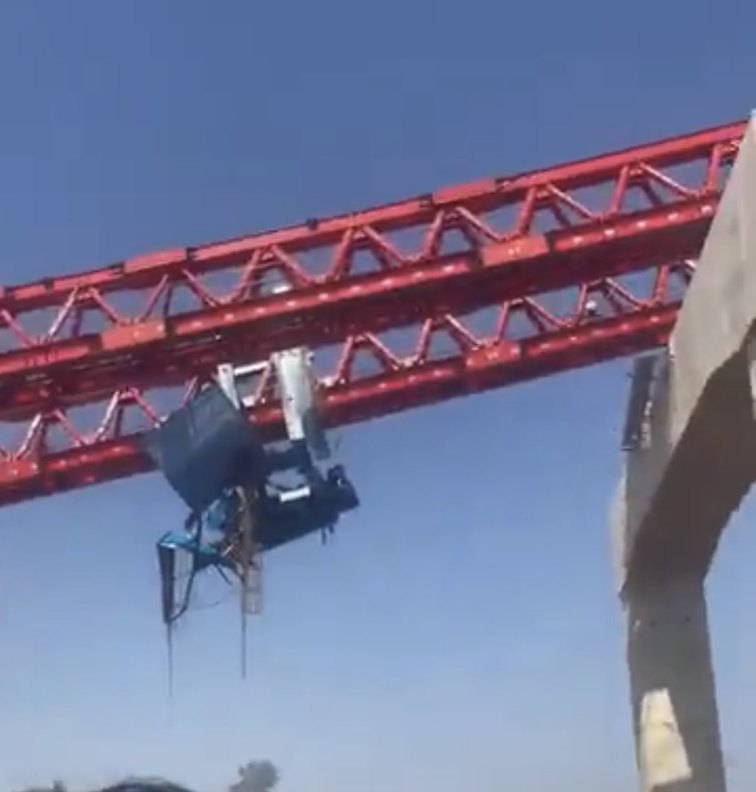
In Baise, Guangxi, more than a dozen workers on a highway displayed banners demanding their wages; in Hanchuan, Hubei, factory workers protested collectively by blocking the entrance due to unpaid salaries. In Daqing, Heilongjiang, construction workers even spent two days and nights stranded on a tower crane, all in an effort to reclaim their hard-earned money.
Numerous netizens have also reported being owed wages, including medical staff working in hospitals, who have found themselves embroiled in the wage arrears crisis. Even 'grid workers' tasked with maintaining stability for the CCP have encountered significant wage delays. One 'grid worker' mentioned that he has been owed over 20 months of salary, stating, 'I have been working for free for nearly two years.'
In recent years, the CCP has increasingly relied on social grid-based monitoring as a key strategy for maintaining stability, pouring substantial funds into recruiting informants and grid workers to serve as eyes and ears for control, monitoring the public. Grid workers work in conjunction with residents' committees and the police, tasked with gathering resident information, reporting issues, and enforcing policies, and are considered grassroots government personnel. Most grid workers are contract employees, earning approximately 2,200 yuan per month, with some regions imposing an age limit of 35 years for applicants.
Grid workers play a crucial role in managing community affairs and maintaining stability in China. They are seen as the "capillaries" and "nerve endings" of the governance system of the Chinese Communist Party (CCP), representing the most direct manifestation of Xi Jinping's concept of "refined social management." As the most fundamental force for stability maintenance, the expenses of grid workers are categorised under stability maintenance funding. If these grassroots capillaries lose their financial support, the CCP's social control network is bound to weaken and become ineffective.
In 2024, the government of Hanjing District in Putian City, Fujian Province, has not disbursed salaries for over six months, affecting nearly 700 to 800 grid workers in the area, who have not received their wages during this period, severely impacting their livelihoods.
Yuan Hongbing, an Australian legal scholar, cited reports from conscientious individuals within the CCP, indicating that in Beijing, apart from Haidian District, other districts and counties will only be able to pay civil servants' salaries for "8 to 9 months" in 2025. This means that salaries will only be disbursed for 8 to 9 months throughout the year. He pointed out that the financial situation in the CCP's capital has reached a critical point, making it easy to imagine the dire circumstances faced by other provinces and cities. The conditions in remote and impoverished areas are likely even worse.
For the first time in decades of CCP rule, the party is confronting a comprehensive financial crisis. As the year-end approaches, maintaining basic operations has become challenging, and sustaining grassroots stability maintenance forces is also difficult, reflecting that the foundation of its rule is facing unprecedented challenges.
Du Wen believes that the financial crisis is what keeps Zhongnanhai awake at night, as it is eroding the grassroots control of the CCP.
The stability maintenance system and grassroots connections of the Chinese Communist Party (CCP) are primarily located at the county and township levels. Currently, the extensive team of grassroots civil servants in county and township governments—including teachers, doctors, police officers, and urban management community workers—faces a critical situation. If these individuals do not receive their salaries and benefits, it is likely to result in discontent, a lack of motivation, and even lead to a phenomenon where they abandon their posts and adopt a 'lying flat' attitude. This large grassroots workforce is essential for the CCP's efforts to maintain stability and control over society. Should their morale wane or they turn against the party, it would deliver a devastating blow to the CCP regime.
As 'tight days' become the new normal, CCP authorities have been compelled to publicly acknowledge and address this financial crisis. Recently, the General Office of the Central Committee of the Communist Party of China and the General Office of the State Council issued a notice titled 'Implementing the Requirements for Party and Government Agencies to Adapt to Tight Days.' This notice imposes strict controls on expenditures across 16 areas, including official overseas trips, domestic research, official receptions, travel expenses, official vehicles, meetings and training, exhibitions and forums, administrative office operations, construction and renovation of buildings, information technology development, asset revitalisation, budget constraints, and supervision and inspection. Agencies at all levels are required to tighten their belts and 'get used to' living in tight circumstances.
Du Wen has indicated that at the beginning of this year, it is highly likely that resources will be depleted, marking a period of the CCP's most acute financial strain and highest risk. It is probable that more government departments will be unable to cope with crises.
Du Wen believes that if grassroots finances are entirely severed, many grassroots public services will come to a standstill, and civil servants will leave their posts, inevitably triggering a societal chain reaction. This scenario represents a New Year nightmare that Xi Jinping is most reluctant to witness but finds increasingly difficult to avoid. Furthermore, this crisis poses a significant threat to Xi Jinping's legitimacy in governance.
Without financial resources, it is unlikely that anyone will assist the Chinese Communist Party (CCP) in carrying out its dirty work. In such a scenario, even if Xi Jinping wishes to maintain a high-pressure regime, it may prove difficult. A financial collapse would directly lead to a crisis of political trust; the public would lose faith in the government, which could gradually result in social unrest.
Yang Qing (pseudonym), an official from the financial system of a southern province in China, recently shared in an interview with The Epoch Times that the local government he works for has suspended several project expenditures since the end of July this year. This includes urban garbage collection, some government vehicles, and certain police equipment, all of which the government can no longer afford to pay for.
Yang Qing disclosed that dozens of project expenditures have been halted in total, effectively putting the government's basic responsibilities on hold and rendering it incapacitated.
He believes that the trend of the Chinese economy becoming increasingly difficult is not only a trend but also an inevitable pattern. A financial crisis can lead to a social crisis. The situation in 2026 is expected to be more challenging than in 2025, with conditions worsening.
To minimise wealth losses, Yang Qing advises the Chinese public against keeping all their money in banks, as this is unreliable. The renminbi is bound to become worthless; he suggests exchanging some for US dollars and keeping cash on hand. This way, if a situation similar to the collapse of the Soviet Union arises, it could help mitigate losses.
Economic issues are likely to incite civil unrest and will serve as the primary catalyst for the Communist Party's downfall. Iran serves as a clear example of this. The CCP is closely following Iran's example, and unpaid wages could become a trigger for large-scale protests, as a hopeless populace may rise up in resistance.
These dictatorial regimes share a common method for dealing with their citizens: coercion, intimidation, arrests, and sentencing, which have become the default tools for addressing issues within a country. However, while fear may lead to silence and resistance, it cannot foster acceptance.
The imminent downfall of the Iranian regime serves as three important lessons for Xi Jinping.
The first lesson is that the legitimacy of any regime ultimately relies on the improvement of people's livelihoods. No matter how grand the ideological narratives or how hardline the foreign policies, they cannot surpass the ordinary people's fundamental desire for a 'better life.'
The second lesson is that foreign policy must support domestic development and should not be confrontational for its own sake. Pursuing a hardline foreign stance while neglecting the essential aspects of domestic growth will ultimately burden the populace and lead to the regime's collapse.
The third and most crucial lesson is that the governance system must evolve with the times and cannot be disconnected from contemporary trends. Democratic systems represent a global movement, and China's future will inevitably align with world civilisation. If Xi Jinping's allies continue to face crises and he fails to change course and dismantle the CCP's dictatorial structure, he risks being swept away by history, following in the footsteps of his troubled allies.
(First published in People News)
△





News magazine bootstrap themes!
I like this themes, fast loading and look profesional
Thank you Carlos!
You're welcome!
Please support me with give positive rating!
Yes Sure!