

Netizens have taken to mocking Huawei by shaking the Bamboo Cicada and creating short videos, but these faced widespread deletions by the platform, which only intensified the backlash. (Video screenshot)
[People News] The 'Bamboo Cicada' is a traditional bamboo toy for children that has unexpectedly become the hottest topic on the Chinese internet recently. Some netizens produced short videos using the 'Bamboo Cicada' to poke fun at Huawei, but after the platform's large-scale deletions, the backlash grew even stronger, resulting in a flood of parody videos across major social media platforms. Analysts suggest that this incident has transcended mere meme-making and represents a concentrated release of public frustration that has built up over time, with Huawei serving as a stand-in for dissatisfaction with the Chinese Communist Party.
As reported by The Epoch Times, the roots of this incident can be traced back to late 2023. Yu Chengdong, Chairman of Huawei's Terminal BG and head of HarmonyOS, claimed at the launch event for the new Wenjie M9 vehicle that it is 'the best SUV under 10 million yuan.' Immediately after his statement, the audience erupted in a chorus of 'wow' exclamations, a moment that has since been widely referenced and turned into a popular meme online.
Recently, a netizen created a video featuring the 'Bamboo Cicada.' In this video, the user combined the continuous 'wow' sounds produced by shaking the Bamboo Cicada with the astonished reactions from the Huawei launch event, adding text such as 'the best toy under 10 million yuan.' This video quickly went viral on social media platforms like Douyin and Weibo.
The short video featuring the Bamboo Cicada was taken down, and Huawei has responded.
In response to the wave of online mockery, Huawei's terminal-related departments have started reporting multiple social media platforms. Since the end of July, several short video creators have received notifications from these platforms stating that their videos have been reported and taken down, with some accounts facing penalties. Leaked notifications from the platforms indicate that the complaints primarily target content that mocks and vilifies the company and its entrepreneurs through homophones, metaphors, and other means, resulting in a decline in social perception.
On the evening of August 4, a spokesperson for Hongmeng Zhixing issued a statement on its official Weibo account, stressing that this complaint is part of routine rights protection efforts, aimed at specific infringing content rather than the Zhuzhiliao toy itself.
The statement revealed that over 56,000 pieces of relevant online information were monitored, with actual complaints filed on 171 of them, leading to the takedown of 144 videos by the platform; the official also denied claims of a 'nationwide takedown' or 'sales ban'.
However, reports from media outlets like The Paper indicate that some of the videos taken down merely showcased or produced Zhuzhiliao toys without mentioning Huawei or related individuals, prompting many creators to question the overly broad scope of the complaints and the unintended consequences for ordinary users.
Analysis: From Meme to Resistance, the Nature of Public Opinion is Subtly Shifting
Huawei's reporting and the subsequent takedown of numerous videos have triggered a strong backlash, quickly leading to a wave of imitation online, with the number of related videos surpassing 3,000 in a single day at one point.
Following this, netizens have continued to use everyday items such as pot lids, bottle caps, wrenches, and medicine bottles to mimic similar sounds, producing related videos and developing various versions.
On Chinese e-commerce platforms, numerous merchants have added labels like 'same style' and 'far ahead', leading to a rapid surge in sales for some stores, even resulting in supply shortages.
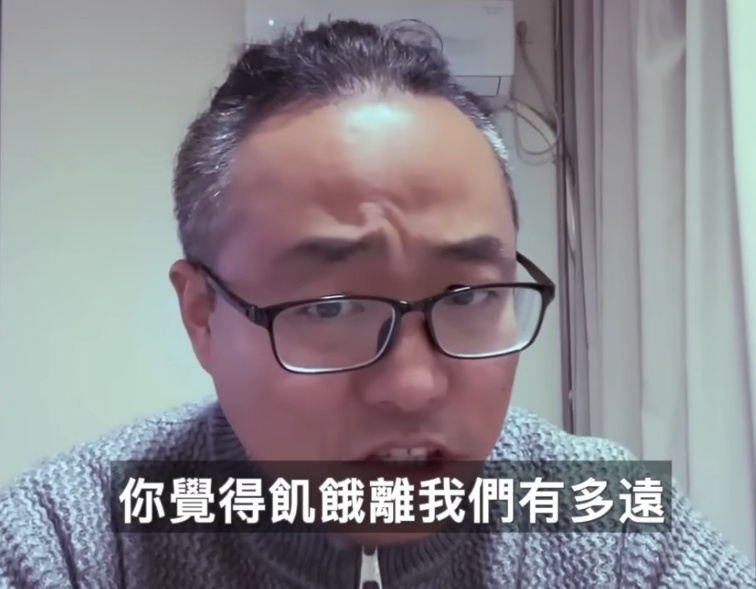
Tang Jingyuan, a current affairs commentator based in the United States, analyzed in his self-media program that the nature of this incident has shifted. Huawei initially aimed to quickly 'extinguish the fire' using its usual tactics, but unexpectedly, it ended up 'igniting a larger fire'.
He believes that while the incident started with netizens joking and mocking Huawei, the authorities' extensive deletion of posts and restrictions on views have provoked a backlash from the public. Many netizens have begun purchasing 'bamboo cicadas', creating videos, and some have even gone to Huawei stores to shake 'bamboo cicadas' as a form of protest.
In his perspective, 'bamboo cicadas' are merely the trigger; the real issue is the long-standing social sentiment that has built up. He pointed out that Huawei has a history of suppressing users, netizens, and even employees, which has created a lasting impression that 'Huawei cannot be provoked'. Huawei has also intentionally cultivated this image, even considering 'no one dares to provoke Huawei' as part of its corporate culture, knowing it has the support of the party.
Tang Jingyuan further noted that the mockery and resistance from many netizens towards Huawei have transcended mere feelings about a single company. By mocking Huawei, they are indirectly expressing their dissatisfaction with the CCP system, a phenomenon referred to as 'beating the dog to show the master'. He believes this is one reason why, despite the risk of account bans, many netizens continue to post related videos.
He noted that without the backing of the Chinese Communist Party (CCP) system, Huawei would not have such strong capabilities in controlling public opinion. However, he believes that Huawei's decision to closely align itself with the CCP inevitably incurs certain costs.
Tang Jingyuan remarked that he has observed many former supporters of Huawei publicly stating that they will no longer buy Huawei products. He believes this shift reflects not just a change in consumer choice, but a transformation in value orientation.
Analysis: The 'De-authorization' Culture Behind the Pun Phenomenon
Zhang Tianliang, a professor at the University of America, mentioned in a self-media program that the core of the 'Bamboo Cicada' incident is a common pun phenomenon in the internet age. He pointed out that internet culture inherently features 'de-authorizing'; the more prominent a company or individual is, the more likely they are to become material for secondary creation, a trend also seen with well-known entrepreneurs in other countries.
Zhang Tianliang believes that Yu Chengdong's frequent use of high-profile phrases like 'far ahead', 'redefine', and 'crush' to craft his personal image makes him a more likely target for online mockery. Meanwhile, Huawei, as a company symbolizing 'national technology', is often held to higher expectations of tolerance by the public. When the company exhibits a strong or even aggressive demeanor, it is more prone to invite irony.
He also pointed out that the real escalation of this incident was not due to the initial pun, but rather Huawei's subsequent actions, such as deleting posts and limiting traffic. This series of actions triggered what is known in communication studies as the 'Streisand Effect'—the more one attempts to conceal or remove certain content, the more widely that content tends to spread.
Diverging Perspectives in Law and Business
According to a report by The Paper, a lawyer in Shanghai asserts that netizens' actions of purchasing and using 'bamboo cicadas' or creating short videos based on them are legitimate activities that do not infringe upon the rights of others. Conversely, an associate professor at East China University of Political Science and Law noted that, from the standpoint of anti-unfair competition law, satirical content aimed at corporate executives could potentially constitute infringement if it leads to actual or potential damage to a company's reputation. He cautioned, however, that companies must find a balance between protecting their rights and maintaining a positive public image, emphasizing that top executives, as public figures, should exhibit greater tolerance for criticism.
Business leaders have also weighed in on the matter. Reports indicate that a former executive from a technology company attributed the current uproar to the inflexibility of the company's internal crisis management mechanisms. He drew a comparison to a case where the founder of another tech firm diffused a controversy regarding his accent at a press conference through self-deprecating humor, suggesting that Huawei should adopt a more lighthearted approach to respond to the mockery instead of resorting to mass complaints.
Huawei's Robust Public Relations and the CCP's Suppression of Public Discourse
In reality, Huawei's complaint against the 'bamboo cicada' videos is not the first instance of targeting self-media in this manner.
As early as March 2025, the legal department of Hongmeng Zhixing filed a lawsuit against the self-media account 'I am Classmate Da Bin', accusing it of disseminating insulting comments and defaming the brand and its products. In November of the same year, the Cyberspace Administration of China initiated a special rectification campaign, highlighting accounts like 'I am Classmate Da Bin' as notable cases for reporting.
In May 2026, the Legal Department of Hongmeng Zhixing released the outcomes of several cases involving self-media reports. In the second trial of the 'I am Classmate Da Bin' case, the original ruling was upheld, requiring the blogger to delete their statements, issue a public apology, and pay 1.5 million yuan in damages. In the 'Piao Qi Wei - Mr. Song Ting' case, the first trial ruled in favor of the plaintiff, ordering a public apology and compensation of 400,000 yuan for defamation. Furthermore, Hongmeng Zhixing has reported several account operators to the police for engaging in long-term rumor-mongering and defamation, resulting in the administrative detention of several individuals.
As the Huawei 'Bamboo Cicada' incident continues to unfold, the Cyberspace Administration of China announced on its official website the initiation of a special campaign to 'rectify malicious hype surrounding corporate information,' which led to the closure of several accounts. The official statement specifically identified cases such as 'Electric Car Xiao Fei' and 'Workplace Five Dou Mi,' accusing these self-media outlets of disseminating misleading information and damaging the products and commercial reputation of automotive companies, resulting in the shutdown of the implicated accounts.
In response to the official claims attributing some criticism to 'organized attacks,' Tang Jingyuan argues that this narrative could be used to justify the Chinese Communist Party's further tightening of public opinion control. He warns that if Huawei does not confront the underlying emotions driving the backlash and instead relies solely on suppression, the situation is likely to escalate further.
△






News magazine bootstrap themes!
I like this themes, fast loading and look profesional
Thank you Carlos!
You're welcome!
Please support me with give positive rating!
Yes Sure!