
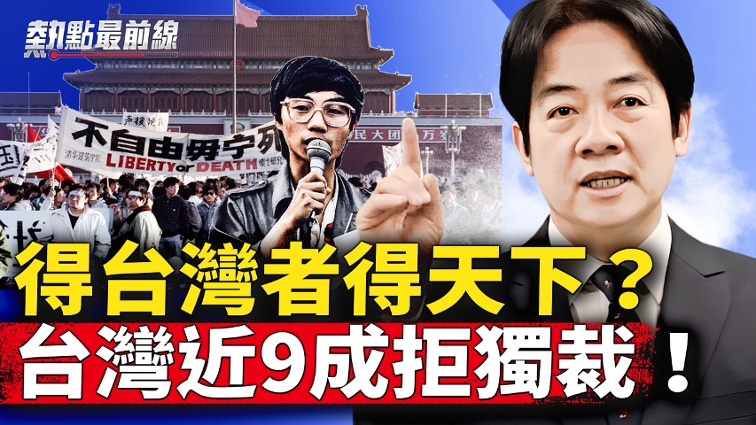
Two Thousand Photos From the June Fourth Incident Have Been Revealed for the First Time: Is Taiwan the Next Tiananmen? (Video)
[People News] Hello everyone, and welcome to the May 29th episode of 'Hotspot Frontline.' I am Xiaokun.
Currently, the entire world is focused on a pressing question: In the AI century war between the US and China, who will emerge victorious? If a conflict were to break out in the Taiwan Strait, what would the world look like?
On this topic, the world's richest man, Elon Musk, provided a stark perspective in a deep interview last year, cutting through the complexities of geopolitics with cold business logic.
Musk stated seriously: 'In the future world, whoever can effectively control semiconductor factories will dominate the realm of artificial intelligence.'
His comments sparked a wave of discussions on the X platform and within the Taiwanese community. Netizens expressed their sentiments, noting that this is the historical conclusion drawn by the tech mogul — 'Whoever secures Taiwan secures the world.'
However, can this golden island, which embodies the notion of 'whoever secures Taiwan secures the world,' truly be treated as expendable?
According to the latest real-time survey released by Taiwan's Mainland Affairs Council and the Taiwan Inspirational Association (TIA), the data offers a shocking revelation: nearly 80% of Taiwanese people firmly oppose the Chinese Communist Party's 'one country, two systems'; furthermore, nearly 90% of the population has made it clear — 'We absolutely do not accept a peaceful unification that sacrifices our freedom and democracy,' and even if the flag changes, they are resolutely against being ruled by the Communist Party!
The true trump card and clear awareness of the Taiwanese people
Let’s examine this latest situation survey released on May 29, and see just how astonishing its findings are.
First, a recent poll asked the public: "If China promotes cross-strait unification under the 'one country, two systems' framework, do you support it?" The results revealed that a striking 72% of Taiwanese respondents opposed this idea!
It is important to note that the most significant detail to highlight is that this consensus spans all political parties, including independents and the People's Party, all of whom show overwhelming opposition. Even among supporters of the Kuomintang (KMT), often seen as the most favourable towards cross-strait exchanges, 54% oppose 'one country, two systems', surpassing half!
This clearly demonstrates one thing: in Taiwan, regardless of whether one's political stance is blue, green, or white, there exists a strong, unshakeable consensus among all Taiwanese on the issue of "refusing to accept the CCP's dictatorial rule and firmly defending Taiwan's freedom and democracy!"
Additionally, this poll includes a particularly incisive statement regarding President Lai Ching-te's views on cross-strait sovereignty. The survey asked whether respondents agree with the statement: "The Republic of China (Taiwan) is already a sovereign and independent democratic country, and there is no issue of Taiwan independence." The result shows that an impressive 66.2% of the public fully agrees!
When this data is compared with the latest cross-sectional survey from the Mainland Affairs Council (MAC), it highlights an intriguing aspect of public sentiment across the strait. The MAC's latest poll asked: "Do you support the Republic of China and the People's Republic of China being mutually independent?" The support rate surged to 72%.
Simultaneously, 55% of the public believes that future peace across the Taiwan Strait should be maintained through "dialogue and communication." What does this signify? It represents the genuine public sentiment in Taiwan that we must express loudly today—Taiwanese people desire dialogue and peaceful exchanges across the Strait, but this in no way equates to accepting unification or relinquishing sovereignty.
The mindset of the Taiwanese people is quite clear, a concept referred to in political science as "hostile coexistence": we are fully aware that our systems are in opposition, yet we aim to maintain peaceful coexistence while safeguarding our sovereignty and opposing the one country, two systems policy.
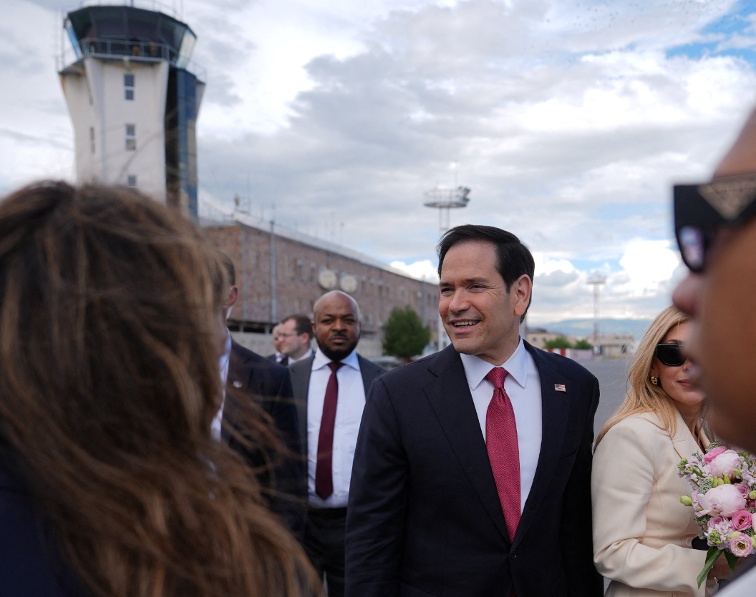
What I find most admirable is the awareness of the Taiwanese public in the face of external threats. The poll referenced the latest warning from the U.S. government, where U.S. Secretary of State Rubio recently stated publicly that the Chinese Communist Party is employing tactics such as information manipulation, political influence, and "public opinion infiltration" to sway democratic societies, and is even attempting to coerce Taiwan into accepting unification through voting or referendums in the future.
The survey directly asked the Taiwanese citizens: "Do you agree with U.S. Secretary of State Rubio's warning?" The results revealed that a remarkable 57% of Taiwanese people fully agree! Beyond the Kuomintang, even the majority of the People’s Party and non-partisan individuals acknowledged that the U.S. is correct.
Dear audience, by clearly articulating these specific poll results, we can genuinely comprehend why Taiwan possesses an irreplaceable "dual absolute importance" in the global geopolitical context:
The first layer refers to the 'importance of technological hard power' mentioned by Musk and Huang Renxun, which shapes the fate of global technology and controls 100% of advanced AI chips.
The second layer highlights the significance of the democratic spirit revealed by the latest poll, which is staunchly defended by over half of the blue camp in Taiwan, regardless of political affiliation. This data demonstrates that Taiwan is not a soft target that can be easily bought or intimidated. The public sentiment in Taiwan is abundantly clear: we cherish peace, but we will never accept 'peace at the expense of losing democracy and sovereignty.'
If Taiwan falls under totalitarian rule, it will become the next Tiananmen.
Dear viewers, after hearing those latest and most genuine polling statements, we all understand that nearly 90% of people in Taiwan, regardless of political affiliation, are resolutely opposed to being ruled by the Chinese Communist Party. This is certainly not just a political slogan; it represents the fundamental bottom line for everyone.
The people of Taiwan have long been accustomed to freedom. Freedom in Taiwan is as natural as air and water, so much so that we often forget how precious it is.
In Taiwan, the public can freely share various memes online every day, write articles that sharply criticise the president and officials; they can also take to the streets in large numbers to demand the government step down due to dissatisfaction with policies or high housing prices.
Just in the past two days, in response to the psychological crisis faced by grassroots teachers, teacher groups have been able to publicly apply pressure, compelling Kaohsiung Mayor Chen Qimai to immediately hold a press conference to apologise and pledge to reduce the administrative burden on frontline teachers. In Taiwan, the people are the true masters of the country; if officials do not perform well, we can use our votes and public opinion to ensure they are held accountable.
Now, I invite everyone to close your eyes and envision the most terrifying yet realistic scenario. What would the world look like if one day Taiwan, due to its weakness and compromises, were forced to accept the dictatorial rule of the Chinese Communist Party (CCP)?
Following unification, the CCP will undoubtedly impose comprehensive digital totalitarianism and the harshest social control over Taiwan to fully dominate the semiconductor and AI industries that Elon Musk and Jensen Huang describe as 'determining the fate of global humanity.'
At that point, when young people in Taiwan feel hopeless due to soaring housing prices, and when workers, facing low wages and long hours, wish to organise unions, initiate strikes, and take to the streets to advocate for their rights as they did in the past, there will be no mayor stepping forward to consult or apologise to the people of Taiwan.
If you attempt to express your views online, the Great Firewall will completely silence you; your account will be swiftly deactivated, and you might even have national security officers knocking on your door in the middle of the night. If you dare to protest in the streets, the historical images I am about to present will depict the future awaiting all Taiwanese people!
On the eve of the 37th anniversary of the June Fourth Incident, the Dajiyuan released a shocking report that sent waves of panic through Zhongnanhai. A former official photographer of the CCP, who was present at the event, took the significant risk of having his entire family searched and facing severe penalties in the twilight of his life, transmitting over two thousand never-before-seen historical photographs of the June Fourth Incident, which had been hidden for 37 years, for public release overseas.
These two thousand photographs serve as undeniable historical evidence, brutally dismantling the lies that the Chinese Communist Party (CCP) has constructed over the past thirty years. In these newly unveiled black-and-white and colour images, we witness ordinary workers and citizens in Beijing during the early summer of 1989, delivering water and medicine to hunger-striking students on their bicycles. We see young faces in their early twenties, earnestly pleading with the government for constitutional governance and integrity in the most peaceful and rational manner. They are cherished by their parents and represent the pinnacle of intellectual talent in China during that era.
The moment the highest echelons of the CCP declared martial law, all gentle illusions about this totalitarian regime were crushed under the weight of bullets and tanks. The CCP mobilised over 200,000 regular troops from surrounding areas, equipped with heavy weaponry, and violently advanced towards this group of unarmed students. The sounds of cries and gunfire reverberated throughout Beijing and beyond.
As of today, in 2026, the CCP continues to suppress this chapter of history. On the internet in mainland China, the term 'June Fourth' remains strictly prohibited. Just in the past few days, following the overseas exposure of these two thousand photographs, CCP national security personnel have been aggressively threatening and harassing all individuals within the country connected to these images.
In the power dynamics of the Communist Party, anyone who dares to challenge its dictatorial authority—whether they are compatriots, students, or share the same blood—will find themselves facing the full force of its military might.
So, what makes you naively believe that once it seizes Taiwan and controls 100% of the global AI chip market, it will treat the 23 million people of Taiwan—whom it has so painstakingly acquired—with kindness?
This is not alarmist rhetoric; it reflects a historical reality that is both occurring and has already occurred. Take a look at Hong Kong, which once received a written promise from the Chinese Communist Party (CCP) that there would be 'no change for fifty years.' Yet today, the people can be imprisoned for merely speaking the truth or lighting a candle for the June Fourth incident.
During the 2019 anti-extradition movement in Hong Kong, CCP state media and several officials praised police violence. Notably, 'Zheng Jian,' the head of the CCP Political and Legal Affairs Commission, stated on Weibo, 'If we don’t shoot now, what use is a gun, what use is a police force?' In the lexicon of the Chinese Communist Party's dictatorship, there are no terms for 'communication' or 'concession,' only 'absolute obedience' and 'violent eradication.'
Anti-communism is the fundamental principle shared by political parties across Taiwan's political spectrum.
It is precisely because they recognize this reality and understand the survival crisis that there is fundamentally no division among Taiwan's political parties on the critical issue of 'opposing CCP dictatorship, defending the constitutional system of the Republic of China, and steadfastly upholding democratic principles.'
We need to uncover the truth about history and political parties. The opposition Kuomintang, which bases its founding principles on the Constitution of the Republic of China, adheres to a constitution rooted in democratic governance, fundamentally opposing the Communist Party of China's (CPC) authoritarian regime. Former President Ma Ying-jeou has consistently made public statements on June 4th, both during his presidency and after leaving office, openly criticising the CPC for its human rights violations and urging Beijing to sincerely confront its historical errors. This demonstrates that both the mainstream and grassroots supporters of the blue camp share the Republic of China's steadfast commitment to opposing communist dictatorship and totalitarianism. In other words, when it comes to rejecting the Communist Party's authoritarian rule, Taiwan stands united.
On May 29th, Taiwan's Legislative Yuan showcased a robust united front to the nation and the world through decisive and impactful actions. After rational discussions and reviews among various political parties, a strong consensus was reached, leading to the official approval of the first batch of military procurement special budget amounting to 8.81 billion and 57 million, which will be immediately allocated for implementation!
This exemplifies Taiwan's most cherished democratic values! While internal debates may become heated over details, this is part of democratic oversight; however, when faced with a significant threat and at a critical juncture for survival, political parties can swiftly put aside their differences and collaborate effectively. Everyone understands that peace is not something that can be begged for; Taiwan must possess weapons and maintain a strong national defence to secure genuine peace through strength.
The people of Taiwan possess the AI high-tech chips that will shape the future of the world, and they must also have the steel weapons necessary to defend the dignity of their homeland. The major political parties in Taiwan need to set aside their internal conflicts and work towards substantial national defence cooperation, united under the common goal of 'opposing the CCP's dictatorship and defending the Republic of China.'
Only by being strong, united across the political spectrum, and having a robust national defence can we ensure that the tanks of the CCP do not dare to cross the Taiwan Strait. This is the only way for the next generation of Taiwan to breathe the air of democracy with dignity, safety, and confidence on this free land. We must not allow the tragedy of Tiananmen to be repeated in the Taiwan Strait; this is not about any single political party, but about the shared homeland of all Taiwanese people!
Thank you for tuning in to this episode of 'Hotspot Frontline.' If you agree with today's analysis, please remember to like, subscribe, share, and activate the notification bell. We look forward to seeing you in the next episode! △






News magazine bootstrap themes!
I like this themes, fast loading and look profesional
Thank you Carlos!
You're welcome!
Please support me with give positive rating!
Yes Sure!