
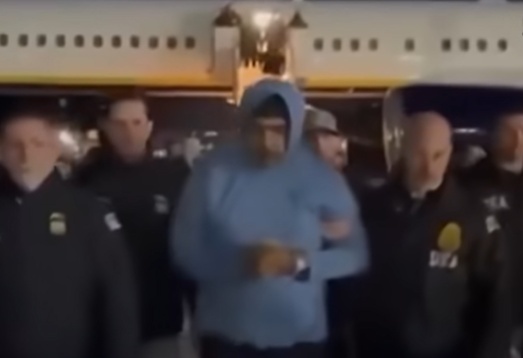
Venezuelan President Maduro has been captured by the U.S. military. (Video screenshot)
[People News] On Saturday, January 3, the United States announced that it had arrested Venezuelan President Maduro through a large-scale military operation. Although the Russian Foreign Ministry, as a long-time 'intimate friend' of Venezuela, issued a statement supporting the country immediately, President Putin, who truly shapes Russia's political landscape, surprisingly chose to remain silent. This has raised suspicions that 'Russia has effectively abandoned Maduro.'
Russian Air Defence Systems Fail to Intercept U.S. Military Aircraft
During the administration of Maduro's predecessor, the late President Chavez, the Venezuelan military began a significant upgrade of its air defence systems with Russian-made equipment, including the S-300, 'Bechamel', and 11 sets of 'Berkut-2M' air defence systems, along with at least 5,000 Russian-made portable air defence missiles. In response to the Trump administration's announcement of military action, Maduro had even boasted that Venezuela had established strong defensive barriers on 'every hill and in every town.'
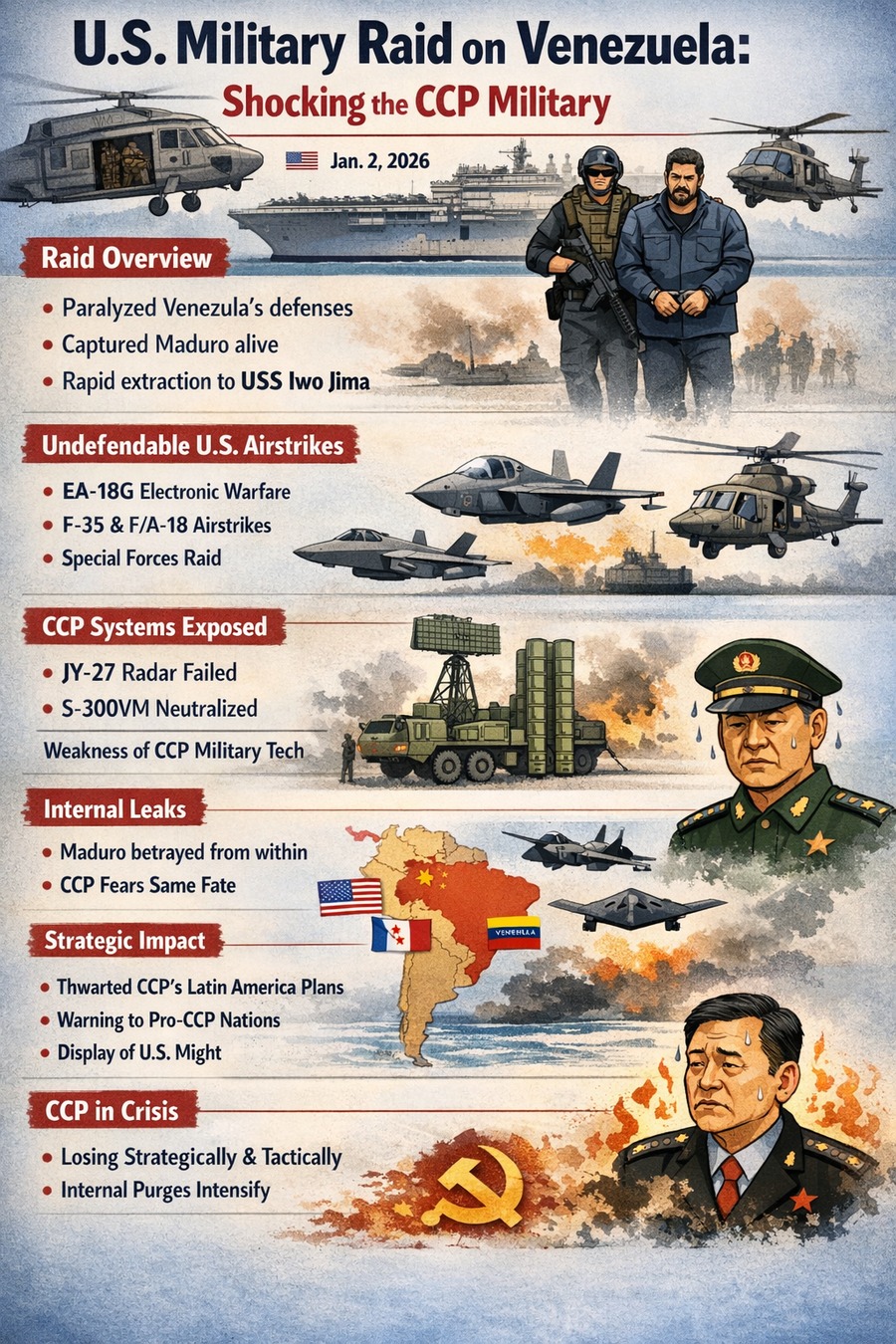
However, during the U.S. military's raid on Venezuela on January 3, which aimed to arrest President Maduro in an 'absolute determination operation,' the Russian-made air defence systems deployed in Venezuela 'collectively fell silent,' achieving zero interceptions and zero counterattacks, and failing to shoot down any U.S. military aircraft, showcasing extremely poor performance in actual combat. Additionally, the radar and equipment purchased from China by Venezuela also completely malfunctioned and failed to serve any purpose. During a speech at the Newport News shipyard in Virginia on January 5, U.S. War Secretary Hegseth sarcastically remarked, "Seems those Russian air defences didn't quite work so well, did they?"
Why doesn't Putin publicly criticise Trump?
Neil Melvin, an expert at the Royal United Services Institute (RUSI), stated in an interview with Deutsche Welle that "Russia's support for Venezuela is more symbolic than practical." He believes that Russia lacks the capability to challenge U.S. military deployments in its neighbouring regions.
Melvin explained that Russia refrains from making sharp criticisms of Washington because it does not want to "offend" the United States. He indicated that without the Ukraine war, Moscow's rhetoric regarding Venezuela would be "significantly tougher," but that would be the extent of it. The British expert also stressed that this would not directly affect the Ukraine war. However, he noted that if Trump were to extend his influence beyond Venezuela, such as attempting to "annexe" Greenland, which belongs to Denmark, the situation could change.
Russia's status is in decline.
The arrest of Maduro in a U.S. military raid resonates profoundly with the ongoing conflict stemming from Russia's invasion of Ukraine. The intersection of these two significant events signifies a complete collapse of Russia's international reputation and a rapid decline in its geopolitical standing.
On the one hand, Russia has revealed the limitations of its conventional military capabilities on the battlefield in Ukraine. Additionally, during the incident in Venezuela, the advanced Russian S-300VM air defence system exhibited 'no response' to U.S. electronic warfare, effectively dismantling the myth that Russian weaponry could effectively counter NATO and U.S. forces. This phenomenon, often referred to as the 'paper tiger' effect, underscores the global collapse of Russia's military deterrence.
On the other hand, while the Russian Foreign Ministry has vehemently condemned the U.S. arrest of Maduro as a 'blatant violation of international law,' these statements are perceived as a glaring example of 'double standards' in the United Nations and international public opinion, especially in light of Russia's own invasion of Ukraine.
Observers note that if the invasion of Ukraine marked the onset of Russia's decline in international standing, then the U.S. military's abduction of Maduro 'right under Russia's nose' symbolises the formal collapse of its global influence. This situation highlights that, in the new geopolitical landscape of 2026, Russia is unable to uphold its strategic interests worldwide, with its geopolitical presence diminished to a historic low. △


News magazine bootstrap themes!
I like this themes, fast loading and look profesional
Thank you Carlos!
You're welcome!
Please support me with give positive rating!
Yes Sure!