
China
Popular news

Why the United States Considers Confucius Institutes a National Security Threat
On the 23rd, U.S. Secretary of Defence Peter Hegseth stated that the U.S. Department of Defence regards the "Confucius Institutes" operating within the United States as a threat to national security. In a video shared on social media, he asserted that these institutes function in U.S. universities u


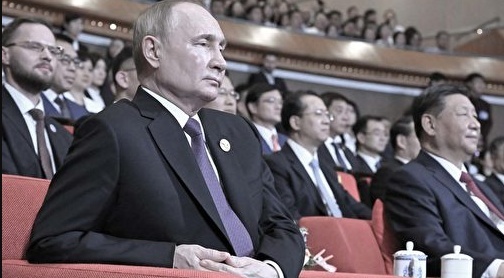


Addiction Is Hard to Shake Off! Are Short Dramas Like Opium Making People Dumber?
Does watching short dramas truly lead to addiction and a decline in intelligence? Recently, the phrase 'short dramas reduce intelligence' surged to the top of Weibo's trending topics, with numerous netizens expressing their frustrations that the more they watch these dramas, the more addicted they become, and their mental faculties seem to diminish.

Official Media Have Rarely Published Photos of Xi Jinping With His Hands in His Pockets, Which May Carry a Deeper Significance.
On October 15, the day after Chinese Premier Li Qiang delivered a rare video speech at the opening ceremony of the new China-North Korea Yalu River Bridge, Xi Jinping visited Ulanqab City in Inner Mongolia to inspect green development initiatives.

Qiushi Magazine Signals Escalation in Xi Jinping’s Political Purge
In mid-October 2026, just before the 20th Central Committee's fifth plenary session of the Communist Party of China, the political climate in Beijing took a sudden downturn. On October 16, "Qiushi" magazine published a crucial article by Xi Jinping titled "Advancing Comprehensive Strict Governance of the Party with Higher Standards and More Practical Measures."
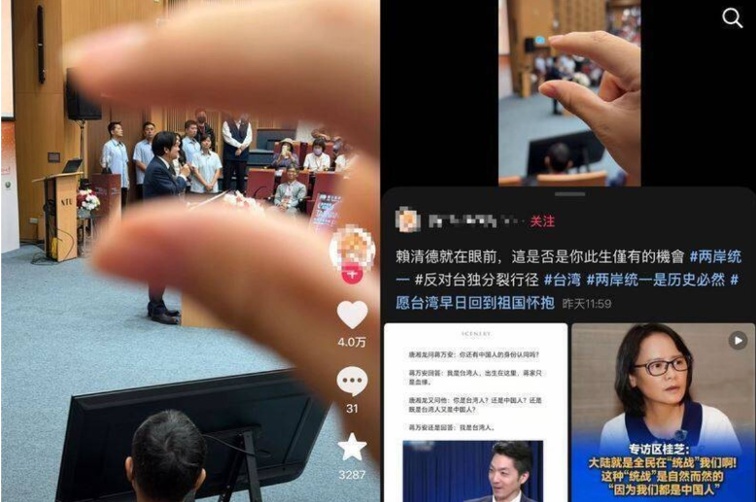
Expelled! Little Wolf Insults Head of State, Banned from Entering Taiwan for 5 Years
On October 12, Republic of China President Lai Ching-te attended the closing ceremony of the 'Taiwan Bridge Project.' During the event, a video captured a Chinese exchange student, Wang, who used a camera angle to create a distorted image that seemed to show him pinching Lai Ching-te's head from a distance.

The Communist Party of China Targets Wealth Rankings for Tax Collection: How Mainland China's Super Rich Are Responding
In recent years, local governments in China have been under increasing fiscal pressure due to persistently weak domestic demand and broader economic imbalances. The Central Committee of the Communist Party has been promoting the 'common prosperity' policy, and the implementation of the global automatic exchange of tax information on financial accounts (CRS) has resulted in unprecedented levels of tax audits and enforcement aimed at high-net-worth individuals (the super-rich).

The Central Committee of the Communist Party of China (CPC) Is Taking a Leading Role in Decision-Making and Coordination
The main article in the 20th issue of the CPC's party journal "Qiushi," published on October 16, is authored by CPC leader Xi Jinping. This article is based on a speech he delivered at the Central Commission for Discipline Inspection (CCDI) plenary session in January this year.

Chinese People Consume Poison Daily! Toxic Meat, Toxic Rice, and Toxic Cabbage Are Widespread
China's meat processing giant Shuanghui has recently faced a serious scandal! On October 9, Shuanghui was hit with an astonishing fine of 129 million yuan! The food safety issues that have emerged are even more alarming.

A Chinese graduate student at the University of Wyoming has been arrested for poisoning the tea of their classmates.
Wang Aili, who is pursuing a degree in microbiology at the University of Wyoming, was taken into custody for allegedly poisoning the tea of a classmate with whom she had a strained relationship, despite the classmate having promising career prospects. After being interrogated by the police, Wang attempted to flee the United States but was apprehended at the airport.

CCP's 'Data Finding People' Initiative Urges Social Security Contributions, Citizens Voice Concerns Over Heavy Burden
The Chinese Communist Party has suggested using methods like 'data-driven identification' to locate individuals who have not yet registered for social insurance and to encourage their participation in social security. Social media platforms have emerged as a tool for this 'data-driven identification.'
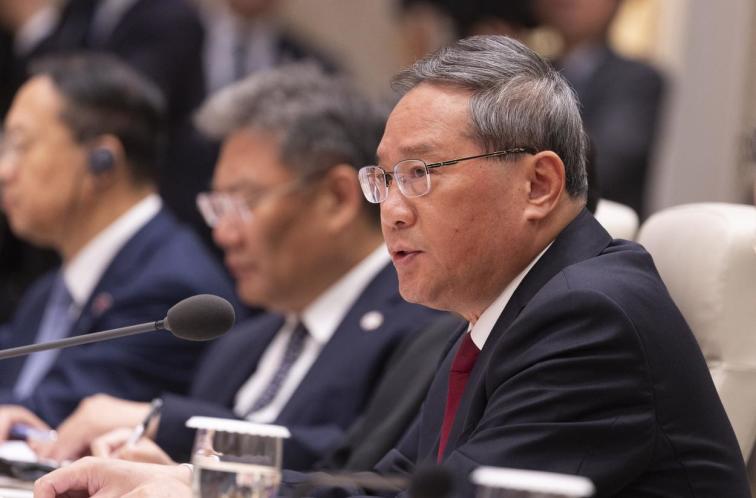
Li Qiang's Rare Video Speech: A Major Signal for the Fifth Plenary Session to Succeed Xi?
As the Chinese Communist Party prepares for its Fifth Plenary Session, rumours have circulated online regarding Xi Jinping's potential resignation as General Secretary of the Communist Party and President of the State. These rumours, along with various signs observed over the past few months, suggest that Premier Li Qiang is the likely successor.

At the Moment Huang Qifan Chose to Participate in Live Organ Harvesting, His Fate Was Already Sealed.
On October 13, Huang Qifan, the former deputy secretary of the Chongqing Municipal Committee and former mayor, known as the 'Weeble of the officialdom,' was officially announced to have fallen from grace. Just days before this announcement, reports indicated that his planned attendance at a forum in Hangzhou was 'cancelled for reasons.'

Why Do Mainlanders Break Down in Tears Upon Hearing the Republic of China's National Flag Song?
October is indeed a fascinating month for both sides of the Taiwan Strait. October 1st marks the National Day of Communist China, while October 10th is the National Day of the Republic of China, with just a brief nine days in between.

Xi Jinping's Endgame Enters Countdown: No Amount of Power Can Escape Historical Fate
For several years, rumours have circulated suggesting that Xi Jinping is suffering from a serious illness. While the Chinese Communist Party (CCP) has not officially addressed these claims, the presence of two cups in front of Xi during meetings has led many to believe that his health is significantly compromised, despite the lack of clarification from official sources.

No Longer Re-Elected as the Next General Secretary, Is the Strategy Beginning With the Investigation of Huang Qifan?
Former Chongqing Mayor Huang Qifan is currently under investigation. Analysts suggest that this move reflects the Chinese Communist Party's (CCP) commitment to 'strict governance of the party' as discussed in the Fifth Plenary Session, and it also represents a significant maneuver in the personnel battles leading up to the 21st National Congress.

The Party Treats the 'Little Pinks' as Expendable! The FBI Has Apprehended Agents of the CCP, Leading to Dire Consequences for Them
Two significant cases have recently come to light in the United States. One involves a Chinese woman suspected of surveilling the family of Taiwan's president, who was arrested at the airport. The other case concerns a Chinese engineer who has lived in the U.S. for over thirty years and holds a U.S. passport.

Wang Huning's Speech Further Confirms That Xi Cannot Make Decisions Independently.
According to reports from the official media of the Communist Party of China (CPC), on October 12, the CPC held a commemorative conference for the 70th anniversary of the Overseas Chinese Federation. Wang Huning, a member of the Standing Committee of the Political Bureau of the CPC Central Committee and Chairman of the National Committee of the Chinese People's Political Consultative Conference, attended the conference and delivered a speech. Two notable points emerged from the news report and Wang Huning's address.
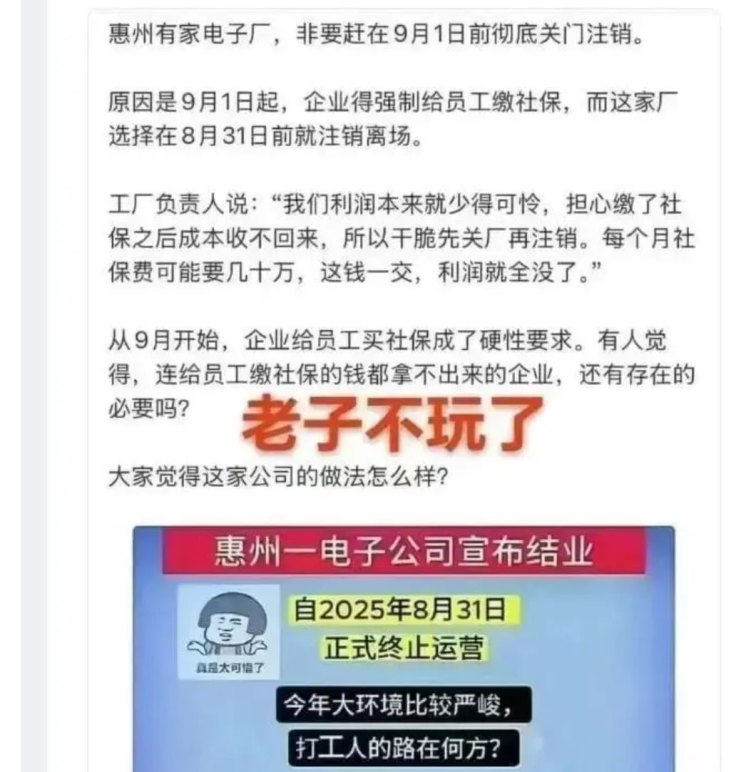
IMF Expresses Pessimism About China's Economy, Social Security Policy Criticized as an Impossible Triangle for Ordinary Citizens
On October 13, the International Monetary Fund (IMF) published its latest "World Economic Outlook" report, which has revised its forecast for China's economic growth rate in 2026 down from 4.6% in July to 4.5%, a reduction of 0.1 percentage points.

Former Chongqing Mayor Huang Qifan Under Investigation: Corruption or Disloyalty?
At 18:00 Beijing time on the 13th, the Central Commission for Discipline Inspection (CCDI) and the National Supervisory Commission (NSC) announced that Huang Qifan, the former deputy secretary of the Chongqing Municipal Committee and former mayor of Chongqing, is under investigation for serious violations of discipline and law.
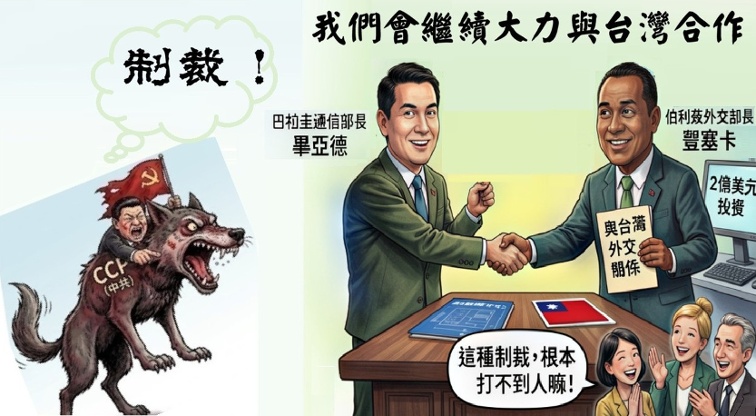
President Xi Is Quite Pleased! The Wolf Warriors Are Launching Empty Sanctions Against Latin American Officials
The CCP's wolf warriors have once again put on a show—this time with 'empty sanctions'!

The Epidemic Is Striking From Both the North and South, Putting China in a Precarious Situation.
Ebola death cases in the Democratic Republic of the Congo (DRC) have spilled over. Last week, the first Ebola patient in Kenya became ill in the DRC and, after traveling by plane through Uganda to Kenya, sadly passed away. In response, Kenya immediately began monitoring 57 close contacts, including about 27 passengers and crew members from the same flight. So far, 17 individuals have been quarantined.