

Recently, CCP leader Xi Jinping's crackdown on the military has garnered significant attention from the international community. The accompanying image shows Xi Jinping (centre) attending a ceremony at Tiananmen Square in Beijing on September 30, 2018. (Lintao Zhang/Getty Images)
[People News] As the Fifth Plenary Session of the Communist Party of China approaches, various reports about Xi Jinping have once again taken centre stage in party and military media. His three titles and the loyalty phrase 'two safeguards' have frequently appeared, creating the impression that Xi continues to wield considerable power. His recent key activities include:
On October 23, the Political Bureau of the Central Committee of the Communist Party held a meeting to review the 'Comprehensive Report on the Situation of the Seventh Round of Inspections of the 20th Central Committee,' which Xi Jinping presided over. The meeting stressed that central and state agencies must prioritise the 'two safeguards' and must 'continuously enhance political judgment, political understanding, and political execution,' while 'resolutely implementing the major decisions and deployments of the Party Central Committee.'
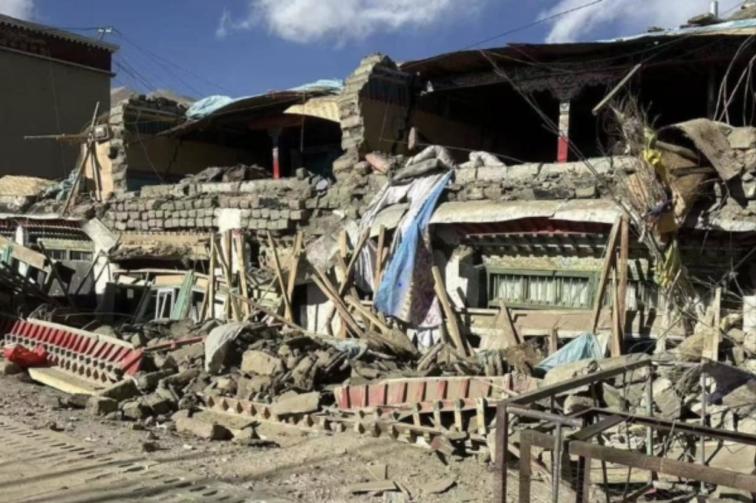
On the same day, a 7.0 magnitude earthquake struck Naqu, Tibet, leading to directives from Xi and Li Qiang. Xi also sent a letter to the 2026 Global Governance Forum (Xiong'an).
On October 22, during the 90th anniversary conference commemorating the so-called 'Victory of the Long March,' which was essentially a retreat to the north, Xi Jinping delivered a speech filled with falsehoods, emphasising the role of the 'Party.' Zhao Leji presided over the conference, unlike the 80th anniversary conference ten years ago, which was chaired by the Premier. Following Xi's speech, major official media outlets published a series of commentary articles on learning from the speech, along with articles from military personnel and the public 'seriously studying' the speech, all of which included loyalty phrases.
On October 20, Xi sent a congratulatory letter for the 70th anniversary of the founding of the Central Socialist Academy.
The 20th issue of the magazine 'Qiushi,' published on October 16, featured Xi's article 'Advancing Comprehensive Strict Governance of the Party with Higher Standards and More Practical Measures.'
At first glance, based on Xi's activities and the superficial articles in state media, it appears that Xi remains the key figure in power within the Communist Party of China (CPC). However, beneath this seemingly glorious facade, there are numerous discordant voices that seem to challenge this assessment.
Let’s delve into the discord surrounding these activities. Firstly, a review of past deliberation inspection reports indicates that the mention of 'the implementation of major decisions and deployments of the Party Central Committee' began with the Politburo meeting of the CPC Central Committee held on November 28, 2025. An article titled 'Improving the Mechanism for Implementing Major Decisions and Deployments of the Party Central Committee,' published concurrently in Qiushi, explicitly highlights the role of the 'decision-making coordination body of the Party Central Committee' in significant matters. This body, which operates above the Politburo, evidently possesses greater authority in decision-making on critical issues than Xi.
Secondly, while military and state media appear to be earnestly studying Xi's speech commemorating the Long March, a commentary in the People's Liberation Army Daily on October 22, titled 'Continuing to Forge Ahead on the New Long March,' states, 'The entire army resolutely unifies thoughts and actions with the decisions and deployments of the Party Central Committee, the Central Military Commission, and the important instructions of Chairman Xi.'
Such phrasing was first noted in a military report on September 11, titled 'Persisting in Advancing National Defence and Military Modernisation with a Correct View of Achievements,' and reappeared in the editorial of the military report on September 23. Previously, the military had stated, 'resolutely implementing the major decisions and deployments of the Party Central Committee, the Central Military Commission, and Chairman Xi.' This suggests that Xi may either be sidelined from the decision-making processes of the Military Commission or can only operate under the auspices of the 'Central Military Commission.'
Additionally, the cover of the September issue of 'PLA Pictorial', which was published in mid-October, has once again been 'shelved', and there are no reports about Xi Jinping in that issue. Furthermore, unlike ten years ago, there was no notification from the General Office of the Central Military Commission today, which required 'the entire military and armed police forces to earnestly study and implement Chairman Xi's important speech at the commemoration of the 80th anniversary of the victory of the Long March'.
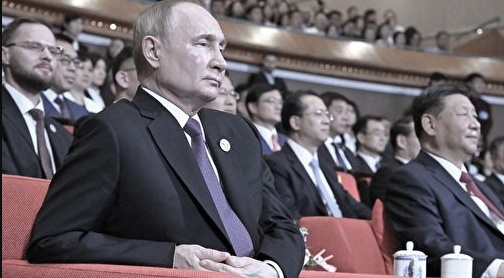
Moreover, this year, neither Xi nor other senior officials attended the commemorative cultural gala for the 'Long March'. In contrast, in 2016, Xi led the Standing Committee, and in 2006, Hu Jintao did the same, participating in related large-scale galas or concerts. Why was there no arrangement this time? Is it due to Xi's health issues, or are there other reasons?
On one hand, there is a strong emphasis on studying Xi's speeches to demonstrate loyalty; on the other hand, there is a clear effort to downplay Xi's presence. Which narrative is accurate?
Thirdly, while Xi sent a congratulatory letter, it does not represent a congratulation from the 'Party Central Committee', but rather states ', I would like to express my congratulations'. At the celebration held on the same day, there was also an unusual occurrence where an unknown individual read Xi's congratulatory letter, and Wang Huning, who attended and spoke, referred to Xi with a reduced title.
Undoubtedly, the CCP is disseminating a mix of true and false information, aiming to prevent the outside world from prematurely discovering the truth about changes in senior personnel. What kind of impact will the Fifth Plenary Session of the CCP have?
(People News first published) △






News magazine bootstrap themes!
I like this themes, fast loading and look profesional
Thank you Carlos!
You're welcome!
Please support me with give positive rating!
Yes Sure!