

Chinese men's football (People News/AI-generated image)
[People News] Recently, the most absurd news is that the Chinese men's football team lost to the Palestinian national team by a staggering score of 0 to 5 in an international football invitation match held in Chongqing.
Palestine only declared its statehood in 1988 and still lacks recognized territory and borders. The Palestinian Authority can only manage fragmented areas of the West Bank, which has been internally divided for a long time, lacks independent military and air defence capabilities, and does not have its own customs revenue. The total population in Palestine is only 5.7 million, comparable to a medium-sized city in China.
From the perspective of Chinese fans, this result is a national disgrace, and the national team's poor performance is nothing new. In recent years, the national team's record includes losses of 0 to 7 against Japan, 0 to 2 against Myanmar, 0 to 3 against South Korea, 0 to 3 against India, 0 to 5 against North Korea, 0 to 3 against Vietnam, 0 to 3 against Cambodia, 0 to 4 against Iran, 0 to 5 against the Philippines, and 0 to 3 against Iraq—almost every Asian country has defeated them, truly a loss of face. It is surprising that the Communist Party still has the audacity to host an international invitation match in Chongqing.
Chinese football was once a sport that Xi Jinping hoped to revive with great dedication, with the government investing substantial funds to scout talent nationwide, selecting the best from county and district levels to provincial and municipal levels, sending the cream of the crop to the national football team. No other country in the world enjoys such favorable conditions, but unfortunately, money cannot make a ghost push the mill; the decline of football has been a longstanding issue.
Why is Chinese football like a muddy wall that cannot be propped up? Ultimately, this issue is tied to the state system of the Communist Party of China. The government monopolizes the development of football, which has also led to the infiltration of its darker aspects into the football world. Recently, nearly the entire senior management of the Football Association was implicated in corruption scandals, including the deputy director of the National Sports Administration, the president and vice presidents of the Football Association, the general manager of the Chinese Super League, and head coaches, with the total embezzlement amounting to 260 million yuan. It is indeed strange that football could thrive when a government agency responsible for its lifeblood is rotten from top to bottom.
In several major football nations in South America, the sport thrives on a long-standing grassroots passion, supported by fans nationwide, along with commercial operations and government backing. It is common to see street children in South America playing football in tattered clothes; many future football stars emerge from these humble beginnings, rising through their own talent and hard work.
In China, every provincial capital has sports schools aimed at selecting and nurturing talented youth, with the intention of promoting the most outstanding players step by step until they reach the national team. However, given the current national conditions and public sentiment in China, this system has been corrupted from the grassroots level.
In China, those who make it to the national football team enjoy substantial incomes, which once soared to tens of millions. Although this has declined in recent years, national team members still earn around 5 million yuan annually, not including bonuses for winning. With such attractive compensation, it’s no surprise that competition is fierce. According to the rules of corruption, for a young person to join a youth training team, their parents often need to leverage connections and offer bribes; the higher the level, the larger the bribe required, indicating that the entire system is fundamentally flawed from the outset.
Sports elites are required to have exceptional physical attributes, including outstanding jumping ability, explosive power, endurance, perseverance, and comprehension. While training methods are generally similar, physical qualities are predominantly innate. The real challenge is identifying the one exceptional talent among many. When coaches go to grassroots levels to scout for potential children, they face pressure from various relatives, local officials, and business elites. Some rely on connections, while others resort to bribery. Those with poor qualifications are excluded, while those with exceptional talent but no bribes are pushed out. Ultimately, only those with some qualifications and financial backing remain.
After several rounds of reverse elimination, the children who enter sports schools are not necessarily the most talented. The ones who eventually make it to the national team often possess strong material desires but only average innate qualities. With such average qualities, no amount of training can transform them into top players, resulting in national team members being merely mediocre. When a mediocre team from a large country faces the best from a smaller nation, compounded by the long-term corruption from unethical practices in training and competitions, losing becomes highly likely.
In recent years, the decline of Chinese sports extends beyond just the national football team; traditional leading sports such as basketball, table tennis, badminton, and gymnastics have also seen significant downturns, losing their former prestige. This decline is certainly not coincidental, as it is rooted in deep political realities.
Beyond the widespread corruption permeating society, there are also issues such as the arbitrary will of management officials, match-fixing, unreasonable reward and punishment systems, and excessive commercialization. These factors obstruct the emergence and development of truly outstanding talents, leading to a decline in integrity within the industry, rampant corruption, and an inability to retain genuine talent.
The corruption within government agencies has, over decades, seeped into every level and corner of society. Nowadays, whether it involves officials and businessmen, officials among themselves, businessmen, or interactions between officials and the public, as well as among the public, getting anything done requires first discussing relationships and interests, leading to a mutual exchange of benefits. This has resulted in a decline in social ethics. It is akin to a person who initially only has colon cancer, but due to medical negligence, the cancer spreads to the liver, lungs, and heart. There was once hope for recovery, but it ultimately reaches a point of no return.
What began as corruption in the officialdom has now permeated all levels of society, with no corner untouched by the stench of corruption. Everything operates outside the bounds of law and conscience, forcing everyone to comply with the dark, corrupt unspoken rules, navigating life through various dishonest means.
When honest and law-abiding individuals suffer in silence for years while those who engage in dishonest practices do so freely, no one can uphold their moral standards. People no longer feel shame in stealing, cheating, or deceiving; instead, they take pride in cunningly acquiring wealth. Ultimately, this leads to the degradation of the entire nation's soul.
In the past, China faced severe poverty and hunger, with frozen corpses lining the streets, and was bullied by foreign powers, earning the label of the 'sick man of East Asia.' Today, while the country may appear strong on the surface and its people no longer face starvation, the Chinese have unfortunately devolved into a morally and ethically inferior race. This is evident among party officials, the business community, intellectuals, and even ordinary citizens. Today, the Chinese can indeed be seen as a spiritual 'sick man of East Asia.'
Certainly, this is a broad generalization. There are indeed individuals who uphold their moral standards and possess integrity, but they are largely marginalized and feel a sense of powerlessness in the current environment. They are unable to influence the mainstream social changes and can only be seen as a few healthy cells in the body of this East Asian patient.
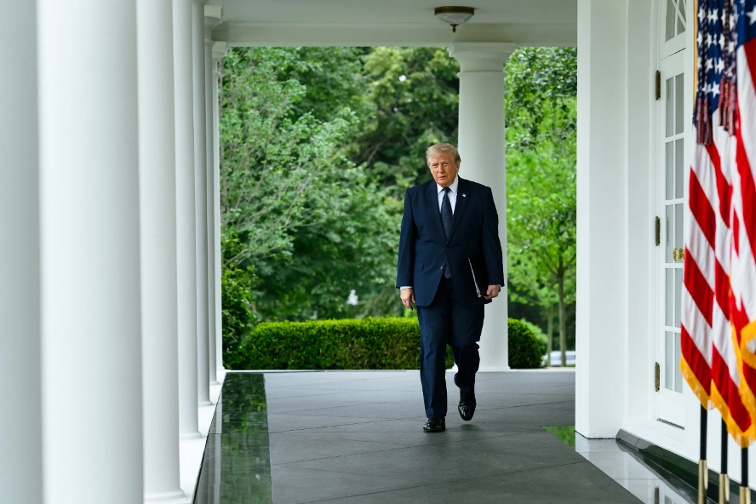
A spiritually East Asian patient, yet shamelessly claiming to engage with the world on equal terms, is truly making a grandiose and shameless statement. With a population of 1.3 billion, as the 'world's second strongest nation,' it still suffers a defeat on the football field to a small country with a population of 5.7 million, and is metaphorically slapped five times, leaving the Chinese people with no dignity. Earlier, during the meeting between the U.S. and Chinese leaders, if Trump had casually joked about this minor issue, I wonder if Xi Jinping would have wished for a hole to hide in?
Originally posted on (author's Facebook) △






News magazine bootstrap themes!
I like this themes, fast loading and look profesional
Thank you Carlos!
You're welcome!
Please support me with give positive rating!
Yes Sure!