

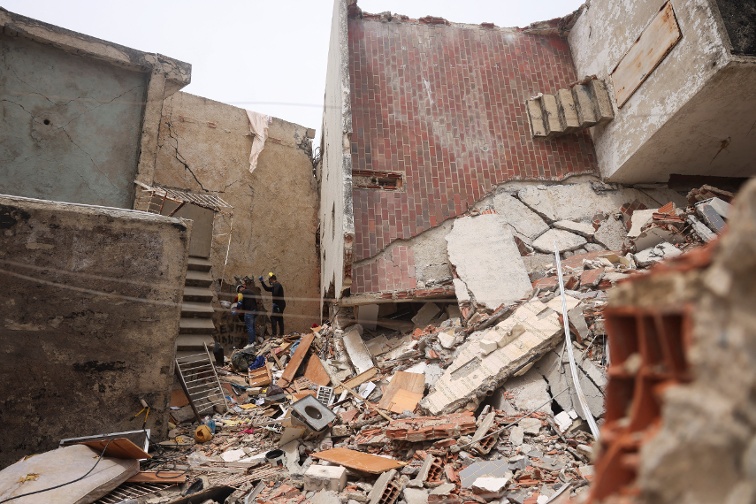
Seventy-two hours have elapsed since the devastating earthquake in Venezuela, with reports indicating that over 1,430 people have lost their lives, more than 3,200 have sustained injuries, and nearly 70,000 remain unaccounted for.
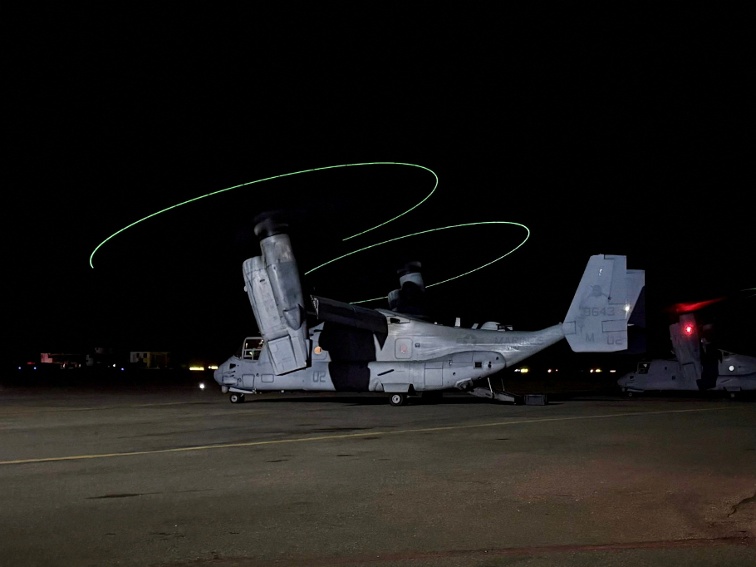
[People News] At the end of June 2026, Venezuela was struck by a powerful earthquake that resulted in significant casualties. The Chinese government responded quickly, initially providing cash assistance, followed by an additional 100 million yuan (approximately 14.7 million US dollars) in emergency non-repayable aid. The first shipment of over 80 tons of supplies—including generators, water purification equipment, disinfectants, solar lighting, tents, and blankets—was delivered to Caracas via chartered flights. State media extensively covered Xi Jinping's international concern, with a spokesperson from the Ministry of Foreign Affairs presenting the Chinese Communist Party's generous aid as part of the 'community of shared future for mankind' narrative. Chinese and Venezuelan officials engaged in handshakes at the airport and delivered thank-you speeches, creating a grand and ceremonial atmosphere.
Around the same time, regions such as Hengzhou in Guangxi faced severe flooding due to Typhoon 'Maysak', which led to the release of floodwaters from several reservoirs, including the Liu Lan Reservoir, and dam breaches, resulting in numerous casualties among residents, although the official death toll reported only 39. On July 9, a major fire broke out at a shoe factory in Fujian, with unofficial reports indicating over 70 fatalities. Concurrently, Typhoon 'Bavi' swept through many areas along the eastern coast and moved northward to impact the Beijing region, prompting several locations to declare a state of emergency for flood prevention, leading to panic among citizens who emptied supermarkets. With multiple disasters occurring domestically, the public faced severe hardships, yet Xi Jinping declined to visit the disaster areas for inspection, relying solely on vague party directives for disaster relief. The focus was on maintaining stability at the grassroots level in affected areas, obscuring the truth, and delaying rescue efforts, leaving victims to rely on their own efforts for survival.
In terms of disaster relief, Xi Jinping's approach to the Venezuelan Communist 'little brother' and the domestic population is strikingly different. He chooses to engage with friendly nations rather than with domestic 'slaves.' The cash flow to Venezuela is rapidly advanced and publicly promoted, enjoying preferential treatment. In contrast, the response to domestic disasters is characterized by anger and directives for donations, with financial allocations making a lot of noise but yielding little. This stark contrast reflects the governance logic of the Chinese Communist Party (CCP): externally, they display high-profile generosity and strategic concern to build an image, while internally, they control information, prioritize stability, and suppresses disaster situations. The suffering of disaster victims becomes a tool for official propaganda and a cheap commodity, while people's livelihoods and rights become innocent victims of Xi Jinping's governance failures and the arbitrary power of the CCP.
The 'brotherly bond' between China and Venezuela: 100 million yuan in cash donations and a publicity spectacle.
Following the earthquake in Venezuela, the CCP's response was remarkably swift. The first batch of supplies was meticulously organized, with charter flights directly delivering aid, supported by satellite imagery, and Chinese enterprises and overseas Chinese communities donating thousands of tons of supplies. State media outlets like CGTN and Xinhua News Agency reported extensively, emphasizing 'President Xi Jinping's condolences' and the 'China-Venezuela all-weather strategic partnership,' showcasing the CCP's internationalist approach to aid and humanitarian spirit.
This aligns with the CCP's consistent narrative of diplomatic packaging, utilizing domestic taxpayers' hard-earned money to win over international allies and support the CCP's geopolitical agenda. Additionally, this move is also a signal to the United States. Despite the change in Venezuela's regime and the decline of the pro-CCP faction, the CCP remains reluctant to concede, attempting to create opportunities for a comeback through financial aid.
In stark contrast to Venezuela, the Chinese Communist Party (CCP) has established a well-developed official governance system for managing domestic disasters. During the Guangxi disaster in 2026, the authorities initially 'debunked' rumors about a reservoir dam collapse and blocked requests for help, gradually acknowledging casualties while selectively reporting on official rescue efforts and even holding celebratory events amidst the mourning. While Venezuelan disaster victims received generators and tents, those in Guangxi were left to go hungry on rooftops for three days, making phone calls for help for two days without any response. Venezuelan victims had access to water purification and disinfection equipment, while families in Guangxi faced venomous snakes in their homes and were afraid to return.
On social media, netizens criticized the situation, stating: 'Guangxi disaster victims rely on self-rescue, while Venezuela receives 80 tons of aid.' This disparity, characterized by 'strong external support but weak internal support,' has led to widespread dissatisfaction, which was quickly suppressed. The CCP is skilled at using foreign aid to divert attention from domestic issues and to cultivate an image of a 'responsible major power,' while neglecting the suffering of its own disaster victims, whose real situations are intentionally marginalized.
The Guangxi dam collapse: a human disaster greater than a natural disaster
The Liulan Reservoir in Guangxi was constructed in 1960 and was previously identified as problematic. Since 2009, over 400 million yuan has been invested in risk mitigation and reinforcement, and in 2023, an additional 380 million yuan was allocated for standardized renovations. In June 2025, it was completed and promoted as a model project for intelligent management and hazard elimination. However, less than a year later, when a typhoon hit, a 50-meter breach occurred, resulting in floodwaters inundating an area with a population of 170,000 downstream.
Residents recounted that a flood warning was issued at 8 AM, and by around 9 AM, water surged into their homes. Many were unable to evacuate in time, becoming trapped on rooftops or swept away by the floodwaters. Videos captured scenes of people struggling in the flood, bodies floating, and buildings collapsing. Residents of Mutang Village in Liuqing Town shared on Xiaohongshu that they had been starving for three days, relying on internal donations to purchase food delivered by drones. The elderly and children were unable to endure, and their cries for help were blocked.
The official death toll has been adjusted multiple times: initially reported as 2, then revised to 4 dead and 8 missing, and later updated to 39 dead and 9 missing across the region. This gradual release of information resembles squeezing toothpaste, as the authorities engage in a tug-of-war with external criticism and public opinion. Many suspect that the actual numbers are much higher. The Chinese Communist Party's traffic controls have hindered civilian rescue efforts, and amidst the widespread devastation and mourning, the government shockingly produced shallow, staged positive energy videos, using the suffering of the people to bolster their own narrative.
Even more absurd is that the more a project is promoted as a model, the more it turns out to be poorly constructed. Such substandard projects are all too common in China. The 1975 Banqiao Reservoir collapse in Henan led to over 20,000 deaths; the school buildings during the 2008 Wenchuan earthquake; and the torrential rains in Henan in 2020, where a 50 billion yuan urban project was quickly exposed as flawed in the face of the downpour, with sponge city initiatives turning into death traps, and rumors suggesting that tens of thousands perished in that man-made disaster.
A fire at a shoe factory in Jinjiang, Fujian, resulted in 147 fatalities, inciting anger from Xi Jinping.
On the afternoon of July 9, a major fire broke out at the Huiteng Footwear Factory in Chendai Town, Jinjiang, Quanzhou, Fujian. Online rumors suggest that the fire was deliberately set by a wage claimant seeking revenge against the factory. The presence of flammable shoe glue and a significant amount of clutter severely obstructed the fire escape routes, allowing the flames to quickly consume the five-story building. Official reports indicate that out of the 239 people inside the factory, 28 have died, while unofficial sources claim the actual death toll could be as high as 147. Many victims were trapped on the roof, with some forced to jump to escape, leading to a tragic scene.
On the evening of July 9, Fujian Province Governor Zhao Long arrived in Jinjiang to oversee the response. The scene of his arrival resembled a Hollywood film, complete with a motorcycle escort clearing the way, flashing police lights, and a long convoy of police cars stretching for hundreds of meters. The streets were eerily empty at night, with only the sharp sound of police sirens piercing the silence, creating a spectacle that was even more impressive than that of Xi Jinping.
Xi Jinping expressed his anger, and both he and Li Qiang issued significant directives, calling for a prompt investigation into the causes and strict accountability, leading to the detention of business leaders and relevant personnel. Fujian, known as 'China's Shoe Capital,' has a concentrated shoe industry supply chain. However, private enterprises in China are burdened with heavy taxes, and the Communist Party mandates compulsory social insurance payments. This creates a significant burden on businesses, which must also contend with a range of official personnel from industrial and commercial administration, taxation, fire safety, and urban management. To survive and maintain profitability, companies are forced to minimize resource investments in management, employee social insurance, and factory safety facilities, ultimately resulting in catastrophic outcomes. Some netizens shared a video claiming that the Huaiteng shoe factory had a large stockpile of production materials, such as shoe soles and fabrics, within its premises. The video showed no fire sprinkler systems in the factory, leading netizens to question whether such safety measures were installed. Local governments, eager to boost GDP, often overlook chaotic management and safety deficiencies in enterprises as long as it benefits their political performance. When incidents occur, they hold business leaders accountable, punish a few officials as scapegoats, issue several reports, and conduct a few inspections merely to create the appearance of action, believing they have successfully navigated the crisis. The next time, operations will continue as usual, and the victims of the disaster won't even be counted in the statistics.
Typhoon 'Bavi' wreaks havoc: A national alert amid multiple disasters
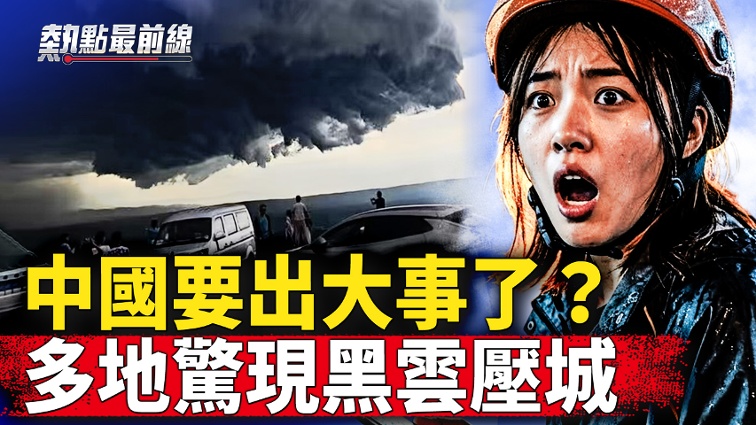
Floods and fires have been occurring in succession, and concurrently, the super typhoon 'Bavi' is approaching with great intensity. This typhoon has a diameter of 1,300 kilometers and maintains a super-strong level for an extended duration. As a result, strong winds and heavy rain have been reported in eastern coastal areas, including Shanghai and Beijing, prompting multiple cities to enter an emergency flood prevention state. Various disasters have created a situation of multiple concurrent occurrences.
Residents in the Jiangsu and Zhejiang regions have been taking proactive measures, flocking to supermarkets to stock up on supplies since the 9th. A reporter visited supermarkets in Shanghai this evening and found that vegetables and fresh meat were nearly depleted. According to the Sing Tao Daily, around 9 PM on the 9th, several stores in Hangzhou, including Hema Fresh, Hema NB, Sam's Club, and Little Elephant Supermarket, experienced long lines of citizens purchasing supplies in preparation for the typhoon. Beijing and Hebei have activated a Level 4 national geological disaster emergency response.
The emergency response system of the Chinese Communist Party has revealed a stark divide between official and civilian responses. The official management is fragmented, characterized by a movement-style warning and a focus on maintaining stability, while the public is stockpiling supplies and enhancing self-rescue efforts. This situation reflects the public's distrust of official warnings and low expectations for government rescue operations.
Xi Jinping's 'disaster relief directive': A governance failure masked by empty slogans
In recent days, disasters have been occurring frequently across the country. Xi Jinping has never personally visited disaster areas to oversee rescue efforts or comfort victims, yet he has consistently issued important directives regarding various national disasters, emphasizing 'people first' and instructing officials to 'determine the causes.' Local officials seem to have a shared understanding, accurately interpreting and diligently implementing Chairman Xi's highest directives: information lockdown in Guangxi takes precedence over rescue efforts, the provincial governor asserts authority during the Fujian fire, and the official slogan-style warnings for Typhoon Bawei are issued. History serves as a reminder; natural disasters account for two parts, while human errors account for eight, with the truth about disaster situations being concealed, official rescue efforts being mere performances, stability prioritized over safety, and corruption lurking behind the scenes…
The 'high-profile rescue' efforts in the earthquake-affected areas of Venezuela starkly contrast with the devastating domestic disasters occurring in Guangxi, the fire in Fujian, and Typhoon Bawei. The Chinese Communist Party (CCP) utilizes taxpayer resources to enhance its international image, while allowing its own disaster victims to struggle for survival amidst mud, flames, and storms. This situation reflects not merely a misallocation of resources, but a profound collapse of values, illustrating how the CCP's party ideology overrides basic human compassion.
(Originally published by the People News) △






News magazine bootstrap themes!
I like this themes, fast loading and look profesional
Thank you Carlos!
You're welcome!
Please support me with give positive rating!
Yes Sure!