

Xinhua News Agency Makes a Sudden Turn: Who is Being Targeted? (Video)
[People News] Hello, dear viewers, and welcome to "Decoding Zhongnanhai." I am Sun Ning.
On June 19, 2026, the Chinese Communist Party's official news outlet, Xinhua News Agency, published a signed article titled: "Three Major Transformations: An Unprecedented and Profound Social Change."
The article opens by discussing the old factory of the Fuxin Flour Mill, established by the Rong family, and the M50 Creative Park, among other industrial heritage sites. It reflects on the celebrations in 1956 in cities like Beijing and Shanghai that marked the victory of socialist transformation. The article boldly asserts that the socialist transformation of that era successfully established socialist public ownership through the innovative method of "peaceful purchase," providing a "solid institutional foundation" and "valuable experience" for the modernization of China today.
Why is the Communist Party making such a concerted effort to glorify this historical period at this particular time?
Cai Shenkun, a political commentator based in the United States, noted in a post on the social media platform X that the Communist Party's renewed emphasis on the "Three Major Transformations" is not merely a historical reflection. He argues that in the context of current macroeconomic pressures for transformation and the severe challenges facing local finances, the official promotion of the historical achievements of "eliminating private ownership" is, in reality, a calculated political maneuver, a preparation of public sentiment, and a declaration of intent.
The Truth Behind the Drums: The "Five Anti" Campaign
According to the Communist Party's definition, the so-called Three Major Transformations refer to the socialist transformation of agriculture, handicrafts, and capitalist industry and commerce that took place from 1953 to 1956.
In an article by Xinhua News Agency, the 'Three Major Transformations' is depicted as a win-win scenario where capitalists willingly participated and the state invested in a 'peaceful buyout.' However, is the historical truth really as tranquil as the official media suggests?
At the outset of the People's Republic of China in 1949, the Communist Party of China (CPC) introduced the 'Common Program' to stabilize the economy, explicitly promising to protect private property. Liu Shaoqi even personally visited Tianjin to reassure business owners, presenting the well-known 'theory of beneficial exploitation.' The shipping magnate Lu Zuofu and textile tycoon Rong Yiren were swayed by these comforting political assurances, abandoning their plans to go abroad and choosing to remain on the mainland with all their assets and patriotic enthusiasm.
By 1950 and 1951, financial constraints began to tighten. The CPC first established various state-owned specialized companies under the guise of government authority, monopolizing essential raw materials such as cotton, grain, and minerals. Private factories lost their rights to independently procure materials. Soon after, the CPC monopolized all commercial orders through 'processing orders and unified purchasing and marketing.' The government became the sole buyer, forcibly lowering commodity prices, which left private enterprises struggling with deficits and rapidly draining their working capital.
When businesses were left with barely any resources and lost all bargaining power, the CPC's moment of lethal encirclement arrived.
In January 1952, the 'Five Anti Campaign,' aimed specifically at private industrial and commercial operators, was launched nationwide with great intensity.
At this point, the Chinese Communist Party has long ceased to invoke the past concepts of 'exploitation with merit' and 'warm promises.' The state apparatus has set all its propaganda machinery in motion, branding private entrepreneurs as class enemies who launch 'sugar-coated shells' at state institutions and 'madly corrupt officials.'
Following this, the 'Five Anti' work teams were deployed to major factories and businesses. The movement quickly transformed into a fascist-style campaign of spiritual torment and physical abuse directed at entrepreneurs.
To coerce entrepreneurs into confessing to these baseless charges, the work teams incited workers, stirring up and exploiting labor-capital tensions. The once dignified and passionate national industrialists, who took pride in running their businesses, were forced to wear high hats labeled 'heartless capitalists' and 'vampires' as they were paraded through the streets. Surrounded by factory workers, they faced spitting, slapping, and were compelled to kneel for extended periods.
After enduring the public humiliation of the parade, they returned to the isolated interrogation rooms, where they were subjected to relentless questioning for dozens of days, deprived of sleep and water, in 24-hour shifts. To utterly crush the will of the capitalists, the regime meticulously orchestrated a 'family strangulation'—the work teams mobilized and coerced the capitalists' wives and children to take the stand, publicly denouncing their husbands and fathers, and reading statements that severed family ties.
When a person's social dignity is publicly trampled, and he realizes that even the business and family he has tirelessly defended throughout his life will completely abandon him, that overwhelming sense of sadness and loneliness becomes the final straw that breaks his will.
In the end, based on so-called grassroots accusations and results extracted under coercion, the work teams adopted an utterly absurd method of calculation, issuing to every enterprise “astronomical fines” and “restitution payments” several times, even dozens of times, greater than their total assets.
With their assets completely plundered, their families facing endless political persecution by association, and the rest of their lives swallowed by bottomless debt, death became, in the eyes of these industrialists, the only escape.
That year, Chinese merchants staged a horrific “wave of a thousand people jumping to their deaths.” At the time, Shanghai’s mayor, Chen Yi, would sit down in his office every morning and coldly ask his secretary his first question: “How many ‘paratroopers’ today?”
Xian Guansheng, a pioneer of China’s food industry and the founder of Guanshengyuan Food Store, unable to endure days of illegal detention, coercive interrogation, and personal humiliation by workers, leapt from the fifth floor of the Guanshengyuan building in April 1952 and died on the spot.
Meanwhile, Lu Zuofu, the “King of Shipping” in China, who had believed Liu Shaoqi’s speech in Tianjin and resolutely returned to the mainland from Hong Kong with his fleet, after enduring endless humiliation from his subordinates, surveillance by agents, and groundless accusations, realized he could no longer protect his enterprise or his family. In February 1952 in Chongqing, he left behind a note reading, “Hand over all public and private shares to the state,” and then took poison to end his life.
Even more desperate were countless small and medium-sized proprietors who were forced to choose death for their entire families. Under the political logic of the time, if a capitalist committed suicide alone, it would be officially labeled as “resisting the movement” or “suicide out of fear of guilt,” and the work teams would directly convict them, subjecting their surviving wives and children to intensified political persecution and physical abuse, even imposing indefinite “debts of the father repaid by the son.”
Thus, a chilling term emerged among Shanghai’s populace at the time: “family portraits taken in the Huangpu River.” Late at night, wealthy bosses would dress their wives in their most beautiful qipaos and their children in their neatest clothes, tie the waists of all family members tightly together, layer upon layer with rope, go to the banks of the Huangpu River, embrace as a group, and jump in together.
This is the blood-soaked historical reality behind the “Three Transformations” and “peaceful redemption.” It was never a gentle institutional transition, but rather one that completely shattered the backbone of China’s bourgeoisie through terror, humiliation, and death.
Everyone who survived the Five-Anti Campaign remembered clearly the screams of those long nights in 1952, so that when the “public-private partnerships” were vigorously promoted in 1956, the remaining capitalists, under the shadow of bayonets, forced smiles on their faces, beat gongs and drums, and “willingly” handed over all their property.
"Need" signifies helplessness, while "elimination" represents an ideal.
The specters of history have not faded with time. When Xinhua News Agency revisited the "three major transformations" in 2026, praising the plunder of that era, a harsh political logic was once again starkly presented to all—relying on private enterprises is a reluctant choice, while the eradication of private enterprises is the noble ideal.
For the Chinese Communist Party (CCP), tolerating private enterprises and recognizing private property rights is merely a reluctant concession dictated by circumstances; in contrast, the elimination of private enterprises and the complete nationalization of wealth is the highest communist ideal within its ideology, one that it has never relinquished.
The reforms and opening-up over the past few decades allowed private ownership to take root in the interstices, not because the system embraced the market economy, but because the national economy was on the verge of collapse at that time. To address the employment of hundreds of millions, to generate foreign exchange, and to rejuvenate the system, the ruling powers had no choice but to make a "tactical retreat."
Nevertheless, the dictatorship has never genuinely considered private entrepreneurs as "one of their own." In a highly centralized political framework, free assets are never permitted to rest comfortably alongside the ruler. Once the CCP perceives itself as sufficiently strong, or when the regime senses a renewed governance crisis, that primal greed for private wealth and the communist instinct to abolish private ownership will swiftly resurface.
In July 2021, Sun Dawu, the founder of Hebei Dawu Group, was sentenced to 18 years in prison under a series of vague "pocket crimes" specifically targeting private enterprises, including "picking quarrels and provoking trouble" and "illegally absorbing public deposits."
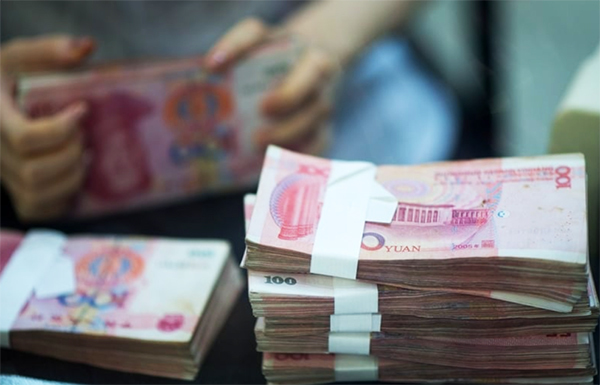
Dawu Group is a large industrial conglomerate with 28 subsidiaries, an asset valuation of at least 5.1 billion yuan, and an abundance of cash on hand. When the authorities decided to strip it of its assets, they did not issue a formal 'confiscation' notice. Instead, they cleverly disguised the action under the modern legal framework of a 'judicial auction.' Within just a few days, the Communist Party forcibly auctioned off all of Dawu Group's assets for a mere 686 million yuan, an absurdly low price, to a puppet company that had only been established a few days earlier and had connections to local state-owned enterprises.
The entire Sun Dawu family is now imprisoned, and the enterprise that took decades to build was completely consumed by the red demon overnight. This legalistic approach to property deprivation is as meticulous and brutal as the asset verification processes of the past.
It's not just grassroots entrepreneurs who are affected; even the once-thriving internet technology giants, who were at the forefront of the era, must bow their heads and 'spit blood' in the face of authority.
In 2021, under the heavy-handed antitrust measures aimed at 'preventing disorderly capital expansion,' major internet giants faced administrative fines totaling hundreds of billions. In a bid for political self-preservation, these giants were compelled to participate in a shocking and almost desperate 'voluntary donation' competition in the latter half of 2021.
In April and August 2021, Tencent Holdings led the way by investing a total of 100 billion yuan in two phases to launch the so-called 'Sustainable Social Value Innovation' and 'Common Prosperity Special Plan'. This funding was specifically directed towards projects designated by the Communist Party of China (CPC), such as rural revitalization and increasing income for low-income groups. Following closely, Alibaba announced in September of the same year its commitment to invest a total of 100 billion yuan by 2025, establishing 'Ten Major Actions' to directly support the construction of the common prosperity demonstration zone in Zhejiang. Meanwhile, Pinduoduo declared the establishment of a '10 Billion Agricultural Research Special Fund', pledging to donate all of its core profits from several consecutive quarters without reservation, with the chairman personally overseeing the process until the total reached 10 billion.
While this funding is labeled as a 'corporate charity fund', its allocation and direction must completely align with the CPC's major policies. This situation transcends mere disguised taxation; it represents a modern form of 'spending to avert disaster'.
Even more alarming for the CPC than the collection of profits is the 'Special Management Share' system, commonly referred to as the 'Golden Share System'. Funds with CPC affiliations or companies backed by the Cyberspace Administration of China can gain veto power on the board of directors by investing to purchase just 1% of the shares of private enterprises, as stipulated in the company's articles of association.
Regardless of how many shares the founder possesses, the board members appointed by the government can use their "veto power" to decisively overturn any corporate decisions related to content review, cross-border data, the appointment and dismissal of key executives, and significant investments. This exemplifies what the Chinese Communist Party (CCP) calls "using four taels to move a thousand pounds"—without incurring market risks or bearing the financial outcomes of the enterprise, merely relying on 1% of institutional leverage effectively strips tech giants of their autonomy, relegating them to mere "high-level accounting rooms" that manage wealth and big data on behalf of the system.
If the golden shares represent a targeted strike against leading corporations, the robust establishment of party branches signifies a comprehensive strategy against all private capital.
Historically, the establishment of party branches in private enterprises was often superficial, serving merely as a political ornament without any real involvement in operations. However, in recent years, the CCP has fundamentally restructured the power dynamics of party branches within private enterprises through legal reforms and strong administrative pressure.
The CCP first encircled the issue from a "legal" standpoint. By forcibly amending the articles of association of private enterprises, it has embedded "party building work" into the highest legal documents of these companies. Once the articles are amended, the nature of the party branch changes: it is no longer a peripheral social organization but has transformed into an invisible command center that holds authority over the board of directors and management.
In terms of operational logic, the CCP has implemented a highly authoritarian "pre-approval" and "dual-entry" mechanism.
What does 'pre-approval' mean? It refers to the situation where, in private enterprises, the management or board of directors lacks the authority to make direct decisions on any major issues that could determine the company's survival or demise. Whether it involves transferring funds exceeding several hundred thousand, appointing or dismissing core executives, or planning the next phase of production expansion, all such proposals must first be submitted to the internal party branch of the enterprise for political review and safety assessment before they can be formally discussed by the board of directors. If the party branch does not approve, the board of directors is not even qualified to convene a meeting for discussion.
Adding to the suffocation is the 'dual entry and cross-appointment' system. This system mandates that party committee and party branch secretaries be included in the company's board of directors, supervisory board, or executive team. Often, this so-called 'party committee secretary' is directly appointed by the local organization department and is a political worker who has no understanding of the market or technology, and is solely focused on political review.
This leads to an extremely absurd situation: in a private enterprise that operates on a self-financing basis, where private assets constitute the vast majority of the equity, the founder—who truly bears the market risks and is accountable for profits and losses—is sidelined. Meanwhile, the political representative who holds the highest command and decision-making authority within the enterprise is not held accountable for the company's financial performance and does not bear any market risks; he only needs to fulfill the political tasks assigned by the higher-level party organization.
This reversal of power, while maintaining the facade of 'private enterprises' and the concept of 'private risk-bearing for losses', has entirely surrendered the control of corporate operations to the will of the Chinese Communist Party (CCP). The enforced establishment of party branches is not aimed at supporting the development of private enterprises; rather, it serves to create an invisible leash within the company. This effectively transforms the private economy into an administrative appendage of the CCP, always ready to take orders and prepared to sacrifice for the Party at any moment. This represents a modern iteration of 'the public representative entering the factory'—achieving the most comprehensive asset expropriation without bloodshed or visible conflict.
Why does the CCP insist on reviving the 'Three Great Transformations' and vocally praising the eradication of private ownership in today's so-called 'reform and opening up' era?
The reason is that the current CCP system has reached a dead end, trapped in a corner with no escape.
The great ship is on the verge of sinking. To sustain its regime, the CCP must forcibly consolidate all social wealth into the state-owned 'wartime safe' through the 'Three Great Transformations of the New Era' before the final storm hits. The revival of public-private partnerships is essentially a complete pivot towards policies that mobilize a 'planned economy' and a 'wartime centralized control system'.
The curtain has been drawn back, and the encirclement is intensifying. I sincerely hope that all contemporary private entrepreneurs in China can learn from history, recognize the true nature of communism, and avoid repeating the tragic fate of the national capitalists who perished together over seventy years ago, choosing a bright and promising future for themselves and their families.
Thank you for watching this episode. If you found today's content enlightening, please feel free to leave a comment in the comment section. We look forward to seeing you in the next episode!
("Decoding Zhongnanhai")
△




News magazine bootstrap themes!
I like this themes, fast loading and look profesional
Thank you Carlos!
You're welcome!
Please support me with give positive rating!
Yes Sure!