

Authorities are ignoring the lives of farmers in Hebei, compelling them to switch to natural gas for heating. (People News/AI-generated image)
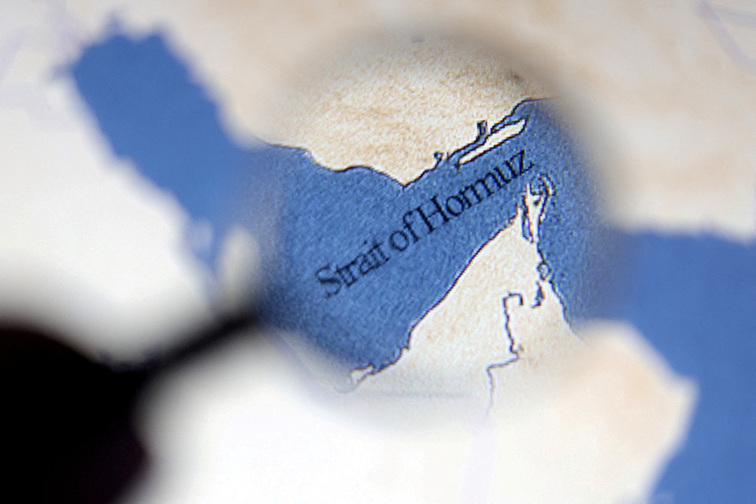
[People News] Trump reached out to allies and the Communist Party for assistance in escorting vessels through the Strait of Hormuz, but his calls went unanswered. The surge in prices is something no one can escape, but the first to confront the energy crisis are Europe and the Communist Party's nation.
According to official statistics from the Communist Party, by 2025, the reliance on oil imports is expected to be around 70%, while natural gas imports will account for approximately 45%. These official figures are laughable; it is unclear how much they have been manipulated, and the actual situation is likely to be even worse. The lengthy construction cycle for nuclear energy and its minimal share in the overall energy mix do not address the core issues.
The energy structure of the Communist Party's country is heavily reliant on coal, imported oil, and natural gas. However, the peak production of coal has already passed, and imports are hindered by sanctions and geopolitical risks. New energy sources, such as photovoltaics and wind power, are merely “pie in the sky” and cannot realistically support industrial and civilian needs.
In 2024 and 2025, China's coal consumption is projected to account for about 55% of global consumption. The challenges of coal mining are increasing, and the economically recoverable reserves are dwindling. Oil imports depend on the Middle East and Russia, but the instability in the Middle East and the geopolitical rivalry between the US and Russia render the supply chain vulnerable.
China's proven and economically recoverable coal reserves are estimated to last less than 20 years under conservative estimates, and only about 30 years under optimistic projections. Given the current extraction rates and consumption patterns, high-quality coal (thermal coal) is expected to be depleted in roughly 15 years, after which only low-quality coal will be available, resulting in soaring costs and declining efficiency. In rural areas, the Communist Party has enforced a switch from coal to gas, but this has left many unable to afford heating, leading to tragic cases of villagers freezing to death. While it is publicly framed as an environmental initiative, the underlying reason is likely a shortage of coal.
Wind and solar energy are unreliable sources of power. Europe has decommissioned a significant number of nuclear power plants and shifted to so-called clean energy sources like wind and solar, which has led to a sharp rise in electricity prices and an increasing dependence on Russian natural gas. The United States is experiencing a similar situation; during the extreme winter storm in Texas in February 2021, wind turbines froze, and solar panels were blanketed in snow, resulting in a drastic drop in clean energy production, which intensified the crisis of grid failure and left millions of households without power.
In China, these so-called new energy sources are primarily located in the western regions, such as Xinjiang, while the major electricity consumers are situated in the southeastern coastal areas. The infrastructure costs for transmitting electricity from the west to the east have reached the trillion-yuan mark. Additionally, losses in long-distance high-voltage transmission can be as high as approximately 7%. All of this makes new energy appear attractive, but in reality, it is a bottomless pit that cannot be filled.
Countries like Iran and Russia, which are considered 'allies,' face their own energy challenges. Iran is under sanctions, and the ongoing Russia-Ukraine conflict has drained resources, making it impossible to provide stable long-term supplies to the People's Republic of China (PRC). This situation transcends ordinary economic issues and could potentially lead to regime change.
The simultaneous collapse of industrial and residential electricity has triggered a chain reaction: factory shutdowns → waves of unemployment → social unrest. Power rationing and heating shutdowns during winter have become commonplace, and the situation is expected to worsen in the future. As people increasingly lose their means of subsistence and are compelled to protest, the legitimacy of the Communist Party of China (CPC) will further diminish, bringing it closer to a potential downfall.
Reference:
Forced gas heating has led to villagers freezing to death
(Originally published by the People News)
△






News magazine bootstrap themes!
I like this themes, fast loading and look profesional
Thank you Carlos!
You're welcome!
Please support me with give positive rating!
Yes Sure!