
CCP Tightens Surveillance of Local “Top Bosses,” Shrinking Decision-Making Room
[People News] On February 23, the General Office of the CCP Central Committee issued a “Notice” that clearly designates leadership groups and leading cadres at or above the county-and-department level as key targets, with special emphasis on the “top leader” (“number-one-in-command”). The study-and-education campaign will begin after the 2026 Spring Festival holiday and will basically conclude by the end of July. In official wording, the document is framed as a concentrated study arrangement, but multiple interviewed scholars believe its real focus is not theoretical education, but a further compression of local decision-making space.
According to Radio Free Asia, the “Notice on Conducting a Party-wide Study-and-Education Campaign on Establishing and Practicing a Correct View of Political Achievements” proposes a new round of study-and-education lasting six months. A Xinhua dispatch said this campaign will not be advanced in batches or divided into stages, but will be carried out in a concentrated manner around study and discussion, problem-checking, rectification and remediation, and establishing rules and institutions, and it requires the principal responsible comrades of Party committees to fulfill the responsibility of the first person accountable. The dispatch did not disclose specific cases.
Wei Xin, a scholar who has long studied CCP bureaucratic politics, told Radio Free Asia in an interview: “This so-called education on the view of political achievements is essentially a campaign-style cadre rectification. This is different from past purge-style anti-corruption—it exposes that the CCP bureaucratic system has already fallen into a structural bottleneck.”
Wei Xin said: “CCP bureaucratic authoritarianism has developed to today and is already in a state that is difficult to self-repair. The current system faces two core problems. First, the bureaucratic group has become highly involuted, competition among cadres is extremely intense, but this competition lacks institutionalized procedural constraints—there is no intra-Party democracy, and there are no open and transparent rules of competition.”
The Notice explicitly targets “leadership groups at or above the county-and-department level,” places the “top leader” in a prominent position, and adopts a method of concentrated推进 without batches and without stages. It states: “Focus on checking whether there exist image projects, political-achievement projects, blind investment promotion and capital attraction, illegal debt-financed expansion, launching projects beyond fiscal capacity, and strictly regulate major project decision-making procedures.” This wording is seen as directly touching the local decision-making level.
A Signal Released Before the Two Sessions — “View of Political Achievements” Points at the Decision End
Mr. He, a retired teacher from Renmin University of China, said that issuing this Notice before the national “Two Sessions” sends a strong political signal. He said: “This is not just routine theoretical study; it simultaneously sends political signals and carries a real-world corrective function. The so-called ‘view of political achievements’ usually involves whether development orientation overemphasizes short-term scale expansion; whether project decisions contain image projects, blind launches, and debt impulses; and whether economic statistics and assessment mechanisms have seen layer-by-layer escalation and distortion, and so on.”
Mr. He believes this concentrated education aims its spear at leadership groups, especially the “top leader,” meaning such problems are defined as originating from the decision-making level rather than deviations in grassroots execution. “Since the problem lies at the decision end, then who exactly is at the decision end—this becomes thought-provoking.”
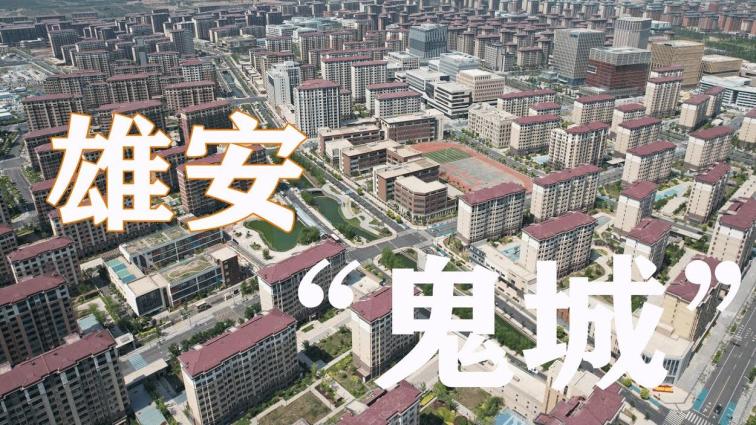
Recently, fiscal and debt pressures at both central and local levels have continued to rise, and risks accumulated from earlier blind investments in some regions are gradually surfacing. At the same time, claims circulating in public discourse that economic data such as imports/exports and GDP are distorted—and that top leaders believe this “affects the center’s judgment”—have also been spreading.
Bureaucratic Competition Logic and Promotion Anxiety
Scholar Wei Xin believes that while the authorities push competition among local officials, they do not touch the institutional premise of one-party rule. He said: “This competition is not party-style competition, nor is it open factional struggle; it is a concealed organizational assessment competition. In a sense, it is more like the Qing dynasty’s official evaluation system.”
Wei Xin said that under this institutional environment, “education on the view of political achievements” is effectively transmitting a signal to cadres on the promotion track: “It is basically telling them to relax their mindset and not pursue profit too excessively. To some extent, it uses a form of spiritual education to ease highly anxious promotion competition.”
Some observers also interpret this Notice as a systematic rectification aimed at current officials at or above the county-and-department level. Wei Xin said: “Aside from anti-corruption, Chinese politics has already been unable to produce effective methods that make bureaucrats both think about problems and actually work. At present, it lacks effective incentives, and it also lacks a mechanism to restrain excessive incentives. Anti-corruption has made cadres collectively cautious or even ‘lie flat’; but single-track and intense intra-Party competition pushes some people to adopt strategies of outward compliance and inward resistance—concealing from above and applying high pressure downward.” This structural tension further widens the distance between the center and the grassroots.
Public opinion holds that China’s bureaucratic group has gradually formed a highly self-interested group structure, and Party organizations to some extent block between the center’s will and society. In this context, the governance tools available to Beijing’s top leadership are seen as increasingly narrowing. Wei Xin said: “It seems only political education is left.”
Risk Forecast Under an Economic Downturn
Over the past decade-plus, the CCP has carried out large-scale anti-corruption campaigns, dealing with more than four million officials. Wei Xin said these actions did not touch the internal logic of how the system operates. He said: “Now shifting to education on the view of political achievements is more like a spiritual-level rectification method, similar to the spiritual rectification movements of the early 1980s—using ideological reshaping to constrain the bureaucratic group.”
As for China’s social and economic trajectory in 2026, Wei Xin expects that multiple factors—slower economic growth, continued real-estate adjustment, and tighter local fiscal constraints—are stacking up, raising overall uncertainty. He said: “In this context, the central top leadership has clearly realized a risk node is approaching. When the economic downturn trend continues, the grassroots, in order to meet assessment targets, may adopt aggressive or short-term methods. This is what the authorities have recognized.”
He said: “Historical experience shows that under a highly administrative mobilization system, when indicator pressure is too large and real information cannot smoothly reach upward, the grassroots easily develops distorted judgments.” He mentioned that in some phases in the late last century and earlier, local layer-by-layer escalation and reporting good news but not bad news to superiors once produced serious consequences. This education on the view of political achievements, to some extent, is an early intervention in officials’ behavior—both a constraint on cadres and a prevention of risk.”△





News magazine bootstrap themes!
I like this themes, fast loading and look profesional
Thank you Carlos!
You're welcome!
Please support me with give positive rating!
Yes Sure!