
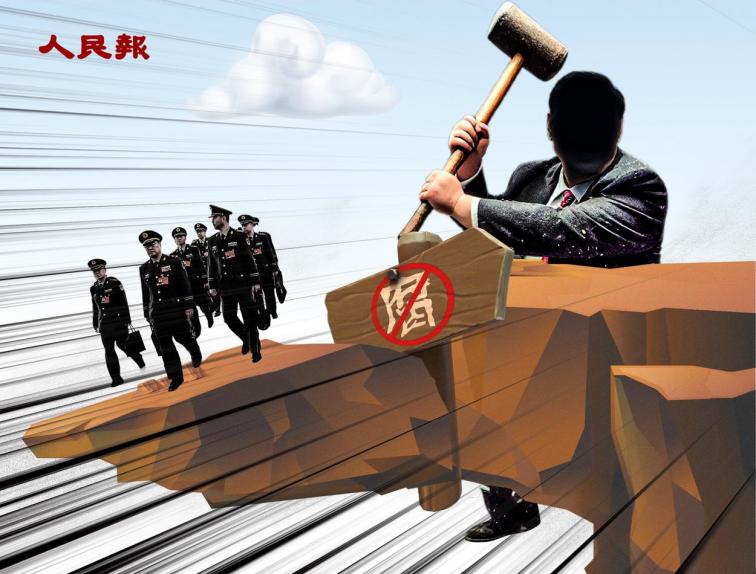
[People News] Self-media figure Jiang Wangzheng revealed that Ma Xingrui may become the first “tiger” sacrificed by the CCP in the Year of the Horse (2026).
1. Ma Xingrui and Li Xi Absent From Politburo Meeting Due to Involvement in the Case
At 11 a.m. on November 30, 2025, the CCP Central Commission for Discipline Inspection announced on its official website that Chen Weijun, a member of the Standing Committee of the Xinjiang Autonomous Region Party Committee and Executive Vice Chairman of the Autonomous Region Government, was under investigation. Two days earlier, on November 28, the CCP Politburo held a meeting followed by a collective study session. According to usual practice, Politburo meetings have only written reports and no live footage. However, CCTV reported video footage of the collective study session, which showed that Politburo Standing Committee member and CCDI Secretary Li Xi, as well as Politburo member Ma Xingrui, were absent.
What is noteworthy is that from the end of 2021 to June 2025, Ma Xingrui served as Party Secretary of Xinjiang. Chen Weijun has served as a Xinjiang Party Committee Standing Committee member and Executive Vice Chairman of the Autonomous Region Government since June 2021, making him a subordinate of Ma Xingrui during Ma’s leadership in Xinjiang. The two were transferred to Xinjiang at different times and overlapped for three and a half years. When Li Xi was Party Secretary of Guangdong, Ma Xingrui served as governor, and the two worked together for four years. Later, Li Xi became the CCDI Secretary, becoming a famous “butcher of officials” after Wang Qishan. In his three years in this position, he has investigated 320–380 senior central and provincial officials, 90–120 military officers, 150–220 figures in the financial system, and 2,500–3,000 local officials below the county level, amounting to a total of 3,100–3,600 people investigated.
2. Ma Xingrui Split 100 Billion With Li Xi and Peng Liyuan
About five weeks have passed since the close of the CCP Fourth Plenum, during which eight provincial and ministerial-level central management officials have been removed, including Xi’an Party Secretary Fang Hongwei and Xinjiang Vice Chairman Chen Weijun. The downfall of Chen Weijun suggests that Ma Xingrui is unlikely to survive.
Jiang Wangzheng said that during his four years in Xinjiang, Ma Xingrui had access to 3.3 trillion yuan in Xinjiang construction funds, from which he personally embezzled 100 billion. But Ma did not keep it all for himself—he split it with Li Xi and Peng Liyuan. Jiang also said that the wives of Ma Xingrui, Li Xi, and Gao Shiwen—the Deputy Secretary of Nanchang—had been buying entire buildings in Hong Kong and large tracts of gas stations and land overseas. Jiang commented that people like Ma Xingrui were buying “asset packages.” This implies that Gao Shiwen is also implicated. In addition, Jiang said that Shanghai Deputy Party Secretary Zhu Zhongming is also entangled in Chen Weijun’s case.
Jiang Wangzheng disclosed that the CCDI initially did not want to investigate Ma Xingrui. But according to his account, if Ma Xingrui is not investigated, then State Council Vice Premier Liu Guozhong and National Development and Reform Commission Deputy Director Li Chunlin—both implicated in Fang Hongwei’s case—will have to fall. Jiang also revealed that Xi Yuanping and Peng Liyuan have planted their own people within the CCDI. Investigating Ma Xingrui directly implicates Peng Liyuan and also involves CCDI Secretary Li Xi. Based on this, Jiang speculated that the behind-the-scenes force pushing for the investigation of Fang Hongwei was Li Xi.
3. Officials Are Rich Beyond Measure, While the People Struggle to Survive
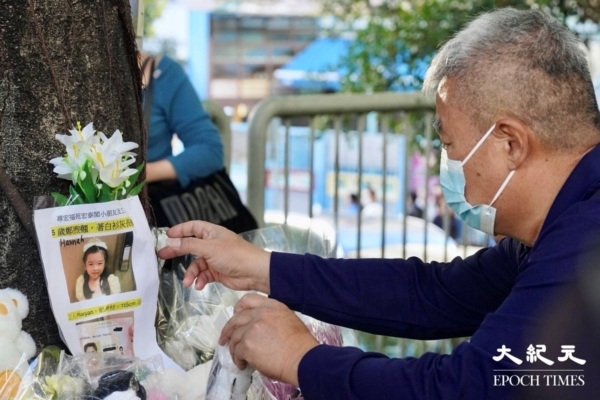
Since coming to power, Xi Jinping has become known for his harsh anti-corruption campaign, yet the more he fights corruption, the more corruption spreads. Officials are getting rich, while ordinary people cannot make a living. In just one week, aside from the Hong Kong fire, the mainland has been filled with gunfire and flames.
On November 24, a “blue sedan” rammed into the entrance of the Beihai city government. Reports said the car was later intercepted by an “armed patrol vehicle,” and a man was taken away. The scene was filled with smoke and dense collision sounds and gunshots. It is very likely that the driver, unable to survive under crushing life pressures, was forced into resistance against the government.
At about 21:40 on November 27, a fishing boat at the border trade port in Qiaogang Town, Yinhai District, Beihai City, caught fire. The flames spread quickly and affected eight nearby fishing boats.
At dawn on November 30, an explosion occurred at a fireworks retail shop in Beihu District, Chenzhou City, Hunan Province. The reason was that the shop owner had been squeezed by the local government, developed suicidal thoughts, drank pesticide, and then detonated his own fireworks.
Deutsche Welle commented that since Xi Jinping took office, China has faced a series of structural problems, including economic decline, persistently high youth unemployment, and an aging and shrinking population. These real issues have caused the CCP’s power to weaken, with no ability to reverse the trend. Public dissatisfaction is likely rising, but severe control suppresses everything. Given this, Xi seems able to maintain rule only through creating fear. There may be more voices of resistance among the people, but the CCP’s “clean-up-the-internet” campaign has silenced them.
However, fear alone cannot support long-term political stability. Officials filled with suspicion and distrust cannot be genuinely loyal to Xi Jinping—they can only show outward obedience while harboring inner resentment.
Overseas commentator Yuan Hongbing claims that two forces within the CCP elite are secretly resisting Xi Jinping’s continued rule: (1) the vested interest group aligned with Deng Xiaoping’s political line and (2) the reform-and-opening faction influenced by Hu Yaobang’s thinking. As many key figures in Xi’s camp have fallen one after another, these personnel shifts likely indicate that the two factions are exerting influence from behind the scenes, pushing to reshape the current power structure.
(People News original publication)
△





News magazine bootstrap themes!
I like this themes, fast loading and look profesional
Thank you Carlos!
You're welcome!
Please support me with give positive rating!
Yes Sure!